
The School That Manufactures Kings: Inside Institute ” Le Rosey “
There is a school on the edge of Lake Geneva in Switzerland where the annual fee crosses ₹1.5 crore. Where kings, oil heirs, rock star offspring, and shipping dynasty scions have sat in the same classroom. Where January arrives and the entire school — students, teachers, horses, and equipment — physically migrates to the Swiss Alps for the winter term. Where no more than 10% of the student body can be from any single country, so that even the world’s most powerful nations cannot dominate the room.
It is called Institut Le Rosey. And it is not fiction.
This is the most expensive school on earth. More importantly, it may be the most consequential social network ever engineered under the guise of education. Here is the full story — the history, the fees, the campus, the owners, the curriculum, the alumni, and the Indian angle that nobody talks about enough.
Origin Story: A Medieval Château and a Man Who Loved Nature
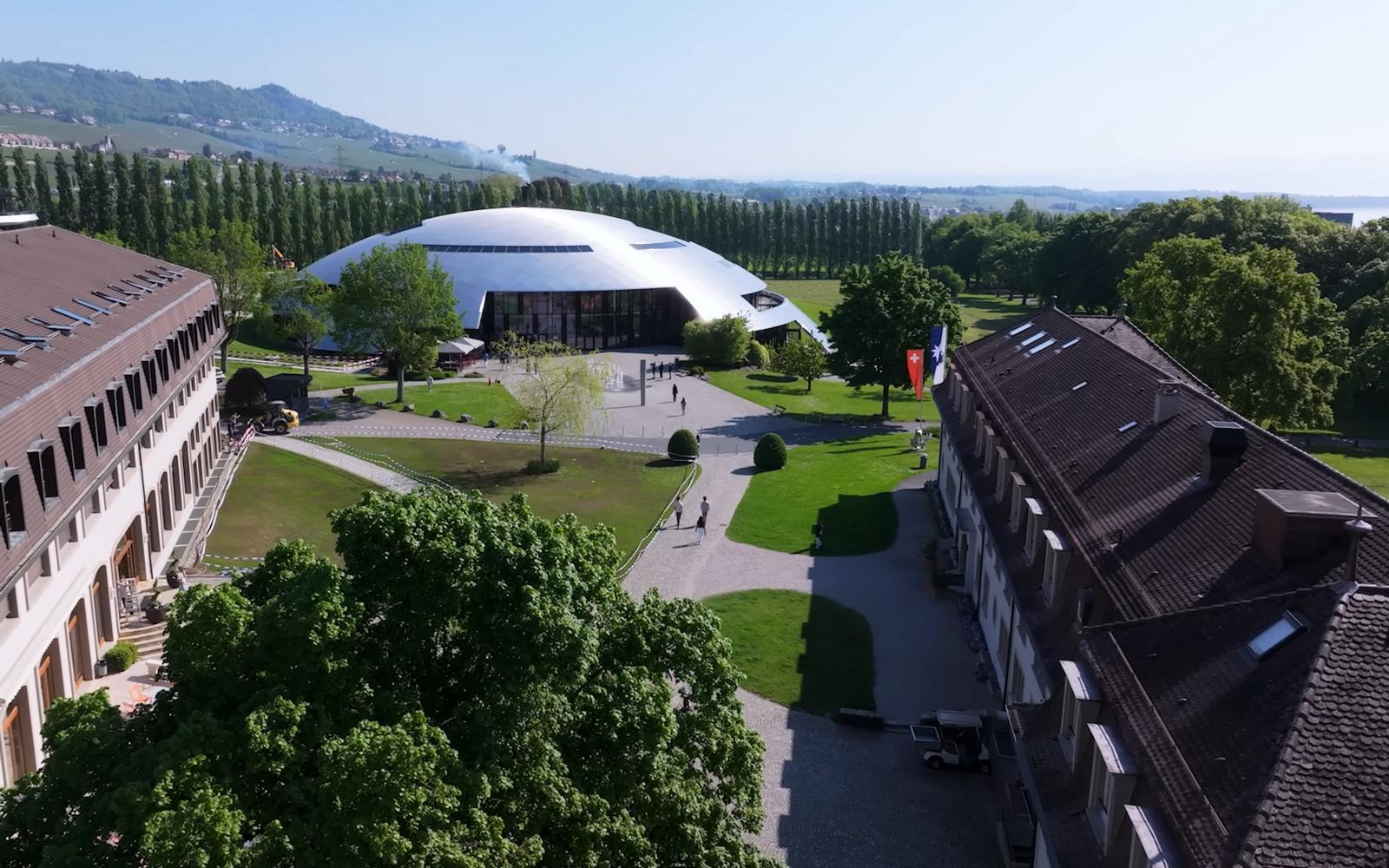
In 1880, a man named Paul-Émile Carnal chose the site of a 14th-century medieval château in the village of Rolle, in the Canton of Vaud, to build a school. The school was founded on the site of the Château du Rosey, a feudal structure that dates to the Middle Ages, chosen by Carnal because he was “a lover of nature, history and the countryside.”
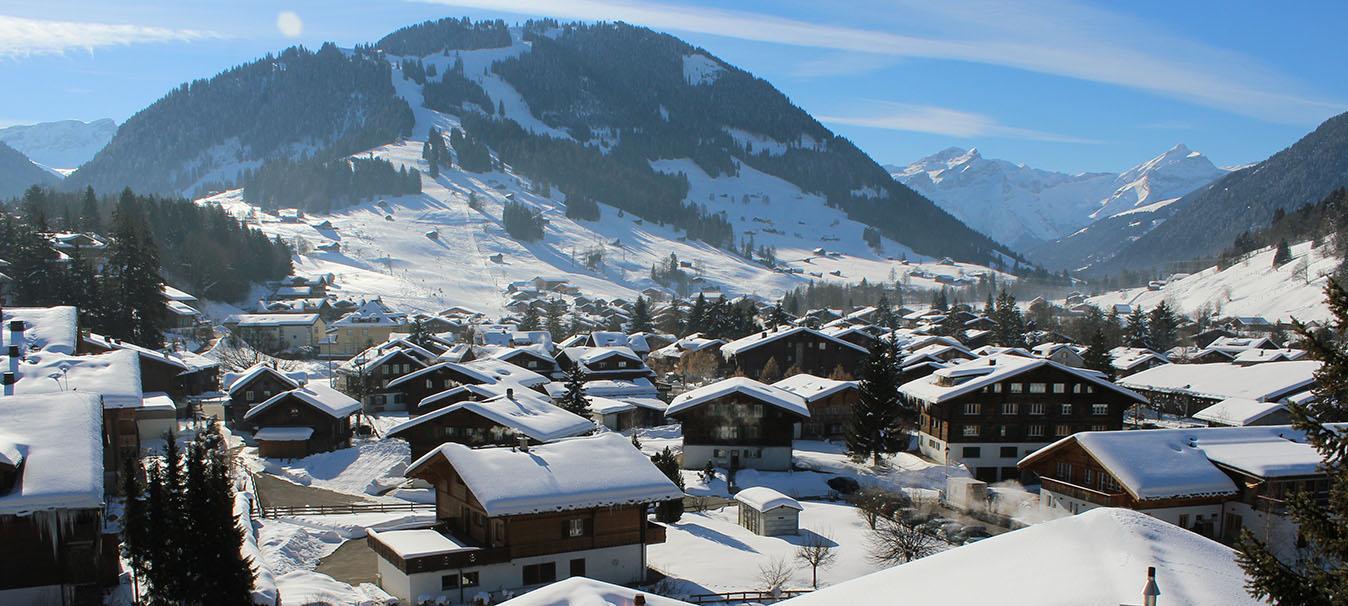
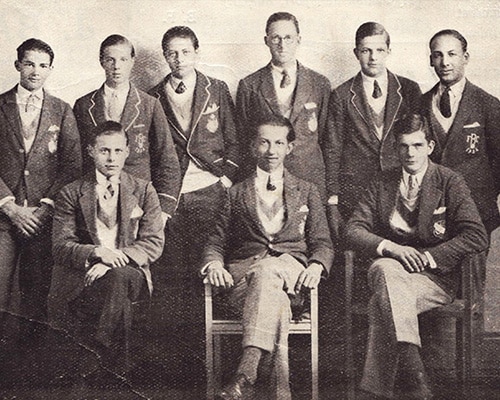
In 1911, the founder passed the ownership of Le Rosey to his son, Henri-Paul Carnal. In 1917, the school began its now-legendary practice of going to Gstaad during the winter months — specifically to escape the dense fog that settles over Lake Geneva. In 1931, Lucien Brunel, a former member of the International Red Cross, took on the direction of Rosey until 1949. By 1947, the third generation of directors, Louis Johannot and Helen Schaub, assumed ownership of Le Rosey. Under their stewardship, Le Rosey admitted girls for the first time in 1967 on a separate campus. In 1980, Philippe and Anne Gudin de la Sablonnière became the fourth generation of directors.
In 2015, Christophe Gudin, son of the fourth director Philippe Gudin, became the fifth director. Kim Kovacevic is the headmaster. Five generations. One family. One school. That tells you everything about the institutional depth Le Rosey operates with.
The Two-Campus System: The World’s Only Migratory School
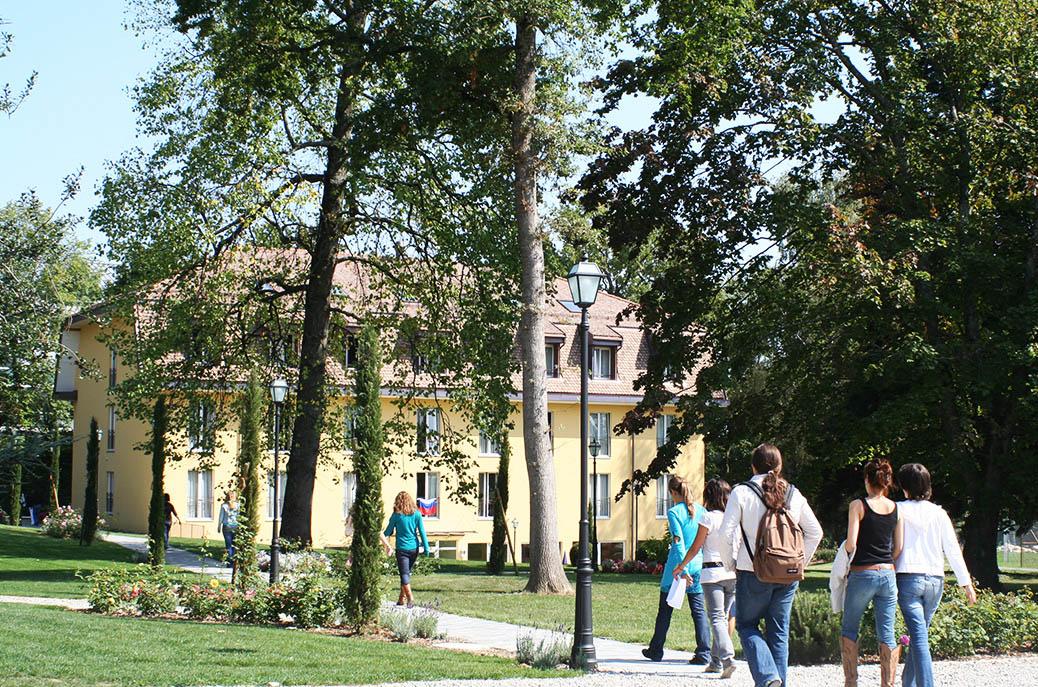
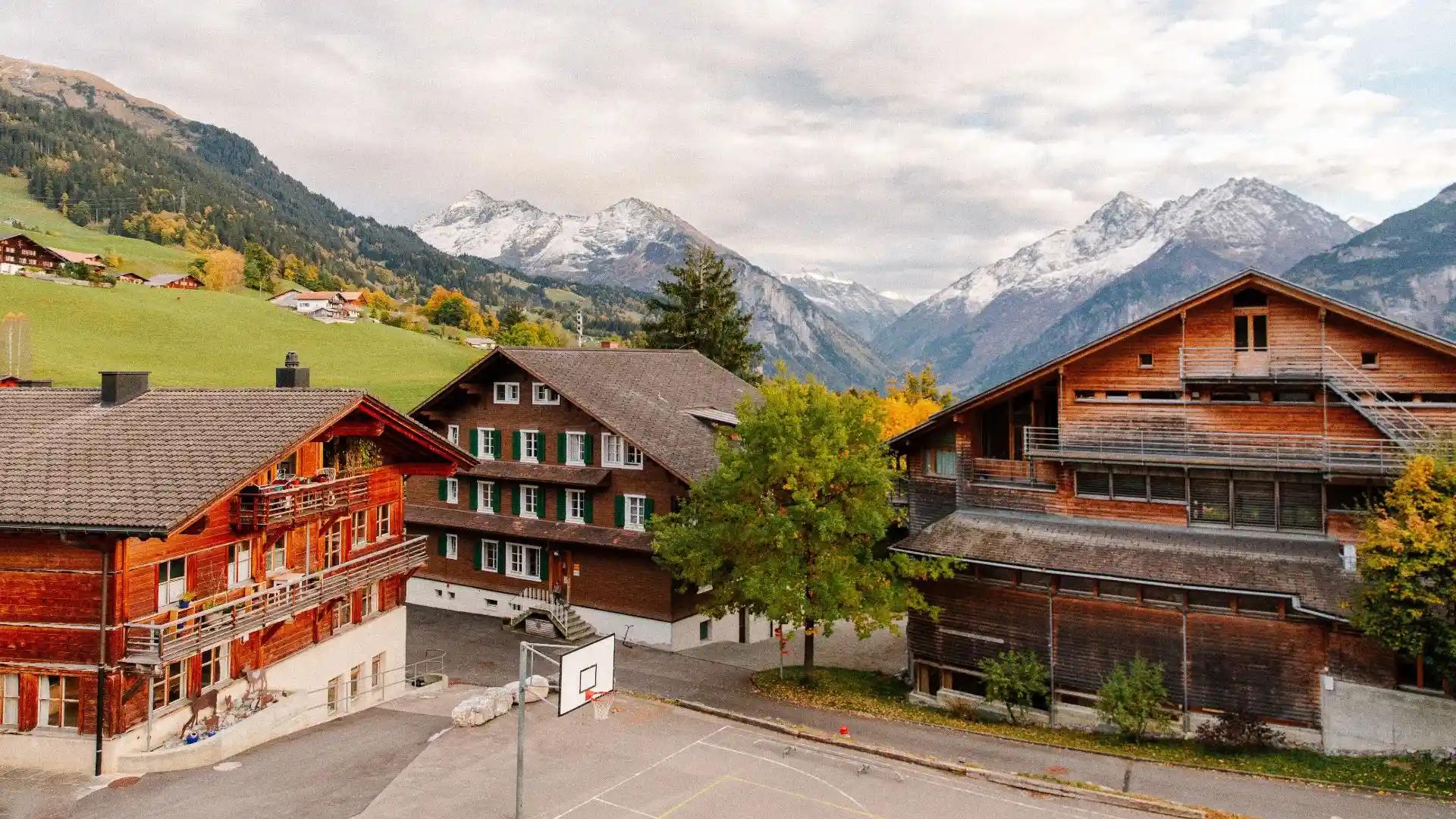
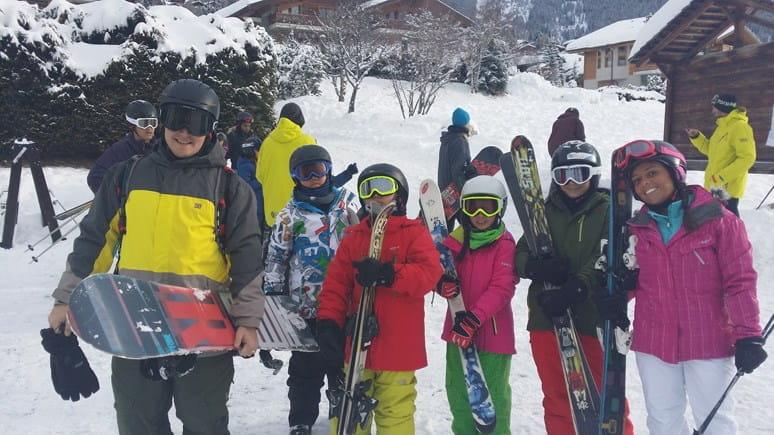
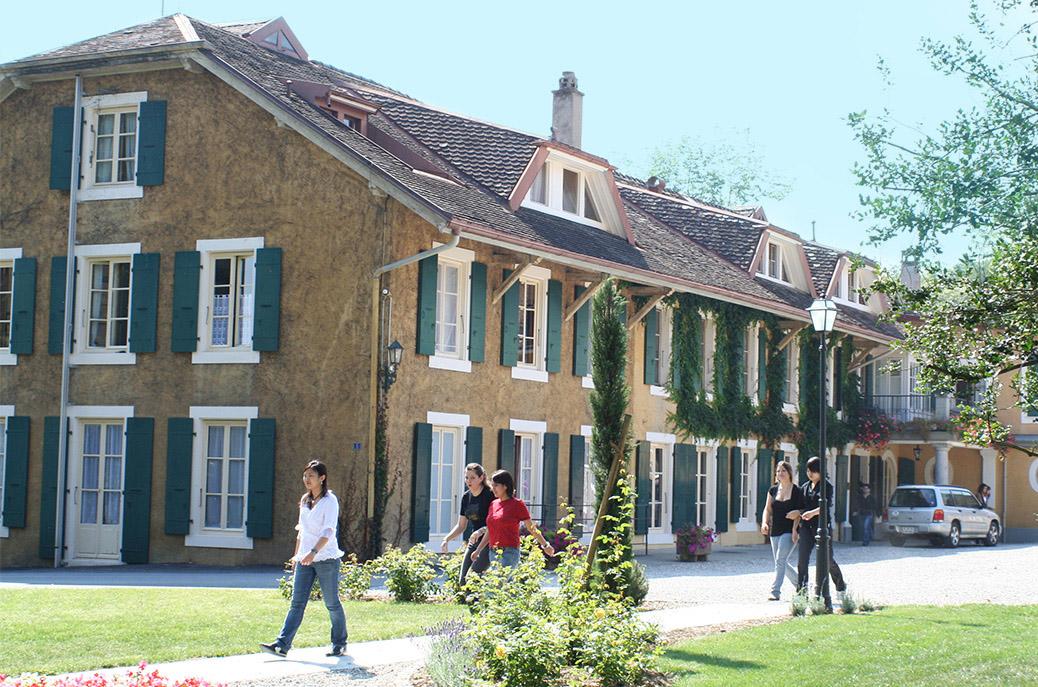
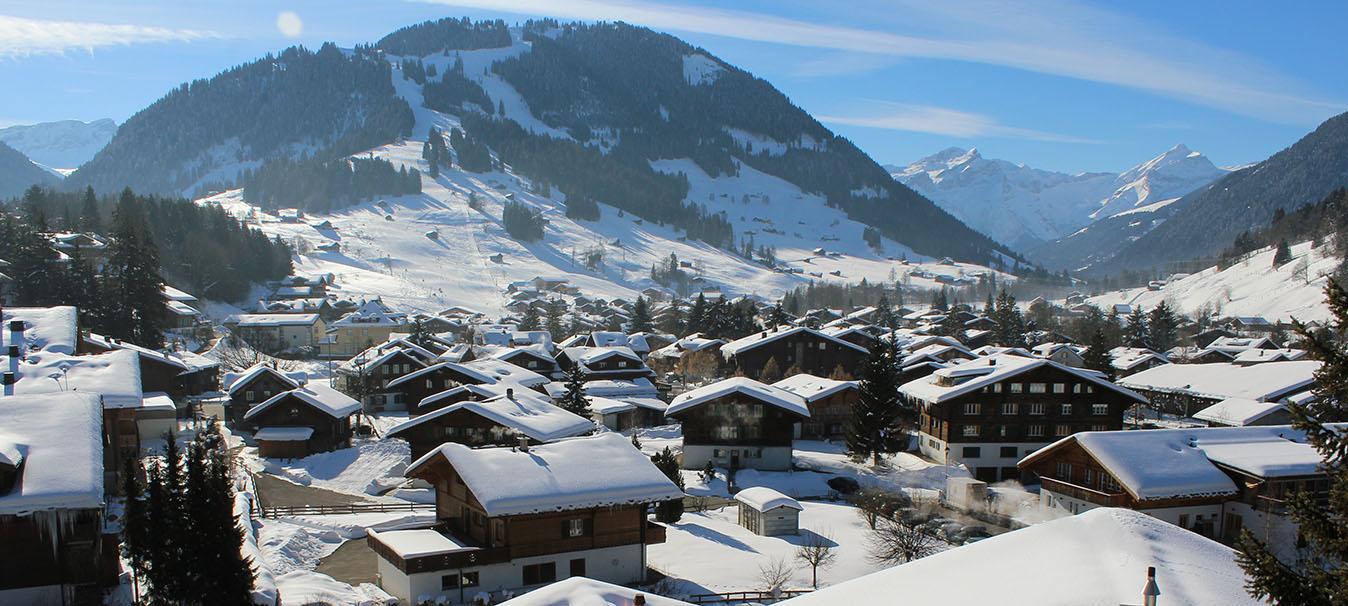
This is the detail that turns heads. Le Rosey is reportedly the only boarding school in the world to change campuses seasonally. In spring and autumn, classes are held at the Château du Rosey campus in Rolle, located between Geneva and Lausanne. For the winter months of January through March, the entire student body moves to a group of chalets in the ski resort town of Gstaad in the Canton of Bern.
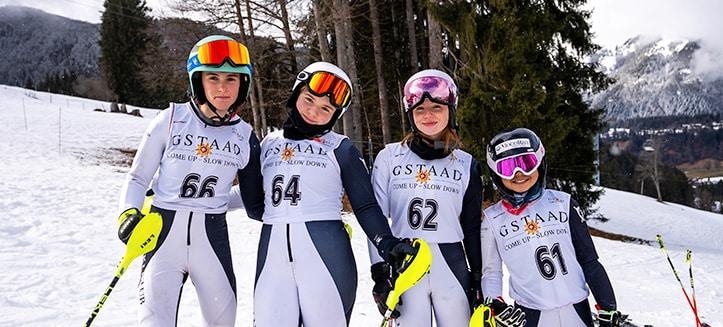
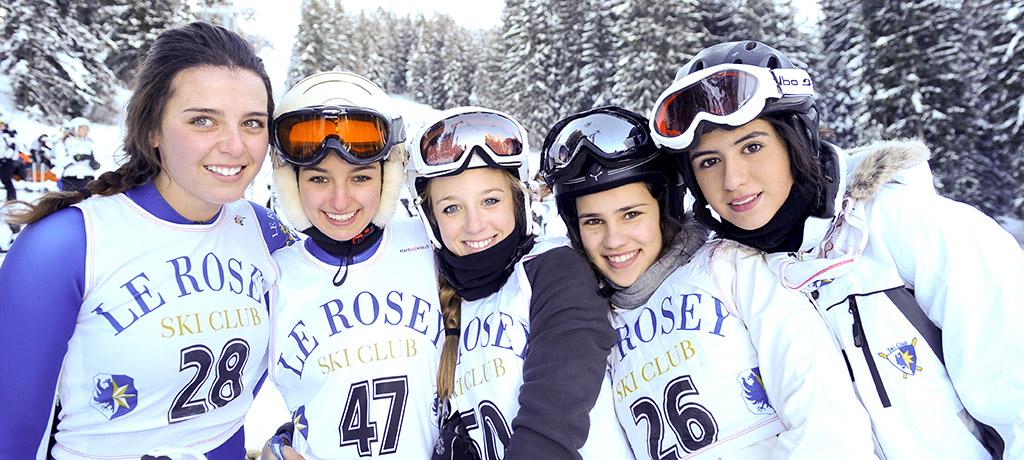
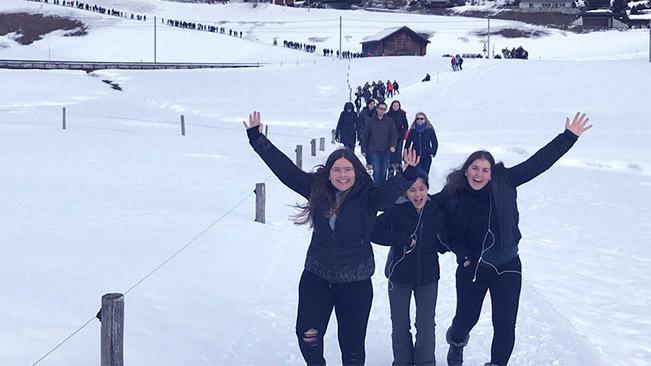
This is not a day trip or optional excursion. Every student, every teacher, every administrator — and reportedly even the horses — make the journey. In January, the entire school — students, teachers, administration, horses, and equipment — relocates to the Alps for the winter term. Skiing is central to campus life in Gstaad, with daily ski instruction on world-class pistes, but academic studies continue in full alongside winter sports.
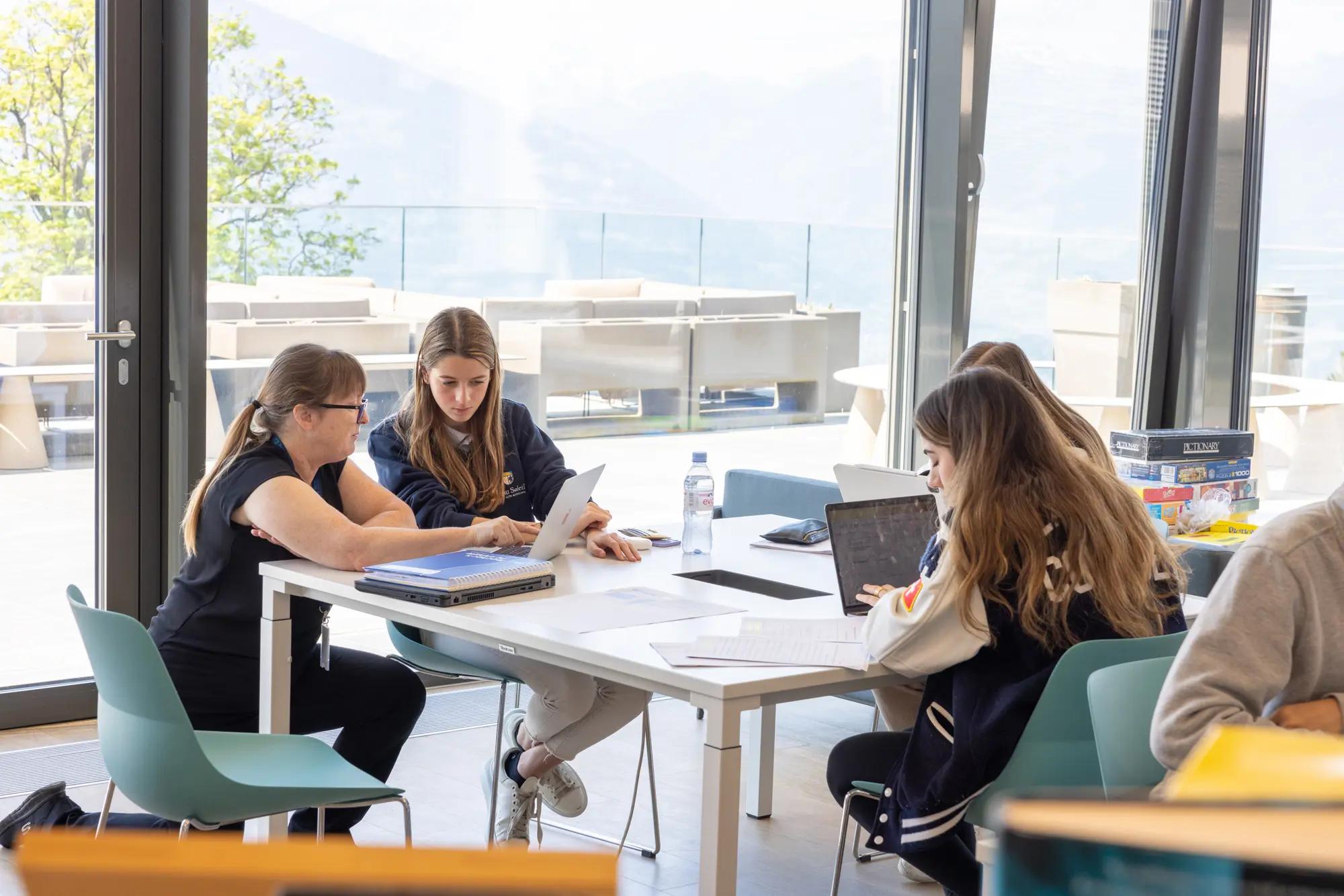
The Rolle Campus sits on 28 hectares of landscaped grounds adjacent to Lake Geneva. It boasts two swimming pools, tennis courts, a school yacht, shooting range, an equestrian centre, and a recently completed £40 million concert hall which resembles a spacecraft and has hosted the Royal Philharmonic Orchestra. The school’s sailing centre, the “Fleur d’Eau”, sits along 100 metres of shoreline on the lake itself.
In mid-2025, a new structure called the φLo (Philo) building opened on the Rolle campus. This 16,000-square-metre hub is dedicated to adaptive learning, reflecting Le Rosey’s investments in flexible, technology-integrated spaces amid growing enrollment demands for a student body exceeding 400.
The seasonal migration is a 140-year-old tradition that shapes the Rosey identity in ways no classroom lesson can. When two students from different countries discover they have both struggled through the same foggy lake campus and the same Alpine chalet term, that becomes a bond that survives decades.
The Money: What ₹1.5 Crore Per Year Buys
Let’s be direct.
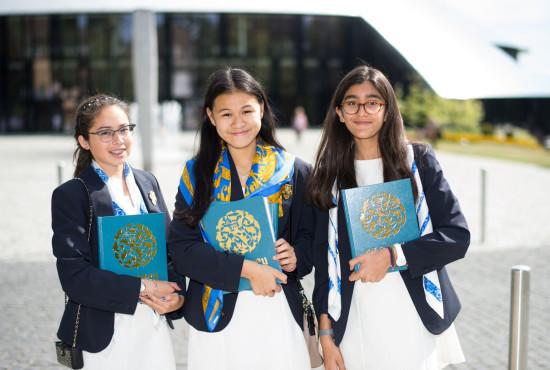
With annual boarding and tuition fees of CHF 159,600 for the 2026–2027 academic year, Le Rosey ranks among the world’s most expensive schools, attracting children of royalty, business leaders, and high-net-worth individuals. At current exchange rates, that translates to approximately ₹1.5 crore per year — every year, from age 8 through 18 if you start early.
For candidates applying to Le Rosey for the school year, a non-refundable one-time registration fee of CHF 3,000 is payable. If the child is admitted, a deposit of CHF 54,000 is required within 30 days of the decision for the place to be confirmed.
At a six-year secondary school career, families should budget for CHF 780,000 to CHF 930,000 in total educational investment — before living and travel costs. That is roughly ₹7 to ₹9 crore across a school education. Not college. Not a postgraduate degree. School.
Le Rosey does not ask for, nor does it accept, donations for school development of any kind. Le Rosey does not pay agents or intermediaries; families who use their services will pay them directly, and agents have no influence over admissions decisions.
That last clause is significant. You cannot buy your child’s admission here through a back channel. Connections won’t open the door. A strategic donation to the new building won’t work. The school insists on evaluating the child directly.
The Admissions Filter: Money Is Necessary, Not Sufficient
Le Rosey’s admission book outlines a series of rules and requirements that a ward must fulfil in order to be enrolled. This includes demonstrating that a child will be able to handle the academic workload of their chosen programme. Proficiency in English and/or French is required, with fluency typically increasing with age. The student must not be ‘spoiled’, racist, violent or have any severe learning disability. Students must also have an impeccable academic record and a ‘good enough’ reason as to why they want to study at Le Rosey.
There are very few vacant places in the school, so applicants should take care of their admission in advance — 2 to 3 years before the expected start of classes. From each country, no more than 40 students per year are admitted.
Scholarships exist, but they are rare. The Rosey Foundation offers scholarships to students who are especially talented either academically or artistically and who are interested in attending Le Rosey but whose parents cannot cover all the fees. These are not marketing props — they are genuinely limited and fiercely competitive.
The Curriculum: What the Fee Actually Teaches
Le Rosey is not a glorified networking event dressed as school. The academic architecture is genuinely thoughtful.
Le Rosey is an authorised IB World School offering the IB Diploma Programme for students aged 16–18. As an alternative, senior students may pursue the Swiss Federal Maturité — Switzerland’s national university entrance qualification, highly respected by European universities and opening doors to Swiss higher education institutions including ETH Zurich and EPFL.
Le Rosey is a bilingual and multicultural educational institute, with several students studying three to four languages, as over twenty languages are taught at Le Rosey. A total of 400 students are currently enrolled in the school, taught by 90 teachers and assisted by 200 staff members, resulting in an extremely healthy student-to-teacher ratio of 4.4:1. The teachers are also provided with equal facilities on campus, leading to every faculty member’s tenure exceeding a decade.
Think about what that ratio means in practice. A class of 20 students, 90 teachers across the school. Every child is genuinely known by name. The long faculty tenure means institutional continuity and real relationship-building — not the revolving door of teachers that most schools normalise.
According to reports, a maximum of 10 per cent of the student body can be from a particular country, resulting in students from 58 different countries learning at Le Rosey. This is not diversity theatre. This is structural architecture for cross-cultural intelligence — the single most valuable skill the children of the global elite need.
Ownership: The Gudin Family
Le Rosey is privately owned — not by a corporation, not by a trust, not by the Swiss government. It has been passed down through family lines across five generations. The controlling family today is the Gudin de la Sablonnière family.
The director of the school is Christophe Gudin, a former McKinsey management consultant who began to take over — from his father Philippe — in 2014 when he was just 28. Christophe’s sister Marie-Noelle also works at the school, as did his mother Anne.
Simultaneously a global institution and a family business — one of the more unusual ownership structures in elite education anywhere in the world. The Gudins do not run a charity. They run a legacy.
The Alumni: Kings, Billionaires, Spies, and Rock Stars
This is where Le Rosey stops being merely a school and starts being a civilisational institution.
Royalty and Heads of State: King Juan Carlos of Spain, King Fuad II of Egypt, and King Albert II of Belgium were all students. As were Prince Rainier of Monaco, the Duke of Kent, the Shah of Iran, the Aga Khan, and Princess Marie-Chantal of Greece — not to mention her sisters Pia Getty and Alexandra von Fürstenberg.
Dynasties: Le Rosey has educated generations of dynastic families, including members of the Hohenzollern, Cavendish, Rothschild, Koskull, Metternich, Borghese, Hohenlohe, Molson, Rockefeller, Niarchos, Safra, Du Pont and Radziwiłł families.
Entertainment: Tracee Ellis Ross, actress and daughter of Diana Ross, attended Institut Le Rosey during her teenage years in the late 1980s. She gained prominence for starring in the ABC sitcom Black-ish (2014–2022), earning a Golden Globe for Best Actress in a Television Series Musical or Comedy in 2017.
Nick Valensi, guitarist and songwriter for The Strokes, attended Le Rosey during his early teens, where he first met bandmate Julian Casablancas and bonded over music interests. Two members of one of the defining indie rock bands of the early 2000s met at the world’s most expensive school. You genuinely could not make this up. John Lennon’s son Sean Lennon is also a former Rosean, as are the children of Elizabeth Taylor.
Intelligence: Richard McGarrah Helms attended Institut Le Rosey during his early education in Switzerland, where he developed proficiency in French and German. He later served as Director of Central Intelligence from June 30, 1966, to February 2, 1973, managing operations amid Cold War tensions including the Vietnam conflict and covert activities. The CIA’s most consequential peacetime director learned his languages at Le Rosey.
Tech: Nicholas Negroponte, founder and Chairman Emeritus of the MIT Media Lab, is an alumnus.
Institut Le Rosey has over 5,000 former students. The school’s alumni list is not publicly published — access to AIAR events and meetings is exclusive to former students. On graduation, Le Rosey alumni gain access to a private online portal with the contact details of almost every other living former pupil — a network that, ordinarily, money could not buy.
The Indian Connection: Pride, Pain, and a Lawsuit
The Most Notable Indian Alumnus:
Sonu Shivdasani — the Indian-origin British actor, producer, and founder of the Soneva luxury resort empire — is a confirmed Rosean. He is, to date, the most publicly identified person of Indian origin who attended Le Rosey. His trajectory from Le Rosey to a global luxury brand is itself a Rosey archetype.
The Oswal Lawsuit: India’s Highest-Profile Le Rosey Story
In 2020, a story broke that shook the school’s carefully maintained facade. Indian-origin billionaire parents Radhika and Pankaj Oswal alleged that their daughter, a student of Institut Le Rosey, was subjected to bullying and harassment by classmates. The parents accused the school of failing to protect their daughter from bullying, which ultimately led to serious cyber harassment of the young teen. The couple claimed their daughter suffered from anxiety attacks and insomnia.
The Oswals, whose fortune is estimated at £1.5 billion, had toured the Lake Geneva campus in 2012 and found it perfect. ‘What you are paying is like $500 per night,’ says Radhika. ‘It’s like staying at a Four Seasons hotel, so we were hoping for care like that.’
What makes the story larger than one family’s dispute is what Radhika said publicly: “It is unfortunate that we have heard of other Indian students being taunted for their ethnicity, shockingly even by a member of the faculty. It is sadder that many Indian parents continue the education of their children in this school, despite their children being told disrespectful and racist remarks such as that India is the dustbin of Asia, and that Indian parents look like sweepers.”
An independent report by cyberbullying expert Elizabeth K. Englander, commissioned by the Oswals, highlighted institutional negligence, noting the school’s inadequate response to documented complaints, such as not isolating perpetrators or implementing restorative measures, which exacerbated the victim’s isolation.
Le Rosey maintained that student safety is its top priority, with established conduct policies, conceding isolated bullying incidents but rejecting claims of systemic failure. Critics, including the Oswals, argued this reflects a broader ethical lapse where high fees — totaling approximately $1 million over six years for the family — do not translate to proportional accountability.
The Oswal case reveals a fundamental tension at the heart of Le Rosey’s promise. The school sells itself as a global community of mutual respect, but when children from genuinely non-Western elite backgrounds arrive, old hierarchies reassert themselves in corridors and dormitories. CHF 159,600 per year does not automatically purchase belonging.
The Verdict: The School of Kings in a Multipolar World
Institut Le Rosey sells three things. The first is education — genuinely bilingual, internationally rigorous, and holistically designed. The second is environment — two extraordinary campuses, world-class facilities, an atmosphere of structured global diversity. The third, and most honestly, is network access — the AIAR portal, the lifelong connections with royalty and billionaires, the signal that comes from being a Rosean at all.
For families who can afford the CHF 159,600 without stretching, the first two are genuinely exceptional. But the network is what really drives the decision. And that is both Le Rosey’s greatest asset and its most uncomfortable truth.
Le Rosey was designed for a world where European royalty and old-money dynasties set the cultural and economic agenda. That world is ending. The rise of Indian, Chinese, Gulf, and Southeast Asian wealth means the students increasingly populating its classrooms come from civilisations with their own long histories, their own aristocratic traditions, their own definitions of what it means to lead. The 10% nationality quota is a structural acknowledgement of this reality — but quotas don’t change culture. Culture changes only when institutions decide they want to change.
The “School of Kings” will eventually have to reckon with the fact that the 21st century’s kings are not from the same genealogical tradition as the 20th century’s.
When that reckoning comes in full, the school that handles it most gracefully will have earned every franc of its fee.
Institut Le Rosey, as of 2026, is still figuring that out.
Quick Reference
| Founded | 1880, Paul-Émile Carnal, Rolle, Switzerland |
| Current Director | Christophe Gudin (5th generation, since 2015) |
| Ownership | Gudin family (private) |
| Campuses | Rolle (Lake Geneva) — spring & autumn · Gstaad (Alps) — Jan to March |
| Students | ~400, ages 8–18, 65+ nationalities |
| Teachers / Staff | 90 teachers, 200 staff, ~4.4:1 student-teacher ratio |
| Annual Fees (2026–27) | CHF 159,600 (~₹1.5 crore / ~$175,000) |
| Curriculum | IB Diploma or French Baccalaureate |
| Languages taught | 20+, bilingual French/English instruction |
| Indian Alumnus of Note | Sonu Shivdasani (actor / Soneva resort founder) |
| Indian Controversy | Pankaj & Radhika Oswal bullying lawsuit, 2020 |
| Total Living Alumni | 5,000+ (private network via AIAR) |
Nishani writes at nishani.in on geopolitics, economics, Indian culture, and entrepreneurship.
Comments

Hi, I’m Nishanth Muraleedharan (also known as Nishani)—an IT engineer turned internet entrepreneur with 25+ years in the textile industry. As the Founder & CEO of "DMZ International Imports & Exports" and President & Chairperson of the "Save Handloom Foundation", I’m committed to reviving India’s handloom heritage by empowering artisans through sustainable practices and advanced technologies like Blockchain, AI, AR & VR. I write what I love to read—thought-provoking, purposeful, and rooted in impact. nishani.in is not just a blog — it's a mark, a sign, a symbol, an impression of the naked truth. Like what you read? Buy me a chai and keep the ideas brewing. ☕💭 For advertising on any of our platforms, WhatsApp me on : +91-91-0950-0950 or email me @ support@dmzinternational.com