
Your Body Has a New Boss. It Might Not Be You
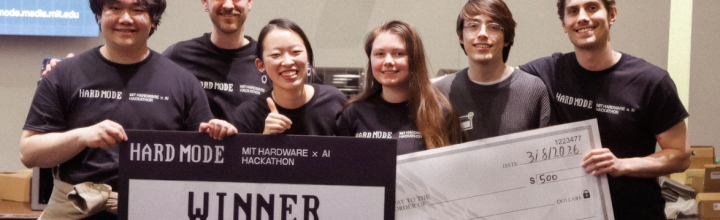
A small team at MIT just spent 48 hours building something that will either save millions of lives or become the most terrifying technology since the internet. Possibly both.
The project is called Human Operator. The concept is deceptively simple: a camera watches what you see, an AI model interprets the scene and decides what movement is needed, and electrical pads strapped to your wrist fire signals directly into your muscles. Your fingers move. Not because you told them to. Because the machine did.
They demoed it playing a piano melody. Waving. Making hand gestures. Assisting with drawing movements. None of it required the person wearing the device to know a single thing about what they were doing.
Let that sit for a moment.
The body already knows how to do this.
Here is what most people miss in the rush to debate the ethics: your muscles are not the limitation. They never were. A concert pianist and a person who has never touched a keyboard have nearly identical hands. The difference is neural — the trained pathways, the rehearsed signals, the thousands of hours of instructions the brain has learned to send.
What MIT’s team essentially built is a shortcut around that learning process. Not a perfect one. Not even a clean one — this is 48-hour hackathon engineering, not a finished product. But the proof of concept is undeniable. The body is already capable. The bottleneck has always been the software running it.
That reframe matters. Because it means the ceiling on this technology is not “can we make it work?” It is “how far do we want to take it?”
The use cases that should make you optimistic.
Stroke survivors. Spinal cord injury patients. People with Parkinson’s, MS, ALS. The millions of humans who sit inside bodies that have partially or fully stopped obeying them — not because the muscles failed, but because the signal chain between brain and limb was severed or degraded.
Physical therapy is brutal, slow, and emotionally punishing. Progress is measured in millimetres over months. A system that can physically guide a recovering hand through the correct movement — repeatedly, patiently, consistently — and retrain the neuromuscular pathway through repetition is not a gimmick. It is potentially one of the most meaningful rehabilitation tools ever built.
Surgeons in training. Factory workers learning precision tasks. Musicians recovering from repetitive strain injuries. The applications stack fast once you accept the premise.
The use case that should make you lose sleep.
Consent.
Right now, you are the only one who decides when your hand moves. That is so fundamental an assumption about bodily autonomy that most people have never even articulated it as a belief — it simply exists as fact. You reach for something because you chose to.
Human Operator, in its current form, requires you to wear the device voluntarily. But technology has a habit of outrunning the governance structures meant to contain it. The history of every powerful tool — from the internet to social media to surveillance cameras — follows the same arc: invented with good intentions, scaled without adequate safeguards, weaponised by the time anyone thought to write the rules.
An advanced version of this technology, deployed without consent, covertly, or through coercion, is not a dystopian thought experiment. It is an engineering problem that someone, somewhere, is already thinking about solving for the wrong reasons.
The honest conclusion.
This is not “download skills into your body” technology. Not yet. What MIT built in 48 hours is rough, limited, and nowhere close to the sci-fi version of itself.
But the direction is unmistakable. The gap between “proof of concept” and “deployed at scale” has never been smaller in the history of technology. We have, on average, closed that gap faster with each successive wave of innovation.
The question is not whether this will become powerful. It will.
The question is whether the people building it will think as hard about what it must never be allowed to do as they do about what it can.
Your body has always been yours. Make sure it stays that way.
Comments

Hi, I’m Nishanth Muraleedharan (also known as Nishani)—an IT engineer turned internet entrepreneur with 25+ years in the textile industry. As the Founder & CEO of "DMZ International Imports & Exports" and President & Chairperson of the "Save Handloom Foundation", I’m committed to reviving India’s handloom heritage by empowering artisans through sustainable practices and advanced technologies like Blockchain, AI, AR & VR. I write what I love to read—thought-provoking, purposeful, and rooted in impact. nishani.in is not just a blog — it's a mark, a sign, a symbol, an impression of the naked truth. Like what you read? Buy me a chai and keep the ideas brewing. ☕💭 For advertising on any of our platforms, WhatsApp me on : +91-91-0950-0950 or email me @ support@dmzinternational.com


