Switzerland: How a Landlocked Country With No Resources Became One of the Richest Nations on Earth
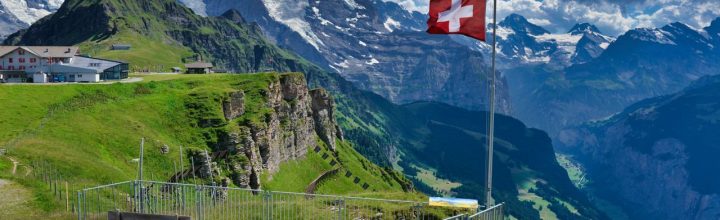
Switzerland sits in the middle of Europe with no coastline, no oil, no gold mines, and almost no useful minerals. Most of its land is steep mountains where farming is hard. By every old rule of economics, it should have stayed poor. Yet today it is one of the richest countries in the world. Its GDP per capita is around $116,000 (nominal, 2025), several times higher than most of its European neighbours. People across the world now dream of settling there.
So how did a small, resource-poor, landlocked country reach the top? The answer is not luck. It is a series of deliberate choices made over many centuries. Let me lay them out.
Step 1: They turned weakness into a strategy — neutrality
Switzerland is surrounded by powerful neighbours: France, Germany, Italy, and Austria. For most of history, this would have meant constant war and ruin. Instead, the Swiss chose permanent neutrality, formally recognised in 1815 after the Napoleonic wars.
This single decision changed everything. While Europe burned through two World Wars and destroyed its factories and cities, Switzerland stayed out. Its industry, banks, and infrastructure survived intact. When the rest of Europe had to rebuild from zero, Switzerland was already running. Neutrality was not weakness. It was the foundation of long-term wealth.
Step 2: They built trust as a product
Because Switzerland was safe and stable, it became the place where the world stored its money. Swiss banks offered strong privacy laws and political stability. Rich people, companies, and even governments parked their wealth there.
This created a giant financial industry. Banking, insurance, and asset management became one of the country’s biggest earners. The “product” Switzerland sold was not a thing you could touch. It was trust. And trust, once built, is very hard for competitors to copy.
Step 3: They went for high value, not high volume
Switzerland could never compete on cheap mass production. It has a small population (about 9 million) and high labour costs. So it made a smart choice: do not make cheap things, make the best things.
Today its industry is built on chemicals, pharmaceuticals, precision instruments, medical devices, and electronics. Companies like Roche, Novartis, and Nestlé are global giants. Swiss watches are a symbol of quality worldwide. The idea is simple but powerful: if you cannot make a million cheap items, make one expensive item that nobody else can match.
Step 4: They invested heavily in skills and innovation
A country with no natural resources has only one real resource: its people. Switzerland understood this early. It built one of the best education systems in the world, including a strong apprenticeship model that trains young people directly for skilled jobs.
It also invested heavily in research and development. The result speaks for itself: Switzerland ranked first in the Global Innovation Index in 2025. When you have no oil under the ground, you dig for ideas instead.
Step 5: They kept government stable, clean, and decentralised
Switzerland runs on a system of 26 cantons with strong local power and direct democracy, where citizens vote on many decisions themselves. This keeps government close to the people and hard to capture by any single group.
It also kept corruption very low and the legal system transparent and predictable. For businesses, this is gold. A company can plan for 20 years ahead because it trusts the rules will not suddenly change. Low corporate taxes added to the appeal, pulling in multinational headquarters from around the world.
Step 6: They protected their currency and kept inflation low
The Swiss franc is one of the most trusted currencies on earth. In times of global crisis, investors rush to it as a safe place. The country kept inflation extremely low (around 0.6% in 2026) and managed its money with great discipline. A strong, stable currency made the whole nation a financial safe harbour.
Where Switzerland stands today
The numbers tell the story. The economy is now driven almost entirely by services (about 74%) and high-value industry. Its biggest strengths remain pharmaceuticals, finance, precision manufacturing, and luxury tourism. Unemployment is low, living standards are among the highest anywhere, and the country topped the U.S. News Best Countries ranking.
But it is not a perfect paradise. The cost of living is very high. Housing is expensive. And despite the wealth, around 8% of people still live in poverty, a reminder that high averages can hide real struggles.
What about the future?
Switzerland faces real questions ahead. Global pressure on banking secrecy has forced it to become more transparent, weakening one old advantage. Its relationship with the European Union, which it is not a member of, remains complicated and must be constantly managed. An ageing population and heavy reliance on a few big industries are risks too.
Yet its core strengths — stability, trust, skilled people, and a habit of choosing quality over quantity — are not going away. These are not things you find in the ground. They are things you build, decision by decision, generation by generation.
The real lesson
Switzerland proves something important. Wealth does not come from what nature gives you. It comes from what you choose to build. No gold, no oil, no sea, no easy land — and still, one of the richest nations on Earth.
The mountains did not make Switzerland rich. The choices did.
Comments

Hi, I’m Nishanth Muraleedharan (also known as Nishani)—an IT engineer turned internet entrepreneur with 25+ years in the textile industry. As the Founder & CEO of "DMZ International Imports & Exports" and President & Chairperson of the "Save Handloom Foundation", I’m committed to reviving India’s handloom heritage by empowering artisans through sustainable practices and advanced technologies like Blockchain, AI, AR & VR. I write what I love to read—thought-provoking, purposeful, and rooted in impact. nishani.in is not just a blog — it's a mark, a sign, a symbol, an impression of the naked truth. Like what you read? Buy me a chai and keep the ideas brewing. ☕💭 For advertising on any of our platforms, WhatsApp me on : +91-91-0950-0950 or email me @ support@dmzinternational.com