India Wants to Make Chips. Few People Understand What That Really Takes.
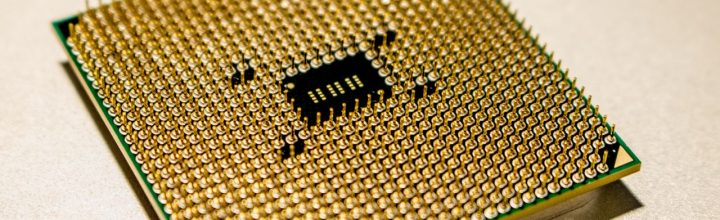
Ashwini Vaishnaw recently told a room full of startups that India will move from a “services nation” to a “product nation” on the back of chip making. The government now backs 24 fabless design startups and wants 50. He is right that design is where India’s real edge lies. We have the engineering brains, and design needs minds more than billion-dollar factories.
But here is the question nobody on stage asks. A chip design is just a file. To turn that file into a working chip, you need a factory called a fab — and almost no one talks about how brutally hard a fab is to build and run.
A factory cleaner than a hospital
Most people picture a chip factory as a big shed with machines. The truth is closer to a sealed laboratory where the rules of normal industry do not apply.
If the power supply fluctuates even slightly, a batch of chips can be ruined. If a heavy truck drives on a nearby road, the vibration alone can destroy what is being made. The factory floor must be cleaner than an operating theatre in a hospital. A single dust particle landing in the wrong place ruins the chip. The air is filtered, the temperature is fixed, the floor does not shake, and the power never wavers. This is not manufacturing as we know it. It is precision at a level few industries on Earth ever attempt.
And the scale of that precision is hard to imagine. A modern transistor is about ten thousand times smaller than a human hair. It is roughly six hundred times smaller than a single red blood cell. Now arrange billions of these on one chip, each placed with near-atomic accuracy, with almost no mistakes. That is the job a fab does every single day.
How Taiwan came to rule the world
Taiwan was not always the centre of this universe. In the early 1980s it was known for cheap, low-end manufacturing, and it wanted to climb higher.
The turning point came through one man. Morris Chang had spent 25 years at Texas Instruments in the United States, rising to lead its global semiconductor business. But he was passed over for the top job. After a short period elsewhere, the Taiwanese government invited him to come and build a high-tech industry from scratch. He said yes. In 1987, Chang founded the Taiwan Semiconductor Manufacturing Company — TSMC.
His idea sounded strange at the time. He would not design or sell his own branded chips. He would only manufacture chips that other companies designed. A pure “foundry.” People doubted it. Today that doubt looks foolish.
TSMC now makes the most advanced chips in the world, down to three nanometres and five nanometres. The processor in your iPhone, Nvidia’s AI chips that power the global AI boom, AMD’s processors — a huge share of them are made in Taiwan. Apple, Nvidia, AMD and many others depend on TSMC to stay in business. One company, on one island, sits at the centre of the modern economy. That is how completely Taiwan mastered the hardest part of this game.
So where is India?
India is being honest about its starting point, even if the headlines are not. India is not trying to make three-nanometre chips. The realistic targets are the older, larger nodes — somewhere between roughly 10 nanometres and well over a hundred nanometres.
These are not glamorous AI processors. But do not dismiss them. These chips are the backbone of the real economy. They run passenger cars, industrial machines, telecom equipment, defence systems and power management for everything from homes to factories. A country that can make these reliably owns a huge and durable market. It is the right place to start. We are late, but a sensible late start is far better than a fantasy.
Why almost no country can do this
Here is the part that should make us humble. Even rich, developed countries cannot easily build this. The United States, Europe, Japan — they too depend heavily on TSMC. If it were simply a matter of money, they would have copied Taiwan long ago.
The roadblocks are the same everywhere. The cost of one advanced fab runs into tens of billions of dollars. The machines that print these patterns are made by only a handful of companies in the world, and there is a long waiting line. The know-how cannot be bought; it is built over decades through millions of small lessons learned on the factory floor. The talent takes years to train. And the supply chain — the special chemicals, gases, water purity and equipment — has to exist nearby. Miss any one piece and the whole effort stalls.
This is why chip making is less like building a factory and more like building an entire ecosystem, brick by brick, over a generation.
The honest verdict
So when the minister celebrates 50 design startups, the celebration is real — but it is the easy half. Design is brains. Manufacturing is brains plus billions plus decades plus an ecosystem that does not yet exist on Indian soil.
The day an Indian company designs a chip and makes it at a competitive level inside India — that is the real headline. Until then, “product nation” is a promise resting on foreign factories.
The talent is here. The hard, expensive, unglamorous half is not yet. The question for the next ten years is simple: are we willing to pay the full price of the part that does not photograph well?
What do you think — can India catch up, or will the world keep depending on one small island?
Comments

Hi, I’m Nishanth Muraleedharan (also known as Nishani)—an IT engineer turned internet entrepreneur with 25+ years in the textile industry. As the Founder & CEO of "DMZ International Imports & Exports" and President & Chairperson of the "Save Handloom Foundation", I’m committed to reviving India’s handloom heritage by empowering artisans through sustainable practices and advanced technologies like Blockchain, AI, AR & VR. I write what I love to read—thought-provoking, purposeful, and rooted in impact. nishani.in is not just a blog — it's a mark, a sign, a symbol, an impression of the naked truth. Like what you read? Buy me a chai and keep the ideas brewing. ☕💭 For advertising on any of our platforms, WhatsApp me on : +91-91-0950-0950 or email me @ support@dmzinternational.com