
When the Earth Gives No Warning: The Venezuela Earthquake That Exposed One of Science’s Greatest Unsolved Mysteries
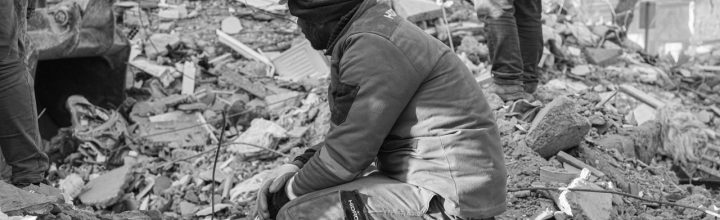
On June 24, 2026, the ground beneath Venezuela turned into a terrifying reminder that despite all our technological achievements, nature still holds secrets beyond human control.
Within less than a minute, two powerful earthquakes measuring 7.2 and 7.5 struck western Venezuela, creating one of the most significant seismic events the country has experienced in recent history. The stronger quake occurred at a relatively shallow depth, making the shaking far more intense at the surface. Buildings trembled violently, roads cracked, communication networks were disrupted in some areas, and frightened residents poured into the streets fearing that stronger aftershocks were still to come.
Emergency responders immediately began search and rescue operations. As this article is being written, officials are still assessing the full extent of the disaster, and the final number of casualties remains uncertain. When major earthquakes strike, communication lines, damaged roads and collapsed buildings often delay rescue efforts, meaning the true scale of the tragedy may not become clear for several days.
Yet beyond the destruction lies a question that has puzzled scientists for generations.
If modern technology can predict hurricanes, monitor volcanic eruptions, track asteroids millions of kilometres away and even land spacecraft on distant planets, why can it still not predict earthquakes?
The Venezuela disaster reminds us that one of nature’s greatest mysteries remains unsolved.
A Country Living Above Moving Continents
Venezuela, located on the northern coast of South America, is home to nearly 29 million people. Its capital city, Caracas, is one of the continent’s largest metropolitan areas and lies approximately 160 kilometres east of the earthquake’s epicentral region.
The country is best known for its vast oil reserves, rich biodiversity and Caribbean coastline. What many people do not realise is that Venezuela also lies close to the boundary between the Caribbean Plate and the South American Plate.
These enormous tectonic plates never stop moving.
Every year they shift only a few centimetres—roughly the rate at which human fingernails grow. That movement seems insignificant until stress builds over decades or even centuries. Then, within seconds, millions of tonnes of rock suddenly rupture, releasing an enormous amount of stored energy.
That energy is what we experience as an earthquake.
Why Did Two Massive Earthquakes Strike?
One unusual feature of this disaster was the occurrence of two major earthquakes within about a minute.
Scientists refer to this as an earthquake doublet.
Sometimes the first rupture transfers stress to a neighbouring fault almost instantly, triggering a second earthquake before people have even realised what happened.
This creates an even greater danger.
Buildings weakened during the first earthquake may collapse during the second. Rescue teams also face greater risks because aftershocks can continue for hours, days or even weeks after the initial event.
Venezuela Has Seen This Before
Although Venezuela is not among the world’s most earthquake-prone countries, earthquakes are far from uncommon.
One of the country’s worst disasters occurred in 1812, when a devastating earthquake destroyed much of Caracas and claimed thousands of lives. Significant earthquakes also struck in 1900, 1967, 1997 and 2018, reminding scientists that the region remains geologically active.
The 2026 earthquake now joins that list as one of the strongest ever recorded in the country’s modern seismic history.
History shows that earthquakes do not respect national borders, political systems or levels of economic development.
They simply occur when geological forces decide the time has come.
Why Was There a Tsunami Warning?
Whenever a powerful earthquake occurs beneath or close to the ocean floor, tsunami warning centres immediately begin analysing the event.
A tsunami is not caused by the shaking itself.
It forms when the earthquake suddenly lifts or lowers a large section of the seabed, displacing an enormous volume of seawater.
These waves travel across the ocean at speeds approaching 800 kilometres per hour—almost as fast as a passenger aircraft.
Out at sea they may appear almost invisible.
But as they approach shallow coastal waters, they slow down, compress and grow dramatically in height, sometimes becoming destructive walls of water capable of sweeping away entire communities.
Fortunately, not every undersea earthquake produces a tsunami. Scientists continuously monitor sea-level gauges and deep-ocean sensors, allowing warnings to be updated or cancelled if the threat decreases.
The Question Science Still Cannot Answer
This disaster once again highlights one of humanity’s greatest scientific limitations.
Weather forecasting has become remarkably accurate because storms develop gradually. Satellites observe clouds, wind patterns, air pressure, ocean temperatures and humidity continuously, allowing computers to simulate how weather systems are likely to evolve over the coming days.
Earthquakes do not behave that way.
They begin several kilometres beneath the Earth’s surface where no satellite can see and no camera can observe.
Scientists know where earthquakes are likely to happen because tectonic plates and fault lines have been carefully mapped.
They simply do not know when.
Imagine slowly bending a thick metal wire.
You know it will eventually snap.
You know approximately where it will break.
But you cannot predict the exact second the break will occur.
Earthquakes behave in much the same way.
Can Artificial Intelligence Predict Earthquakes?
Artificial Intelligence has transformed medicine, finance and transportation.
Naturally, researchers hope it can also solve earthquake prediction.
AI is already helping scientists analyse enormous volumes of seismic data, detect tiny earthquake clusters, improve hazard maps and recognise patterns that humans might overlook.
However, AI faces one major obstacle.
Nature does not provide a consistent warning signal before every earthquake.
Some earthquakes are preceded by foreshocks.
Others are completely silent.
Some release underground gases such as radon.
Others do not.
Some produce tiny ground deformations.
Others occur without any detectable precursor.
Without a universal pattern, even the smartest AI cannot reliably predict the exact day or hour when an earthquake will occur.
Scientists Have Not Given Up
Around the world, researchers continue exploring new possibilities.
Current research includes:
- GPS networks measuring movements smaller than a centimetre.
- Satellites monitoring tiny changes in Earth’s surface.
- Underground sensors detecting stress within rocks.
- Fibre-optic cables that can act as thousands of seismic sensors.
- Electromagnetic field monitoring.
- Groundwater chemistry.
- Radon gas emissions.
- Quantum sensors capable of detecting extremely small changes in gravity.
Some experiments have produced encouraging results.
None has yet demonstrated a reliable method that can consistently predict earthquakes before they happen.
Seconds Can Still Save Lives
Although earthquakes cannot currently be predicted, they can sometimes be detected immediately after they begin.
Countries such as Japan, Mexico and parts of the United States have built sophisticated Earthquake Early Warning Systems.
These systems detect the first, less destructive seismic waves and instantly send alerts before the stronger waves arrive.
People may receive only 5 to 30 seconds of warning, but that brief interval can make an enormous difference.
High-speed trains stop automatically.
Gas pipelines shut down.
Factories halt dangerous machinery.
Hospital operations pause.
Children move beneath desks.
Elevators stop at the nearest floor.
Those precious seconds have already saved thousands of lives.
What Makes Japan So Resilient?
Japan experiences thousands of earthquakes every year, making preparedness part of everyday life.
Buildings are designed to sway rather than collapse.
Schools conduct regular earthquake drills.
Mobile phones receive emergency alerts within seconds.
Strict building regulations ensure that new structures can withstand severe shaking far better than conventional buildings.
Cities are planned with evacuation routes, emergency shelters and disaster response systems that are continuously tested and improved.
Japan cannot prevent earthquakes.
But it has shown that intelligent planning can dramatically reduce the number of lives lost.
The Greatest Scientific Challenge of the 21st Century?
Perhaps the greatest lesson from Venezuela is not about geology.
It is about humility.
Humanity has developed artificial intelligence capable of writing software, spacecraft capable of exploring distant planets and telescopes capable of observing galaxies billions of light-years away.
Yet we still cannot answer one seemingly simple question:
Will the ground beneath our feet shake tomorrow?
Perhaps one day, advances in quantum sensing, satellite technology, artificial intelligence and Earth science will provide the answer.
If that day comes, it may become one of the greatest life-saving discoveries in human history.
Until then, our strongest defence is not prediction, but preparation.
Because nature never sends an invitation.
It simply arrives.
And when it does, it reminds us that despite everything humanity has achieved, the Earth still keeps some of its greatest secrets hidden deep beneath our feet.
Comments

Hi, I’m Nishanth Muraleedharan (also known as Nishani)—an IT engineer turned internet entrepreneur with 25+ years in the textile industry. As the Founder & CEO of "DMZ International Imports & Exports" and President & Chairperson of the "Save Handloom Foundation", I’m committed to reviving India’s handloom heritage by empowering artisans through sustainable practices and advanced technologies like Blockchain, AI, AR & VR. I write what I love to read—thought-provoking, purposeful, and rooted in impact. nishani.in is not just a blog — it's a mark, a sign, a symbol, an impression of the naked truth. Like what you read? Buy me a chai and keep the ideas brewing. ☕💭 For advertising on any of our platforms, WhatsApp me on : +91-91-0950-0950 or email me @ support@dmzinternational.com