
The Journal Entry #025 : Leadership Is Not About Convoys. It Is About Character.
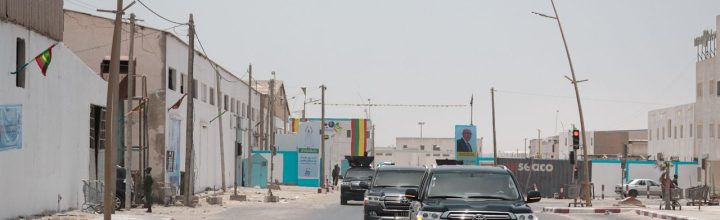
Politics often changes people. Before elections, leaders speak the language of sacrifice. After elections, many begin speaking the language of privilege. Bigger convoys, larger official residences, endless security, roadblocks, and VIP treatment slowly become symbols of power.
That is why the early months of Tamil Nadu Chief Minister C. Joseph Vijay’s tenure have attracted attention across India.
One of the most talked-about decisions is his choice to continue living in his private residence instead of shifting to the official Chief Minister’s bungalow, even after government residences were allotted to ministers. Every day, he reportedly travels around 17 kilometres to the Secretariat from his own home instead of moving closer for convenience. Whether this continues for the full term or not, the message has been powerful: public office should not automatically become a gateway to personal luxury.
Another point repeatedly discussed is the reduction of visible VIP culture around the Chief Minister. While social media has widely credited Vijay with introducing a “no traffic halt” policy,and this policy was actually introduced during the previous MK Stalin government in 2021. Giving credit where it is due is important because good governance should never depend on propaganda.
Yet leadership is not measured only by who started a policy. It is also measured by whether a leader continues practices that respect ordinary citizens instead of expanding privileges after assuming power.
India has become accustomed to VIP culture. In several states, even local politicians travel with long convoys that inconvenience thousands of commuters. Public roads become private corridors whenever a minister passes by.
Kerala provides another interesting example. During his tenure as Chief Minister, Pinarayi Vijayan often travelled with a large security convoy, attracting criticism from many quarters. Today, as Leader of the Opposition, those arrangements have naturally reduced according to the security protocol applicable to his current office. It is a reminder that power is temporary. The privileges attached to office disappear the day the office is gone. Character, however, remains.
Reports from Tamil Nadu also suggest that the new government has taken steps to reduce political activities inside educational institutions and has acted against liquor outlets that allegedly violated prescribed distance norms from schools and educational institutions. These actions reflect an attempt to place education and public welfare above political visibility, though the long-term impact will be judged by implementation rather than announcements.
Cabinet formation has also generated discussion. Vijay has retained crucial departments such as Home, Police, Women Welfare and Youth Welfare under his direct supervision while allocating other ministries based on professional backgrounds and administrative priorities. The quality of governance will ultimately depend not only on qualifications but also on performance over the coming years.
This naturally raises a larger national question.
Why do we still tolerate excessive VIP culture?
Why should an ambulance wait because a politician’s convoy is passing?
Why should school children stand in the heat while roads remain blocked?
Public representatives are elected to serve citizens—not to be separated from them.
The conversation should also extend to education. India repeatedly witnesses controversies surrounding competitive examinations, paper leaks and recruitment irregularities. Every such incident destroys the dreams of honest students who spend years preparing. Accountability cannot become selective. Whether governments are at the Centre or in the states, transparency must be demanded equally from every political party. Silence from the opposition or the ruling party weakens democracy just as much as administrative failure.
None of this means any leader should receive blind praise.
Every new government begins with goodwill. The real examination starts when difficult decisions arrive, political pressure increases, and public criticism becomes louder. History is filled with leaders who began with humility but slowly embraced privilege once power became comfortable.
That is why citizens should neither become blind supporters nor permanent critics.
They should become careful observers.
If Chief Minister Vijay continues to reject unnecessary privilege, strengthens education, improves governance, reduces corruption, and places citizens above political image throughout his full term, he could redefine what leadership looks like for an entire generation.
India does not need more VIPs.
India needs more public servants who remember that every convoy, every bungalow, every security detail and every government privilege is paid for by the taxpayer.
Power is temporary.
Service is permanent.
And history rarely remembers the size of a leader’s convoy. It remembers the size of their character.
Comments

Hi, I’m Nishanth Muraleedharan (also known as Nishani)—an IT engineer turned internet entrepreneur with 25+ years in the textile industry. As the Founder & CEO of "DMZ International Imports & Exports" and President & Chairperson of the "Save Handloom Foundation", I’m committed to reviving India’s handloom heritage by empowering artisans through sustainable practices and advanced technologies like Blockchain, AI, AR & VR. I write what I love to read—thought-provoking, purposeful, and rooted in impact. nishani.in is not just a blog — it's a mark, a sign, a symbol, an impression of the naked truth. Like what you read? Buy me a chai and keep the ideas brewing. ☕💭 For advertising on any of our platforms, WhatsApp me on : +91-91-0950-0950 or email me @ support@dmzinternational.com