
The Journal Entry #028 : The Man Who Built Schools, Inspired a Nation… and Is Now Starving for His Beliefs
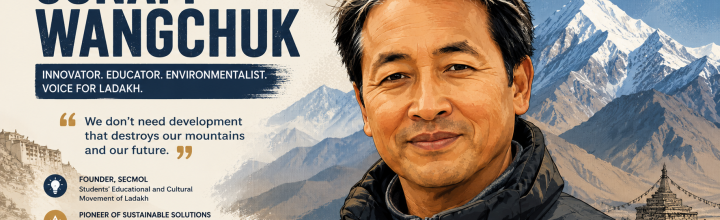
“History has a strange habit. It first celebrates people, then questions them, and sometimes forgets them—until it is too late.”
A man lies on a mattress in Delhi.
His voice has weakened. His body has lost kilograms. Doctors worry about organ failure. Supporters gather around him. Critics dismiss him. Politicians argue over him.
And the rest of the country scrolls past.
This is not merely the story of a hunger strike.
It is the story of how democracies remember—and forget.
Before Politics Knew His Name
Long before television debates, hashtags, and accusations, Sonam Wangchuk was known for something far less controversial.
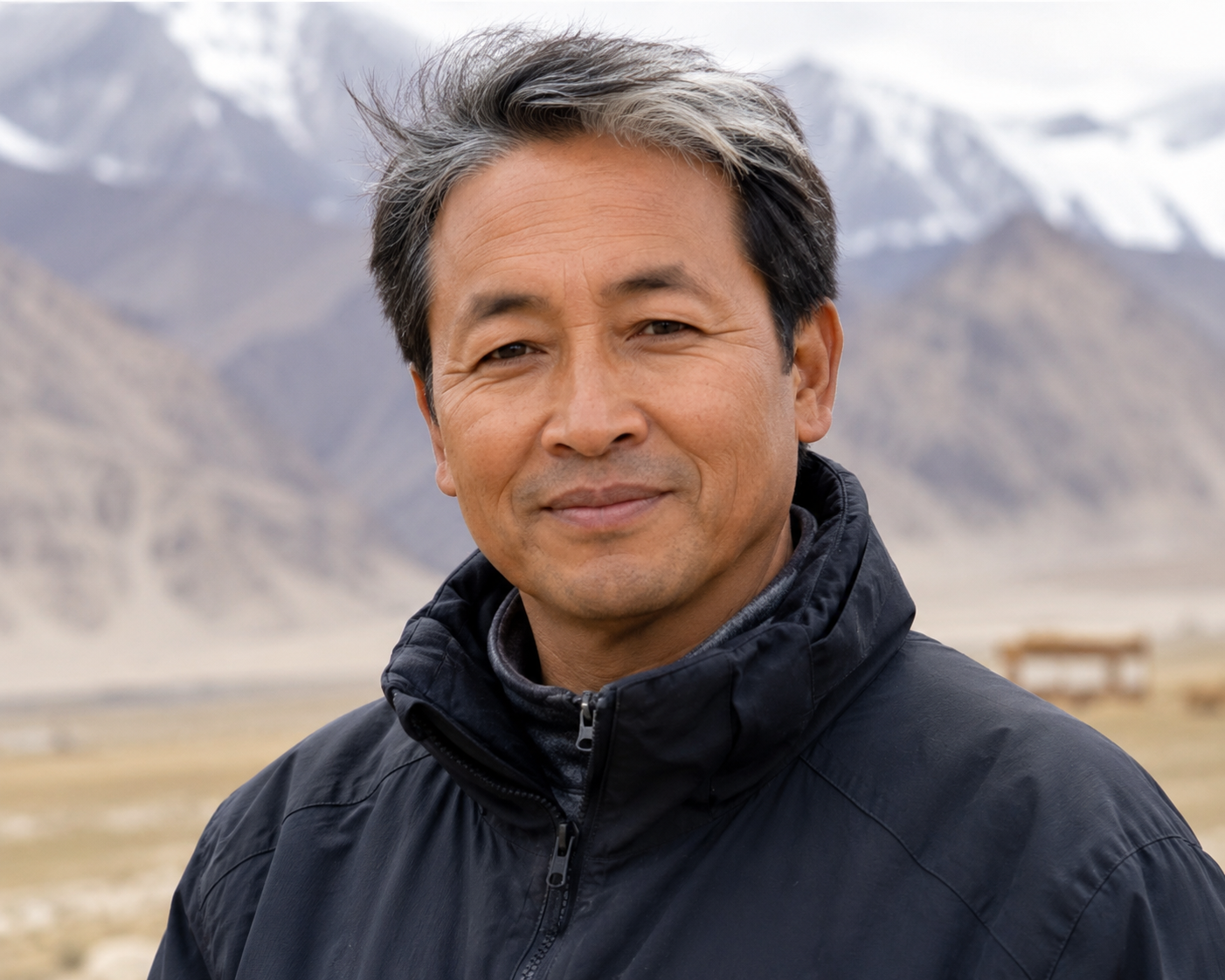
Education.
Growing up in Ladakh, where harsh winters and geographical isolation made schooling difficult, he experienced firsthand what it meant to be ignored by systems designed far away.
Instead of leaving, he stayed.
Instead of complaining, he built.
He helped create innovative schools that focused on understanding rather than memorizing. His work inspired the character of Phunsukh Wangdu in the blockbuster 3 Idiots, although the film was fictionalized.
Around the world, he became known for sustainable engineering.
His “Ice Stupa” project helped villages store water for agriculture.
His work earned international recognition, environmental awards, and admiration across India.
For years, he represented the kind of citizen every country proudly celebrates:
An innovator.
A teacher.
An environmentalist.
A problem solver.
Then Came Activism
But history shows something interesting.
When innovators begin asking uncomfortable questions, they often stop being seen only as innovators.
They become activists.
And activists rarely receive unanimous applause.
Today, Wangchuk is on an indefinite hunger strike demanding accountability over recent examination controversies and broader education-related issues. His fast has continued despite visible deterioration in his health. Medical teams are reportedly monitoring him closely as concerns grow.
His supporters call him courageous.
His critics accuse him of politicising issues.
Some voices have even labelled him “anti-national.”
Others insist he is defending the very ideals that make a nation stronger.
The same man.
The same life.
Completely different stories.
When Does a Patriot Become a Villain?
Perhaps the better question is:
Who decides?
Is patriotism measured by silence?
Or by speaking when you believe something is wrong?
History offers uncomfortable examples.
Many freedom fighters were called troublemakers during British rule.
Journalists exposing corruption are often accused of damaging the country’s image.
Whistleblowers are frequently celebrated only years after their warnings prove true.
This does not automatically make every activist correct.
Nor does it make every government wrong.
Democracy is far more complicated than heroes and villains.
The real challenge is whether disagreement can exist without turning fellow citizens into enemies.
Hunger Is a Dangerous Language
A hunger strike is unlike any other protest.
It carries no weapons.
It blocks no roads.
It attacks no one.
The protester turns his own body into the battlefield.
Every passing day becomes a sentence.
Every kilogram lost becomes an argument.
Whether one agrees with the cause or not, hunger strikes remind us that some people believe their voices are no longer being heard through ordinary means.
That itself should concern every democracy.
What Are His Current Demands?
According to recent public statements, Wangchuk’s primary demands include:
- Accountability over examination paper leaks and reforms to restore trust in India’s education system.
- The resignation of Union Education Minister Dharmendra Pradhan.
- Meaningful dialogue with the government regarding these concerns.
Whether these demands should be accepted is a matter for democratic debate.
But ignoring them altogether raises another question.
When does silence become a response?
The Speed of Public Memory
A decade ago, millions admired stories inspired by his educational work.
Today, many people know him only through political headlines.
That is the strange economy of public attention.
Years of service can disappear behind one week of controversy.
The internet rarely remembers complete lives.
It remembers moments.
Beyond Left and Right
Perhaps this story is not ultimately about Sonam Wangchuk.
Perhaps it is about us.
Have we become so divided that every issue must belong to one political camp?
Can we appreciate someone’s lifelong contributions while still questioning some of their positions?
Can governments engage critics without treating criticism as hostility?
Can citizens disagree without hatred?
These questions will remain long after this hunger strike ends.
A Question for Every Indian
Imagine a classroom.
The teacher asks:
“What should happen when a respected citizen believes the government is making a mistake?”
Should the answer be:
“Ignore him.”
“Support him.”
“Attack him.”
Or should the answer be:
“Listen first.”
Listening is not surrender.
Disagreement is not betrayal.
And criticism is not automatically anti-national.
Democracy is strongest not when everyone agrees—but when people can disagree without losing each other’s humanity.
As one man continues to weaken physically, perhaps the greatest test is not only of his body.
It is of our collective conscience.
History will eventually decide whether his demands were justified.
But history will also ask another question:
When a citizen chose to risk his own life for what he believed, did the nation choose conversation—or merely choose sides?
Comments

Hi, I’m Nishanth Muraleedharan (also known as Nishani)—an IT engineer turned internet entrepreneur with 25+ years in the textile industry. As the Founder & CEO of "DMZ International Imports & Exports" and President & Chairperson of the "Save Handloom Foundation", I’m committed to reviving India’s handloom heritage by empowering artisans through sustainable practices and advanced technologies like Blockchain, AI, AR & VR. I write what I love to read—thought-provoking, purposeful, and rooted in impact. nishani.in is not just a blog — it's a mark, a sign, a symbol, an impression of the naked truth. Like what you read? Buy me a chai and keep the ideas brewing. ☕💭 For advertising on any of our platforms, WhatsApp me on : +91-91-0950-0950 or email me @ support@dmzinternational.com