
The Journal Entry #031 : When Protest Meets Power: Is Democracy Strongest When It Listens?
Democracy is often celebrated during elections, but its true strength is tested between elections.
Over the past few days, India has witnessed a series of dramatic events surrounding protests led by CJP and its supporters. What began as a peaceful hunger strike escalated into a national political flashpoint. As the health of fasting activist Sonam Wangchuk deteriorated, he was shifted to a hospital while reportedly continuing his fast. Meanwhile, the founder of CJP announced an indefinite hunger strike and called upon supporters from across the country to gather in Delhi.
The response was overwhelming. People reportedly travelled from different parts of India, turning the protest into one of the largest public mobilisations in recent months. As crowds moved towards sensitive government areas, police imposed restrictions, carried out lathi charges in some locations, and later used tear gas after incidents of stone pelting were reported. Security around Parliament was significantly strengthened, while Delhi Police repeatedly appealed for calm and warned against misinformation and attempts by anti-social elements to exploit the situation.
Politics, however, rarely stands still.
In a significant development, CJP representatives Saurav Das and Ashutosh Ranka met Union Minister J. P. Nadda, marking the first formal dialogue between the government and the protest movement. The delegation reportedly submitted three major demands: the immediate release of Sonam Wangchuk from hospital, the resignation of Union Education Minister Dharmendra Pradhan over alleged examination irregularities, and financial compensation for families of deceased NEET aspirants. While the minister sought time to consult the government before responding, the protests continued.
Whether one supports the government or the protesters is almost beside the point.
The real question is this:
Why do democratic societies often wait until a crisis reaches the streets before meaningful conversations begin?
History repeatedly shows that people usually don’t leave their homes, take long journeys, endure extreme weather, or risk arrest unless they believe their voices are no longer being heard through ordinary channels. At the same time, governments have a constitutional responsibility to maintain public order and ensure that protests do not turn violent or threaten public safety.
This creates a difficult balancing act.
How much force is justified in maintaining law and order?
How much disruption should a democracy tolerate in the name of dissent?
And perhaps most importantly, could many such confrontations have been avoided through earlier dialogue?
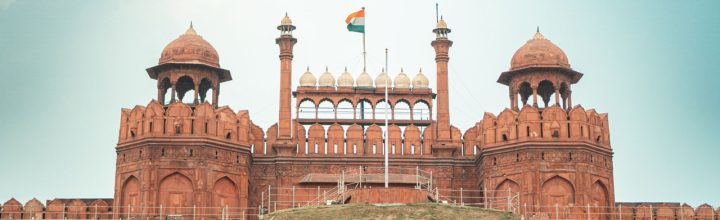
The images from Delhi have once again reminded India that democracy is not simply about winning elections. It is about continuously engaging with citizens—even those who disagree with the government.
Governments often argue that unrestricted protests can paralyse cities, disrupt Parliament, and create opportunities for violence. Protesters argue that peaceful demonstrations are frequently ignored until they become impossible to overlook. Both concerns deserve attention.
The danger lies at the extremes.
If governments rely primarily on force, public trust begins to erode.
If protesters allow violence or unlawful acts to overshadow their cause, public sympathy can quickly disappear.
Neither outcome strengthens democracy.
The encouraging aspect of the recent developments is that dialogue has finally begun. Whether those discussions produce meaningful action remains to be seen, but conversation is always a better starting point than confrontation.
The responsibility now rests on both sides.
The government must demonstrate that listening is not a sign of weakness but of confidence in democratic institutions. Protest leaders, in turn, must ensure that their movement remains peaceful and that legitimate demands are pursued within the framework of democratic values.
Perhaps the greatest lesson from these events is not about any single political party, organisation, or leader.
It is about us.
As citizens, are we becoming so polarised that every issue is instantly divided into “our side” versus “their side”? Social media often rewards outrage more than understanding, making it increasingly difficult to separate verified facts from emotional narratives. In such an environment, patience, empathy, and critical thinking become essential civic responsibilities.
A mature democracy does not measure its success by how effectively it silences criticism. Nor is it measured by how loudly people can protest.
It is measured by how quickly it listens, how fairly it responds, and how peacefully disagreements are resolved.
Because when dialogue begins only after hospitals fill, streets overflow, and security barricades rise around Parliament, the question we should all ask is not who won the confrontation.
It is why the conversation did not begin much earlier.
Comments

Hi, I’m Nishanth Muraleedharan (also known as Nishani)—an IT engineer turned internet entrepreneur with 25+ years in the textile industry. As the Founder & CEO of "DMZ International Imports & Exports" and President & Chairperson of the "Save Handloom Foundation", I’m committed to reviving India’s handloom heritage by empowering artisans through sustainable practices and advanced technologies like Blockchain, AI, AR & VR. I write what I love to read—thought-provoking, purposeful, and rooted in impact. nishani.in is not just a blog — it's a mark, a sign, a symbol, an impression of the naked truth. Like what you read? Buy me a chai and keep the ideas brewing. ☕💭 For advertising on any of our platforms, WhatsApp me on : +91-91-0950-0950 or email me @ support@dmzinternational.com