
When Humans Learn to See Beyond Human: Neuralink’s Boldest Promise Yet
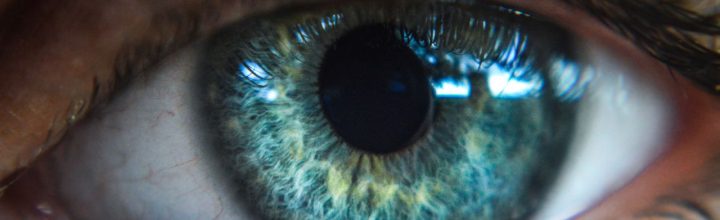
“The future arrives quietly. It doesn’t knock. It simply becomes possible.”
For decades, blindness has been accepted as one of humanity’s most difficult medical challenges. Science has developed better surgeries, better lenses, better retinal implants, and smarter assistive technologies. Yet one truth remained unchanged: if the eyes could not send information to the brain, vision was lost.
Until now.
Elon Musk recently made one of the most astonishing technological announcements of this decade. According to him, Neuralink aims to implant its first vision devices within the next six to twelve months. The goal is extraordinary—not merely to improve eyesight, but to bypass the eyes altogether.
Imagine information flowing directly into the visual cortex of the brain.
No retina.
No optic nerve.
No traditional pathway.
Just the brain receiving visual information directly.
If this technology succeeds, people born completely blind could experience sight for the very first time.
Pause for a moment and consider what that truly means.
For thousands of years, blindness has shaped entire lives. Humanity invented Braille, guide dogs, canes, audio technology, and countless accessibility tools. Each innovation helped people adapt to a world they could not see.
Neuralink proposes something radically different.
Instead of adapting the person to the world…
adapt the technology to the brain itself.
That represents a fundamental shift in human history.
The Brain Was Always the Real Camera
Most people think we see with our eyes.
We don’t.
Our eyes simply collect light.
The real image is created inside the brain.
Every color…
every face…
every sunset…
every smile…
exists only because billions of neurons interpret electrical signals.
Your brain has never actually “seen” light.
It has only decoded information.
If technology can generate those electrical patterns directly, the eyes become optional.
This idea sounds like science fiction, yet neuroscience has been exploring similar concepts for decades. Neuralink’s ambition is to dramatically increase the precision, bandwidth, and practicality of that communication between computers and the brain.
If successful, it could redefine what vision means.
Restoring Vision Is Only Chapter One
Helping blind people regain sight is perhaps the most emotionally powerful application.
But Musk didn’t stop there.
He described a future where humans could perceive infrared, ultraviolet, and even radar-like information.
Think about that.
Dogs hear frequencies humans cannot.
Eagles spot prey from astonishing distances.
Snakes detect heat.
Bats navigate using echolocation.
Nature distributed extraordinary abilities across different species.
Humans received only a narrow slice of the electromagnetic spectrum.
We call that slice “visible light.”
What if that limitation disappears?
Imagine firefighters seeing through smoke.
Search-and-rescue teams locating survivors by body heat.
Doctors visualizing hidden biological information during surgery.
Engineers inspecting infrastructure beyond the capabilities of ordinary vision.
Astronomers observing celestial phenomena without bulky instruments.
The line between biological ability and technological enhancement begins to blur.
For the first time, evolution may no longer be limited to biology.
It could become programmable.
Technology Is Beginning to Edit Human Limitations
Every major invention in history expanded human capability.
The wheel expanded movement.
The telescope expanded vision.
The printing press expanded knowledge.
Electricity expanded productivity.
The internet expanded communication.
Artificial intelligence is expanding intelligence itself.
Brain-computer interfaces may become the next leap.
Instead of holding technology in our hands, we may integrate it directly with our nervous systems.
The smartphone replaced many external tools—a camera, calculator, map, flashlight, music player, notebook, and encyclopedia.
Future neural interfaces raise a provocative question:
Will tomorrow’s most powerful device even need a screen?
Or will information appear directly within our perception?
The Ethical Questions Are Even Bigger
Every transformative technology creates excitement—and concern.
Who controls the software connected to the human brain?
How secure are neural signals?
Can thoughts remain private?
Could enhancements deepen inequality if only a few can afford them?
Where should society draw the line between restoring lost abilities and enhancing healthy ones?
History shows that technological capability often arrives before ethical consensus.
Artificial intelligence forced new debates about creativity.
Gene editing challenged our understanding of medicine.
Brain-computer interfaces will challenge our understanding of identity.
These conversations are not obstacles.
They are essential.
The more powerful a technology becomes, the greater our responsibility to guide its use wisely.
We Have Seen This Story Before
There was a time when flying seemed impossible.
The Wright brothers proved otherwise.
There was a time when carrying the world’s knowledge in your pocket sounded absurd.
The smartphone proved otherwise.
There was a time when reusable rockets were dismissed as impractical.
SpaceX proved otherwise.
Electric cars were once considered niche products.
Tesla reshaped the global automotive industry.
Not every ambitious prediction becomes reality on schedule. Engineering breakthroughs often take longer than expected, and many challenges remain before brain-computer interfaces become widely available. Yet history reminds us that today’s impossibility has a habit of becoming tomorrow’s routine.
Progress rarely asks permission.
It simply keeps advancing.
The Real Superpower
People are fascinated by the possibility of seeing infrared or ultraviolet light.
But perhaps the greatest superpower isn’t enhanced vision.
It is restored hope.
Imagine a child who has never seen their parents finally recognizing their faces.
Imagine reading a book without Braille for the first time.
Imagine watching rain, stars, oceans, or a sunrise after a lifetime of darkness.
Those moments cannot be measured in pixels.
They can only be measured in human emotion.
Technology is at its best not when it makes us faster or richer, but when it gives people back experiences they never thought possible.
The Future Is Being Written Today
Whether Neuralink achieves every milestone exactly as envisioned remains to be seen. Scientific progress demands rigorous testing, regulatory oversight, and long-term evidence. Healthy skepticism is part of responsible innovation.
Yet one fact is undeniable.
Humanity has entered a new era.
For centuries, medicine repaired the body.
Today, technology is beginning to communicate directly with the brain.
That changes everything.
The next industrial revolution may not happen in factories.
The next digital revolution may not happen on computer screens.
The next great revolution may happen inside the human mind itself.
And perhaps future generations will look back at this moment the way we look back at the invention of electricity—not as the end of a story, but as the beginning of an entirely new chapter.
The future is no longer confined to science fiction.
It is steadily becoming science.
Comments

Hi, I’m Nishanth Muraleedharan (also known as Nishani)—an IT engineer turned internet entrepreneur with 25+ years in the textile industry. As the Founder & CEO of "DMZ International Imports & Exports" and President & Chairperson of the "Save Handloom Foundation", I’m committed to reviving India’s handloom heritage by empowering artisans through sustainable practices and advanced technologies like Blockchain, AI, AR & VR. I write what I love to read—thought-provoking, purposeful, and rooted in impact. nishani.in is not just a blog — it's a mark, a sign, a symbol, an impression of the naked truth. Like what you read? Buy me a chai and keep the ideas brewing. ☕💭 For advertising on any of our platforms, WhatsApp me on : +91-91-0950-0950 or email me @ support@dmzinternational.com