
The War Everyone Stopped Talking About: Where Iran, the US and the Gulf Stand now
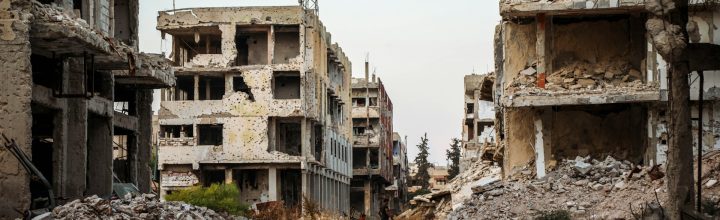
For months, the world watched the Iran–US–Israel conflict almost hour by hour. Then the headlines faded. Ukraine–Russia also became yesterday’s breaking news. But neither war has actually disappeared. The Iran conflict, in particular, has entered a more dangerous phase — one where diplomacy is failing, the Strait of Hormuz remains disputed, and the risk is shifting from direct US-Iran strikes to a wider regional confrontation.
As of today, the June US-Iran interim agreement has effectively collapsed. Its 60-day window expired without a broader settlement. Iran says the US must lift its blockade, remove sanctions, release frozen assets and stop military operations before Tehran will fully reopen Hormuz. Washington says there is no current plan for talks and insists the waterway is open.
Iran: Weakened, but far from defeated
Iran has suffered enormous military and economic damage, but the regime has survived. After the death of Ayatollah Ali Khamenei earlier this year, his son Mojtaba Khamenei became Supreme Leader. The new leadership has increasingly empowered the Revolutionary Guard and is preparing for a prolonged confrontation rather than assuming another quick peace deal will emerge.
Tehran’s biggest weapon now may not be its missiles. It is Hormuz.
Iran says the strait is under its control and has warned that it will take military action if Washington does not honour the previous agreement. Shipping through the waterway has fallen dramatically, although alternative routes around Oman are carrying a growing share of traffic.
Iran is also increasingly targeting shipping and has attacked or threatened US-linked infrastructure across the region. The danger is that every American strike on Iran could produce another Iranian response somewhere else.
Why are Gulf countries being dragged into this?
Iran’s argument is straightforward: If American forces are using bases in your country to attack Iran, those bases make you part of the conflict.
That has put almost every Gulf state in an uncomfortable position.
Iranian missile and drone attacks have affected Bahrain, Kuwait, Oman, Qatar, Saudi Arabia and the UAE, while Jordan and Syria have also been targeted. GCC countries have repeatedly condemned attacks on their sovereignty and civilian infrastructure.
The situation has become particularly serious for the UAE. On August 18, Abu Dhabi accused Iran of launching missiles toward UAE territory and subsequently suspended trade and financial dealings with Iran. Iran denies responsibility.
The UAE has also accused Iran of attacking its ADNOC vessels in Hormuz and is demanding that the waterway be fully reopened.
Saudi Arabia has tried to avoid becoming a battlefield while simultaneously strengthening its defences. Riyadh has reportedly urged Washington to pursue negotiations, but has also warned Tehran that continued attacks could provoke a response.
Qatar, Bahrain and Kuwait have similarly called for de-escalation while making it clear that their sovereignty cannot be treated as collateral damage.
And then there is Oman — perhaps the most important diplomatic player in the region. Muscat has traditionally maintained channels with Iran and the West and is now attempting to find a practical arrangement for Hormuz. That balancing act has put Oman under extraordinary pressure.
What happened to Pakistan’s mediator role?
Pakistan initially emerged as one of the most interesting diplomatic players because it had something few others possessed: working relationships with both Washington and Tehran.
Islamabad helped facilitate the June agreement and continued trying to keep communication alive after the deal began falling apart. Foreign Minister Ishaq Dar has remained involved in diplomatic contacts and Pakistan invited Iranian officials to Islamabad again in August.
But Pakistan’s influence is no longer as strong as it appeared earlier in the year. Washington has increasingly looked toward Saudi Arabia, Qatar and the UAE, while Iran’s distrust of American intentions has deepened. Pakistan is still useful as a back channel, but it cannot force either side back to the negotiating table.
Ironically, Islamabad has also become more deeply connected to the Gulf security architecture. Pakistan, Saudi Arabia and Turkey recently signed the Mecca Joint Defence Agreement, creating a new regional defence framework. That makes Pakistan simultaneously a potential mediator and an increasingly important security partner for countries that are directly threatened by Iran.
That is a difficult diplomatic balancing act.
What happens next?
Three possibilities stand out.
First: controlled negotiations. Oman, Pakistan, Qatar and other intermediaries could eventually rebuild enough trust for indirect US-Iran talks. This remains the best outcome for the region.
Second: a long frozen conflict. Iran keeps Hormuz heavily restricted, America maintains economic and naval pressure, and neither side wants another full-scale attack. This could continue for months.
Third — and the most dangerous: regional escalation. Another major US strike on Iran could trigger attacks on Gulf energy infrastructure, American bases, shipping and possibly European-linked military assets. Recent Iranian threats already suggest the conflict could spread beyond the Gulf. (
The most important point is this: the war has not disappeared. It has simply stopped dominating the television screen.
And that may actually make it more dangerous.
When a war becomes yesterday’s headline but the missiles, sanctions, blocked shipping lanes and broken diplomatic agreements remain, the world can become dangerously comfortable with instability.
Hormuz is still the pressure point. Iran is still standing. America is still applying pressure. Israel remains central to the equation. The Gulf states are increasingly unwilling to simply absorb the consequences. Pakistan is trying to keep diplomacy alive.
The next phase may therefore not be another spectacular war.
It may be a long geopolitical chess game — with the world’s oil supply, regional alliances and global economy sitting on the board.
Comments

Hi, I’m Nishanth Muraleedharan (also known as Nishani)—an IT engineer turned internet entrepreneur with 25+ years in the textile industry. As the Founder & CEO of "DMZ International Imports & Exports" and President & Chairperson of the "Save Handloom Foundation", I’m committed to reviving India’s handloom heritage by empowering artisans through sustainable practices and advanced technologies like Blockchain, AI, AR & VR. I write what I love to read—thought-provoking, purposeful, and rooted in impact. nishani.in is not just a blog — it's a mark, a sign, a symbol, an impression of the naked truth. Like what you read? Buy me a chai and keep the ideas brewing. ☕💭 For advertising on any of our platforms, WhatsApp me on : +91-91-0950-0950 or email me @ support@dmzinternational.com