
India’s AI Dream Must Not Become the World’s Resource Dumping Ground
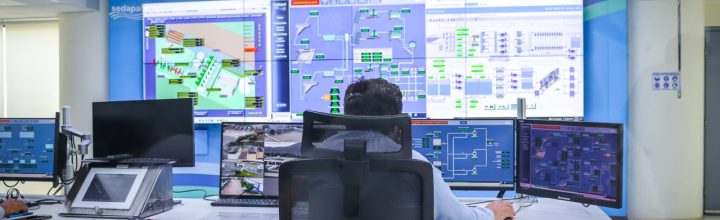
India is celebrating the arrival of the AI revolution.
Google, Amazon, Meta and other global technology giants are pouring billions into data centres. Governments proudly announce investment figures. Politicians talk about jobs. Headlines speak of India becoming the next global technology powerhouse.
On paper, it sounds like progress.
But India needs to ask a much harder question:
Are we becoming an AI superpower—or simply becoming the place where the world parks the most resource-hungry infrastructure behind its AI revolution?
Data centres are not magical clouds floating somewhere in the sky.
They are enormous physical facilities filled with machines that consume land, electricity and, depending on their design, significant amounts of water. AI has made this demand even more intense.
And that is where the uncomfortable truth begins.
Across the United States and other developed economies, communities are increasingly fighting proposed data centres. Residents are asking uncomfortable questions about electricity bills, water consumption, noise, pollution, farmland and the pressure these giant facilities can place on local infrastructure. In the United States, opposition has grown into a nationwide political issue, with protests and projects being delayed or challenged by local communities.
So India must ask:
If developed countries are increasingly questioning whether these facilities should consume their water and power, why are we so eager to welcome them without asking the same questions?
This does not mean India should reject data centres.
That would be foolish.
India needs AI infrastructure. India needs computing capacity. India needs technology investment.
But India should not confuse investment with development.
A company announcing ₹1 lakh crore of investment sounds impressive. But investment figures alone do not tell us whether ordinary Indians benefit.
How many permanent high-quality jobs will the data centre actually create after construction ends?
How much electricity will it consume?
Who will pay for expanding the power grid?
Will local residents face higher electricity costs?
Where will the water come from?
What happens when the region itself faces water scarcity?
And most importantly:
When there is a shortage, who gets priority—the people or the machines?
These are not imaginary concerns. India’s data-centre expansion is already creating public debate over water and environmental pressure, including opposition to major projects in Visakhapatnam and elsewhere. Google’s proposed large-scale project in Andhra Pradesh has also faced concerns related to water availability and environmental impact.
Of course, technology companies argue that newer facilities are becoming more efficient. Meta says its planned Indian facility will use renewable energy and desalinated seawater, while Amazon says its operational Indian data centres use air-cooled systems rather than drinking water for cooling. Those commitments matter—and they should be independently verified, monitored and made transparent.
India should welcome technology.
But India must stop behaving like a country that is simply grateful when a global corporation chooses us.
We are not short of people.
We are not short of digital users.
We are not short of engineers.
And increasingly, we cannot assume we are rich in unlimited water, land and electricity.
The AI revolution will create enormous wealth. The question is whether India will own a meaningful part of that wealth—or merely provide the land, energy, water and infrastructure while the biggest profits travel elsewhere.
A data centre should not receive unquestioned incentives simply because it has an American logo and an enormous investment announcement.
Every major project should pass a simple public-interest test:
What does India gain? What does India give? And what happens to ordinary people when the resources become scarce?
The future is not about saying yes to every data centre.
Nor is it about saying no.
It is about having the courage to negotiate.
India must ensure that the AI boom creates Indian jobs, Indian innovation, Indian companies and Indian technological capability—not just giant server buildings consuming Indian resources to power somebody else’s global AI empire.
Because the worst possible future is simple:
The world builds the AI. The world earns the profits. India supplies the resources—and Indians are left standing in the queue for electricity and water.
That would not be technological progress.
That would be outsourcing the cost of the AI revolution to India.
Comments

Hi, I’m Nishanth Muraleedharan (also known as Nishani)—an IT engineer turned internet entrepreneur with 25+ years in the textile industry. As the Founder & CEO of "DMZ International Imports & Exports" and President & Chairperson of the "Save Handloom Foundation", I’m committed to reviving India’s handloom heritage by empowering artisans through sustainable practices and advanced technologies like Blockchain, AI, AR & VR. I write what I love to read—thought-provoking, purposeful, and rooted in impact. nishani.in is not just a blog — it's a mark, a sign, a symbol, an impression of the naked truth. Like what you read? Buy me a chai and keep the ideas brewing. ☕💭 For advertising on any of our platforms, WhatsApp me on : +91-91-0950-0950 or email me @ support@dmzinternational.com