
The Universe Was Never Built for Us — And That Should Terrify You
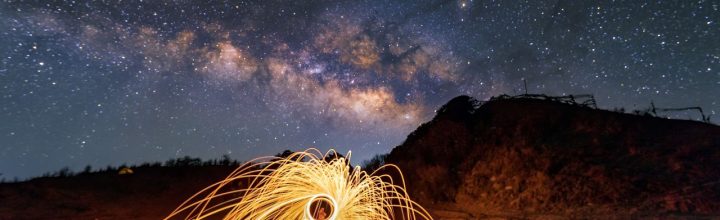
Look up tonight. Every star you see is old light. Some of it left its source before the dinosaurs existed. You are not seeing the universe as it is. You are seeing its ghosts.
That single fact changes everything about how we should think about space.
How humans started looking up
Ancient Indians, Greeks, Babylonians, and Egyptians tracked planets with nothing but eyes and patience. Aryabhata calculated Earth’s rotation in the 5th century using only mathematics. Galileo pointed a simple lens telescope at Jupiter in 1610 and saw moons circling it — proof that not everything orbits Earth. That one observation broke a thousand years of belief.
Binoculars and small telescopes bend light through glass lenses to make distant objects appear closer. But they have a limit. Earth’s atmosphere blurs and filters light before it even reaches the ground. To see clearly, you need to go above the air — or build something the size of a building.
The technology behind the discoveries
Modern astronomy uses giant mirrors, not lenses. A large curved mirror gathers far more light than any lens can, and computers stitch together thousands of exposures to sharpen the image. Radio telescopes catch invisible wavelengths lenses cannot see. Space telescopes skip the atmosphere entirely by orbiting far from Earth.
The James Webb Space Telescope, launched in December 2021, is the most powerful observatory operating in 2026. It sits 1.5 million kilometers from Earth, at a stable point called L2, shielded from the Sun’s heat by a five-layer sunshield the size of a tennis court. It sees in infrared — heat, not visible light — which lets it look through dust clouds that block ordinary telescopes.
In 2026 alone, Webb detected a galaxy — nicknamed MoM-z14 — from just 280 million years after the Big Bang, the farthest ever recorded. It found dry ice inside a dying star’s shell, something scientists did not expect to survive there. It mapped how dark matter — an invisible substance that outweighs everything visible in the universe — appears to shape where galaxies can form at all.
How scientists know it’s real
No single image is trusted alone. Findings are checked against independent instruments, repeated by other observatories, and published for other scientists worldwide to challenge and try to disprove. If a result cannot be repeated, it is dropped. This is slow, boring, and exactly why it works.
Just how far is “far”
Light from the Sun takes about 8 minutes and 20 seconds to reach Earth, crossing 150 million kilometers. That is the closest star we have. The next nearest star is over 4 light-years away — meaning its light left over four years before reaching us. Some galaxies Webb photographs are over 13 billion light-years away. Their light started traveling before Earth existed.
This is why you can never see the universe “as it really is right now.” You only ever see its past.
Why it looks blurry, and why nothing is being hidden
Distance, dust, gravity bending light, and the sheer age of the light itself all distort what reaches us. This is physics, not concealment. Every “blurry” image is a puzzle scientists slowly sharpen using better instruments and mathematics, not a cover-up.
Was this built for us?
Some ask: if the universe is billions of light-years across, and humans can survive only on one thin shell of one planet, why does it exist on such an unreachable scale? There is no answer science can give with certainty. What is certain is that most of the universe is lethal to life as we know it — vacuum, radiation, extreme heat or cold. Earth’s survivable window is a rare accident of position, atmosphere, and time, not a guarantee.
Earth has already been struck before
66 million years ago, an asteroid roughly 10 kilometers wide struck what is now Mexico. It ended the age of dinosaurs within days, through fire, then years of darkness that killed plant life worldwide. Recovery took an estimated 10 million years before ecosystems fully rebuilt themselves.
This was not Earth’s only strike. Evidence points to at least five mass extinctions in Earth’s history, each wiping out most life on the planet. Even our Moon is believed to have formed from a planet-sized collision with early Earth, over 4.5 billion years ago.
The Milky Way itself is not safe from collisions. Galaxies merge with other galaxies regularly across cosmic time, and our own galaxy is on a slow collision course with the neighboring Andromeda galaxy — expected in roughly 4 to 5 billion years.
What comes next
Scientists are now searching for signs of water and chemical markers of life on planets outside our solar system, mapping the invisible scaffolding of dark matter, and building even larger telescopes on Earth and in space to look further back in time than Webb currently can.
None of this is settled. All of it is being checked, questioned, and revised — which is exactly what makes it trustworthy.
The universe is not cruel or kind. It simply does not owe us comfort. And that, more than any single photograph from space, is the most humbling discovery of all.
Comments

Hi, I’m Nishanth Muraleedharan (also known as Nishani)—an IT engineer turned internet entrepreneur with 25+ years in the textile industry. As the Founder & CEO of "DMZ International Imports & Exports" and President & Chairperson of the "Save Handloom Foundation", I’m committed to reviving India’s handloom heritage by empowering artisans through sustainable practices and advanced technologies like Blockchain, AI, AR & VR. I write what I love to read—thought-provoking, purposeful, and rooted in impact. nishani.in is not just a blog — it's a mark, a sign, a symbol, an impression of the naked truth. Like what you read? Buy me a chai and keep the ideas brewing. ☕💭 For advertising on any of our platforms, WhatsApp me on : +91-91-0950-0950 or email me @ support@dmzinternational.com