The Cloth That Came From Under the Ground
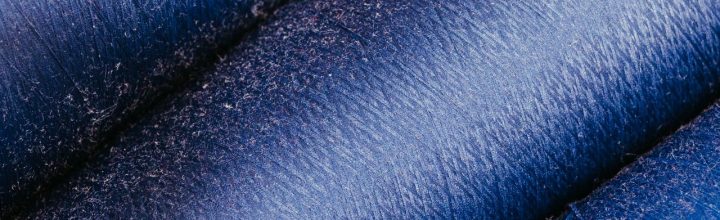
The plastic bottle on your table and the shiny saree in your cupboard are close relatives. Both are made of the same material. Both began as crude oil, pumped from deep under the sea or the desert.
Most people never learn this. They see a saree. They never see the oil.
A Quiet Invention in 1941
In 1941, two British chemists, John Rex Whinfield and James Dickson, worked at a textile printing company in Manchester. Their goal was small. They wanted a fibre that could compete with American nylon.
They combined two chemicals and pulled out a thread. It was the world’s first polyester.
Nobody celebrated. Yet today, polyester makes up more than half of all fibre produced on Earth. Cotton, the fabric we call “natural” and “traditional,” is now the smaller player.
The Two Chemicals Behind the Shine
Those two chemicals are called PTA and MEG. Both are made from oil products. They are turned into polyester chips, the chips are melted, and the melt is spun into yarn.
Now follow the yarn to Surat in Gujarat.
Surat is often called India’s textile capital, and most of the fabric it weaves is man-made, not cotton. By common estimates, the city has about six lakh power looms and produces crores of metres of cloth every day. Many of the sarees sold across India, from small-town shops to big wedding stores, begin here.
So when you see a glittering saree, you are really looking at a long chain: oil, then two chemicals, then melt, then yarn, then a loom, then a shop.
Who Really Earns the Money?
Most people think the profit goes to the brand name or the weaver. The chain tells a different story.
Think about the weaver. Surat has hundreds of thousands of looms, and they compete fiercely with each other. Buyers can always find a cheaper loom next door. So when the cost of yarn goes up, the weaver cannot easily raise the price of cloth. The extra cost lands on the weaver’s own margin.
Now look at the other end of the chain. Making polyester raw material needs giant refineries and plants that cost thousands of crores. Very few companies can build them. In India, a handful of large players make most of it, and Reliance Industries is the biggest among them.
Many looms depend on a few suppliers. The few suppliers set the price. The many loom owners accept it.
This is the hidden rule of business: money does not collect where the work is done. It collects where the choice is small.
The Same Pattern Is Everywhere
This pattern is not limited to cloth.
India is a world leader in making medicines, yet a large share of the key ingredients for those medicines is imported, mostly from one neighbouring country. The factory in India may be famous, but a single supplier abroad holds the real power.
Look at the phone in your hand. Many phones are assembled in India. But the chip inside, the screen and the core design come from a few foreign companies. The assembler works hard and keeps a thin slice. The owner of the chip keeps the fat one.
In each case, the loud, visible work earns less. The quiet, rare input earns more.
A Hidden Cost on Your Wardrobe
There is one more surprise, and it is not about money.
Every time polyester clothing is washed, it can release thousands of tiny plastic fibres into the water. Most of them are too small to see, and they travel through drains toward rivers and the sea. Because polyester is a plastic, it may take hundreds of years to break down.
The cloth that looks so bright for one wedding season can stay on this planet for generations.
What Every Small Business Owner Should Take From This
If you are building a business in India, do one simple exercise before you grow. Draw your supply chain on paper, from the raw material to the customer.
Then ask three questions:
- Which input do I need that only one or two companies control?
- If they raise the price tomorrow, can I pass it on to my customers?
- If they stop supplying me, how many days can I survive?
If you cannot answer these comfortably, you do not fully own your margin. Someone else does.
You then have three real options. You can own the scarce input, you can build a second source so no one can squeeze you, or you can build something that cannot be squeezed, such as a trusted brand, a unique design or a direct relationship with your buyers.
This last option is why slow, honest crafts still survive. A handloom saree made of cotton or silk does not follow the oil chain at all. Its value comes from a weaver’s hands, a regional story and a buyer who knows the difference. That kind of value cannot be raised or lowered by a refinery.
The Last Thread
The next time you admire a shimmering saree, look closer. You are seeing crude oil, two chemicals from 1941, and a loom in Surat that gets paid last.
The fabric looks like silk. The profit follows the oil.
And in business, as in cloth, remember this: whoever controls the thread controls the price.
Comments

Hi, I’m Nishanth Muraleedharan (also known as Nishani)—an IT engineer turned internet entrepreneur with 25+ years in the textile industry. As the Founder & CEO of "DMZ International Imports & Exports" and President & Chairperson of the "Save Handloom Foundation", I’m committed to reviving India’s handloom heritage by empowering artisans through sustainable practices and advanced technologies like Blockchain, AI, AR & VR. I write what I love to read—thought-provoking, purposeful, and rooted in impact. nishani.in is not just a blog — it's a mark, a sign, a symbol, an impression of the naked truth. Like what you read? Buy me a chai and keep the ideas brewing. ☕💭 For advertising on any of our platforms, WhatsApp me on : +91-91-0950-0950 or email me @ support@dmzinternational.com