
The Golden Truth About Ghee: Why Purity Matters More Than Ever
In today’s market, where trust is often compromised, I find myself hardwired to believe that the ‘pure ghee’ sold can’t be truly pure. The reality is harsh: over 80% of the ghee available is adulterated. This makes it even more crucial to understand the essence of pure ghee, its importance, and why making it at home can be a life-changing experience.
Ghee: The Purest Treasure with Infinite Shelf Life

Ghee, along with honey, stands as one of the rare edibles that boast an infinite shelf life, provided it is 100% pure and handled properly. Unlike other consumables, these two natural wonders resist adulteration when sourced and prepared authentically. Pure ghee is not just a cooking ingredient; it’s a health elixir, steeped in tradition and value.
The Emotional Journey of Making Ghee at Home
Making ghee at home is more than a process; it’s an emotional journey, a nostalgic nod to our grandmothers who treated ghee like gold. Every drop is a testament to patience, effort, and love. The aroma that fills your home, the rich golden hue, and the satisfaction of creating something pure and wholesome make the experience invaluable. Once you embark on this journey, you’ll never see ghee the same way again.
The Economics of Pure Ghee: Why Market Prices Don’t Add Up

Let’s talk numbers. Making ghee at home may seem costly, but the true cost of purity cannot be compromised. Here’s a breakdown:
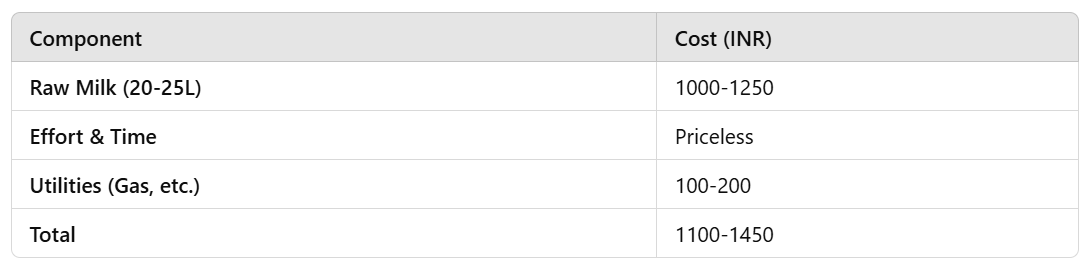
This shows that making one kg of pure ghee at home costs between INR 1100 to INR 1450. Compare this to the retail prices, and it’s evident that many market offerings compromise on quality to keep costs low.
Scientific Purity Tests: A Buyer’s Guide
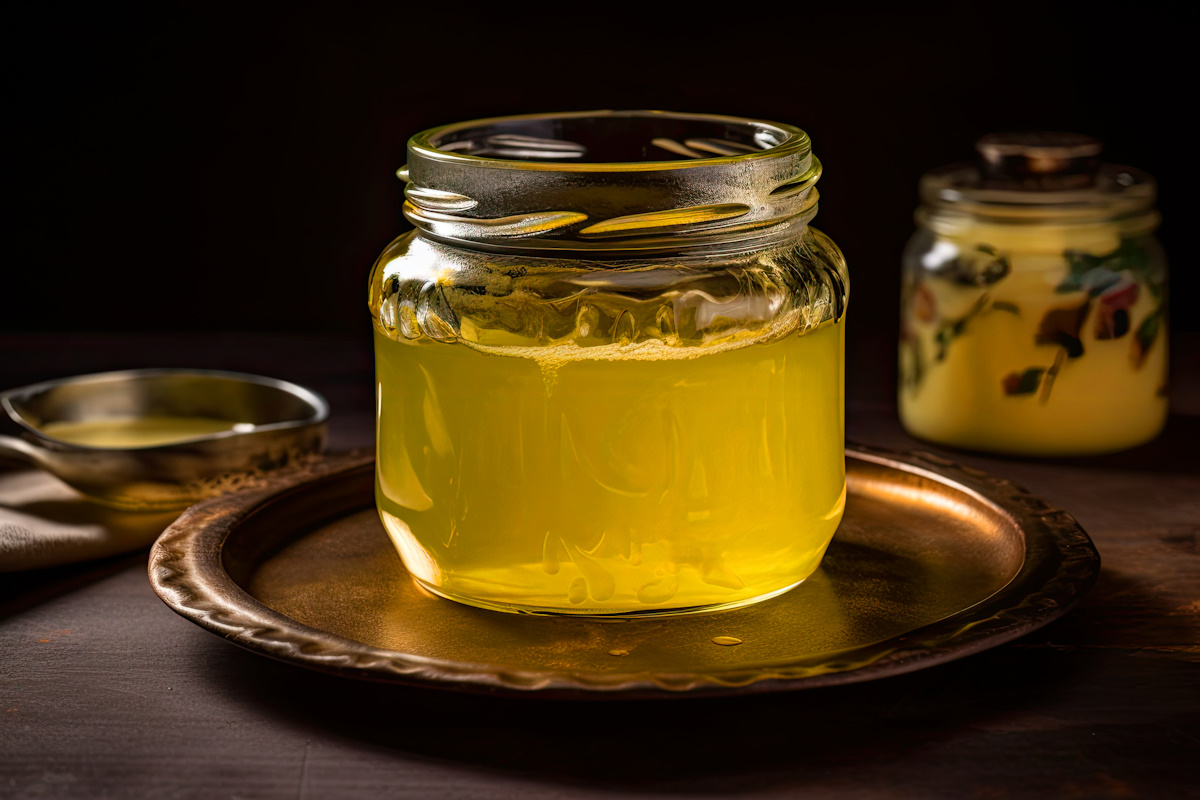
Ghee or clarified butter in jar on wooden table .AI generative.
For those who still buy ghee, it’s essential to arm yourself with knowledge. Simple tests can help you identify adulteration:
1. Solubility Test: Pure ghee dissolves in palm when rubbed between fingers.
2. Freezing Test: Pure ghee remains semi-solid in the freezer, while adulterated ghee forms separate layers.
3. Iodine Test: Adding iodine to ghee; if it turns purple, starch is present, indicating adulteration.
These tests can serve as a quick check to ensure the ghee you buy isn’t compromising your health.
The Tirupati Laddu Controversy: Resolution and Assurance of Quality
Last week, the famous Tirupati laddu, a beloved prasadam offered at the Lord Venkateswara temple in Tirumala, became the center of a heated controversy. Concerns were raised by devotees and activists over allegations that the laddus were being prepared using adulterated or substandard ghee, deviating from the traditional use of pure cow ghee. The issue sparked public outcry and led to demands for a thorough investigation into the quality of ingredients used. The Tirumala Tirupati Devasthanams (TTD), the governing body of the temple, swiftly addressed the issue, conducting quality checks and assuring devotees that no compromise had been made in the preparation process. As a resolution, TTD announced that all future laddus would be made exclusively with natural, unadulterated cow ghee, sourced from certified suppliers to maintain the sanctity and authenticity of the prasadam. They also implemented stricter quality control measures and pledged transparency in ingredient procurement to reassure devotees. The freshly prepared laddus now come with a guarantee of purity, reinforcing trust among the millions of worshippers who consider the laddu sacred and symbolic of divine blessings.
Why You Should Try Making Ghee at Home
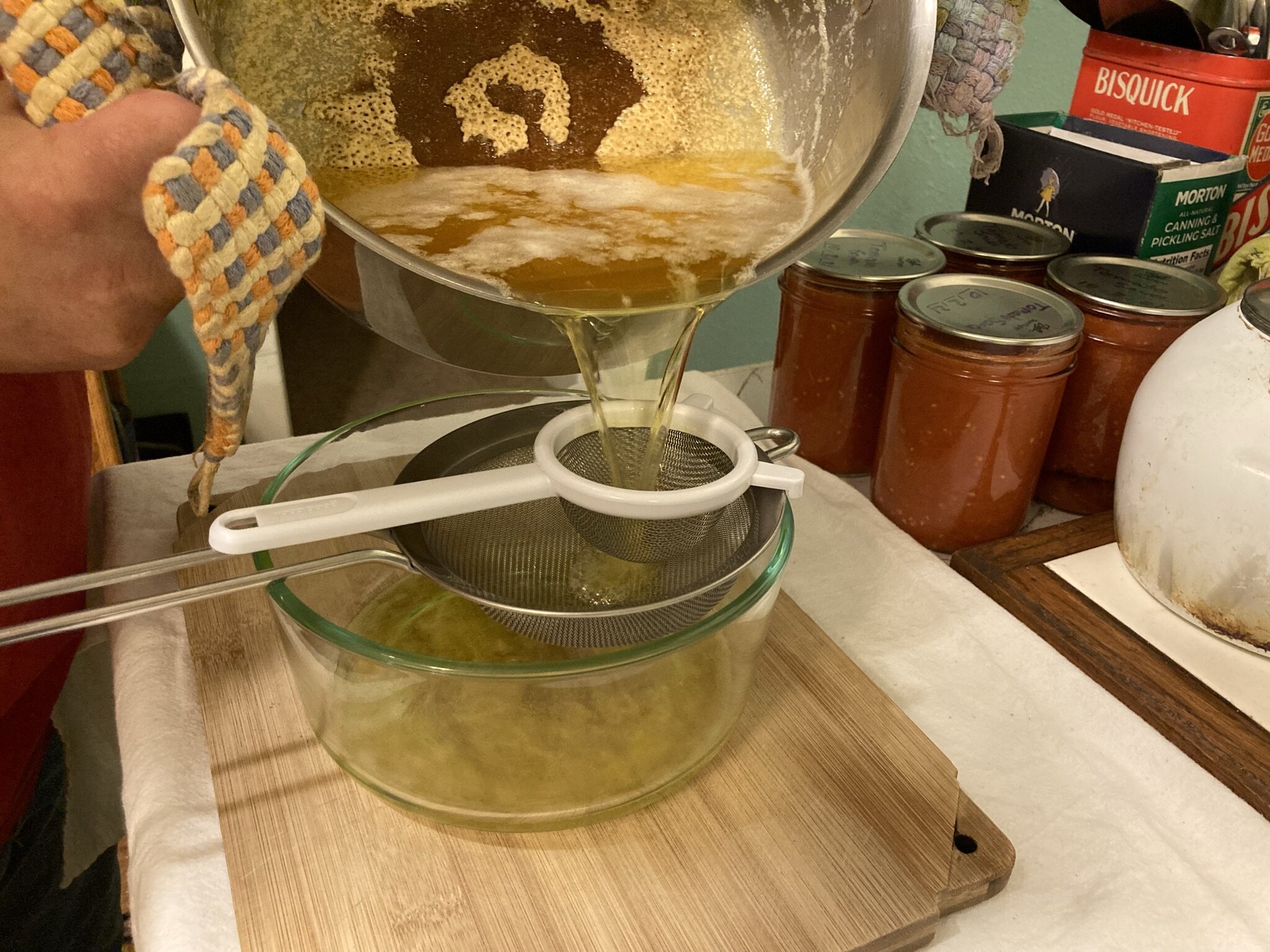
Home-made ghee isn’t just about purity; it’s about reclaiming a piece of tradition, understanding the value of patience, and enjoying the unmatched taste of something truly pure. It’s an investment in health, culture, and taste. Try making it yourself, and you’ll realize it’s priceless in ways you never imagined.
In a world where authenticity is rare, making your own ghee is a bold step towards preserving the purity of tradition and health. Would you take that step today?
Comments

Hi, I’m Nishanth Muraleedharan (also known as Nishani)—an IT engineer turned internet entrepreneur with 25+ years in the textile industry. As the Founder & CEO of "DMZ International Imports & Exports" and President & Chairperson of the "Save Handloom Foundation", I’m committed to reviving India’s handloom heritage by empowering artisans through sustainable practices and advanced technologies like Blockchain, AI, AR & VR. I write what I love to read—thought-provoking, purposeful, and rooted in impact. nishani.in is not just a blog — it's a mark, a sign, a symbol, an impression of the naked truth. Like what you read? Buy me a chai and keep the ideas brewing. ☕💭 For advertising on any of our platforms, WhatsApp me on : +91-91-0950-0950 or email me @ support@dmzinternational.com
