
Justice Karnan: The Judge Who Dared to Judge the Judges
In the corridors of Indian judiciary, few names have stirred as much controversy, courage, and conversation as Justice Chinnaswamy Swaminathan Karnan. A man who once walked into courtrooms with the flair of a movie character, clad in coat and confidence, is not just a cinematic figure. He’s a chapter in Indian legal history that refuses to be forgotten.

The man who walks in with a coat in full movie style is Justice Karnan
The First Dalit Judge of the Madras High Court
Justice Karnan made history by becoming the first Dalit judge appointed to the Madras High Court in 2009. But what followed was far from a routine judicial career. In 2017, while still serving as a sitting judge, Karnan sent shockwaves through the system by writing a letter to Prime Minister Narendra Modi—a letter that named 20 sitting and retired judges, alleging serious corruption charges.
This was unprecedented. For the first time in Indian history, a sitting judge openly accused fellow judges of corruption. It was a moment of reckoning. But instead of investigating the contents of the letter, the system turned on the messenger.
A Constitutional Crisis Unfolds

Justice Karnan’s letter was never officially acknowledged by the Central Government, nor was it made public. What followed instead was a dramatic escalation. The Supreme Court of India took suo motu cognizance and charged Justice Karnan with contempt of court—a rare and extreme move against a sitting High Court judge.
In a symbolic and retaliatory move, Justice Karnan “sentenced” the Chief Justice of India and other apex court judges to five years of rigorous imprisonment, asserting that they were guilty of corruption. Of course, this order had no legal weight—but it demonstrated his defiance.
Eventually, the Supreme Court bench of seven judges sentenced Justice Karnan to six months in prison, making him the first sitting judge in India to be jailed. He was arrested in June 2017 after evading police for weeks and served the full sentence.
Branded ‘Mentally Unstable’ – Silencing the Whistleblower?
At the time, many in the legal fraternity and media questioned Justice Karnan’s mental health, with some outright labeling him as delusional or unstable. His warnings were dismissed. He was vilified, ridiculed, and cast aside.
But recent developments suggest that Karnan’s claims may not have been entirely baseless. With crores of rupees in unaccounted cash being found in the residences of sitting and retired judges, questions are now being raised: Was Karnan really mad, or just too truthful for the system to tolerate?
A Lone Attempt at Judicial Reform
Justice Karnan’s rebellion may have been clumsy, unorthodox, or even outrageous—but his intent was clear: to cleanse the judiciary from within. In his words and actions, he was making a desperate plea to hold the powerful accountable. As he once said in court, “Only the judiciary can reform the judiciary.”
Now, as the dust settles and India watches a wave of anti-corruption raids, Karnan’s warnings sound eerily prophetic.
Final Thoughts : A Vindication in the Present
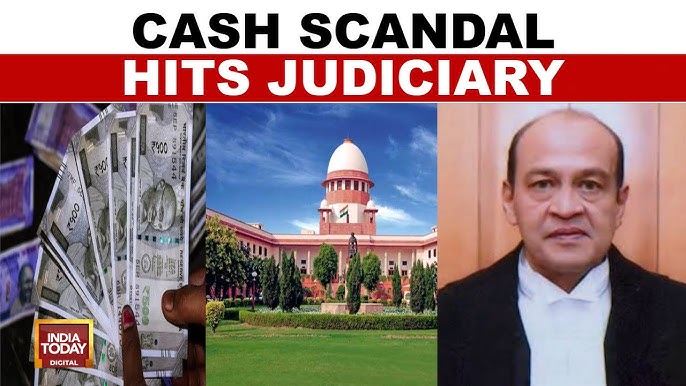
Today, the nation watches as massive amounts of black money are being seized from the homes of judges—confirming what Justice Karnan tried to expose years ago. His lone voice, once dismissed as a rant, now echoes with painful relevance. It forces us to confront a reality we chose to ignore: corruption does exist within the judiciary, and it is no longer just an allegation—it’s a proven fact.
Justice Karnan’s stand, though unconventional, was a humble attempt to reform the judiciary from within. And as the current revelations shake the legal establishment, one truth becomes clear: only the judiciary can reform the judiciary. We, the citizens, have no choice but to hope for more such bold and principled judges to emerge—those unafraid to challenge even the most powerful institutions in pursuit of justice.
Justice Karnan is not just a controversial figure. He is a symbol of what happens when one dares to speak out—even from within the system. Whether you view him as a crusader or a cautionary tale, one thing is undeniable: he exposed the uncomfortable truth that the judiciary, like any other institution, is not immune to corruption.
Perhaps, the time has come to revisit the Karnan chapter—not with contempt, but with introspection and reform.
Comments

Hi, I’m Nishanth Muraleedharan (also known as Nishani)—an IT engineer turned internet entrepreneur with 25+ years in the textile industry. As the Founder & CEO of "DMZ International Imports & Exports" and President & Chairperson of the "Save Handloom Foundation", I’m committed to reviving India’s handloom heritage by empowering artisans through sustainable practices and advanced technologies like Blockchain, AI, AR & VR. I write what I love to read—thought-provoking, purposeful, and rooted in impact. nishani.in is not just a blog — it's a mark, a sign, a symbol, an impression of the naked truth. Like what you read? Buy me a chai and keep the ideas brewing. ☕💭 For advertising on any of our platforms, WhatsApp me on : +91-91-0950-0950 or email me @ support@dmzinternational.com