
From Silence to Salute: The Return of BSF Constable Purnam Kumar Shaw
One Soldier, One Nation’s Wake-Up Call
On April 23, 2025, a name that was unknown to most Indians—BSF Constable Purnam Kumar Shaw—became a symbol of both silent sacrifice and overdue justice. Hailing from Rishra in West Bengal and posted with the 182nd Battalion of the Border Security Force, Shaw accidentally crossed the India-Pakistan International Border near Ferozepur, Punjab, while assisting local farmers. Within minutes, he was apprehended by the Pakistan Rangers, plunging his family and the nation into uncertainty.
This happened just a day after the deadly Pahalgam terror attack on April 22, where 26 Indian civilians and security personnel lost their lives in a Lashkar-e-Taiba strike. The timing of Shaw’s crossing couldn’t have been worse—from that moment, he was caught in a political whirlwind, caught between two nuclear-armed neighbors teetering on the edge of another conflict.
22 Days in Custody: The Unseen Ordeal
For 22 excruciating days, Purnam Kumar Shaw was in Pakistani custody. His whereabouts were not disclosed to the public initially, and no clear updates were provided by either government. The nation was largely silent, with only a few concerned voices—including my blog post titled “12 Days of Silence: One Soldier Forgotten, One Nation Shamed”—urging the Indian government to act quickly before a humanitarian crisis unfolded.
While India dealt with the grief and outrage post-Pahalgam, many feared that Shaw’s safe return would be delayed or even denied as diplomatic tensions soared. Inside Pakistan, his detention was confirmed quietly through military and media sources but without any detailed statement.
Who Negotiated His Release? Behind-the-Scenes Diplomacy
The return of Constable Shaw didn’t happen overnight. It was the result of multi-tiered negotiations, involving several key players and strategic moves:
1. Ministry of External Affairs (MEA), India
India’s MEA formally raised the issue with Pakistani authorities, requesting consular access and pressing for his immediate release under humanitarian grounds. These official diplomatic notes were vital in setting a formal framework.
2. Border Security Force (BSF)
The BSF didn’t wait for foreign ministry alone. Multiple flag meetings were held with the Pakistan Rangers at the border to negotiate a safe handover. The discussions included proof of identity, cross-verification of the incident, and Shaw’s health and safety.
3. Intelligence and Diplomatic Channels
Unofficial backchannels—often used in sensitive cases like this—were also activated. Middle-level diplomats, defense attachés, and intelligence liaison officers coordinated to keep the matter from escalating while pushing for a swift resolution.
4. Global Pressure and the Ceasefire Backdrop
The biggest turning point came when both countries agreed to a ceasefire in early May 2025. This truce, reportedly facilitated by international players including the United States, helped de-escalate tensions. Within this more peaceful context, Pakistan became more willing to return Shaw without losing face.
The Return: A Moment of Dignity at Attari-Wagah
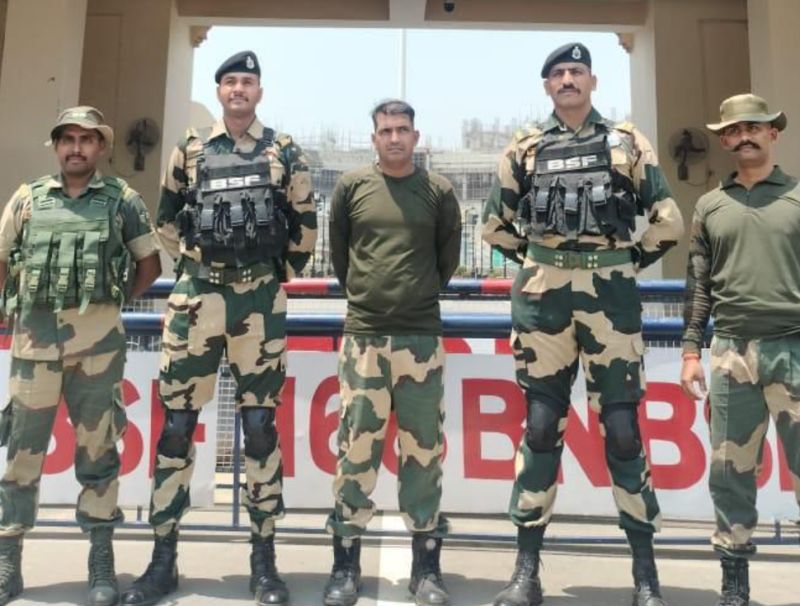
On May 14, 2025, at precisely 10:30 AM, Constable Purnam Kumar Shaw was handed over to Indian officials at the Attari-Wagah border in Punjab. The transfer was conducted peacefully, in full uniform, and under standard procedures for military repatriation.
Indian security officials received him with full respect and ensured his immediate medical evaluation. Later, he was safely transported back to his family in West Bengal.
The Family’s Pain and Gratitude
Throughout the ordeal, Shaw’s family in Rishra had appealed through news channels and social media, begging for swift government action. His mother and sister were in tears when the news of his return broke. The family personally thanked Prime Minister Narendra Modi and West Bengal Chief Minister Mamata Banerjee for their intervention and efforts in securing his release.
What Made This Release Possible?
Several factors aligned to make Shaw’s return possible:
- Non-hostile Intent: It was proven that Shaw crossed over unintentionally while helping farmers, not during a combat mission. This softened the Pakistani stance.
- Ceasefire Agreement: The thaw in Indo-Pak relations after the brutal Pahalgam incident created room for peaceful gestures.
- Diplomatic Pressure: Continuous communication, both official and unofficial, built pressure on Pakistan to not escalate the matter.
- Media and Public Voices: Though mainstream media was slow, grassroots efforts and blogs added emotional weight to the demand for Shaw’s release.
Why This Case Matters
This incident isn’t just about one soldier—it’s about national conscience. Had Shaw not returned, it would have sent a message that in times of conflict, individual lives are dispensable. His safe return reminds us that every soldier counts, and that diplomacy can work, even when cannons are almost fired.
It also highlights the need for faster official communication in such cases, so that citizens and families aren’t left in the dark, clinging to rumors and silence.
Closing Thoughts: From Forgotten to Celebrated
Constable Purnam Kumar Shaw left for duty that morning like any other day. He returned as a symbol of national pride, diplomatic success, and human resilience. His journey from silence to salute is a story India must never forget.
Let this episode remind us: when even one soldier is missing, a whole nation should raise its voice—not after 21 days of silence, but from the very first moment.
No soldier should ever be forgotten. And no silence should ever last this long again.
Comments

Hi, I’m Nishanth Muraleedharan (also known as Nishani)—an IT engineer turned internet entrepreneur with 25+ years in the textile industry. As the Founder & CEO of "DMZ International Imports & Exports" and President & Chairperson of the "Save Handloom Foundation", I’m committed to reviving India’s handloom heritage by empowering artisans through sustainable practices and advanced technologies like Blockchain, AI, AR & VR. I write what I love to read—thought-provoking, purposeful, and rooted in impact. nishani.in is not just a blog — it's a mark, a sign, a symbol, an impression of the naked truth. Like what you read? Buy me a chai and keep the ideas brewing. ☕💭 For advertising on any of our platforms, WhatsApp me on : +91-91-0950-0950 or email me @ support@dmzinternational.com