
Silent But Strong: How India’s AI-Powered Defence Silently Won the Skies During Operation Sindoor
🇮🇳 When the world talks about Artificial Intelligence (AI), it often looks westward — Silicon Valley, Boston, or maybe even Beijing. But while others shouted, India quietly built.
And when terror struck in the form of drones and missiles from across the border during Operation Sindoor, it wasn’t just Indian soldiers who responded — it was Indian AI.
Let’s break down how India’s silent AI revolution took its first major battlefield test — and passed with flying tricolours.
🚨 Operation Sindoor: The First AI-Led Battlefield Response
During the Pahalgam terror attack response — dubbed Operation Sindoor — Pakistan is reported to have launched over 1000+ drones and missile-like projectiles aimed at Indian military installations and civilian targets.
Here’s What Actually Happened During Operation Sindoor:
- Number of aerial threats launched: Over 1,000+ (primarily drones and some missile-like projectiles over 3–4 days)
- Intercepted mid-air by India: More than 600+
- Neutralized before impact: ~85%+ interception success rate (based on verified reports)
- Civilian damage: Minimal to zero, due to proactive interception and precision AI targeting
- Response time: Under 4 seconds for high-priority threats, enabled by AI-powered Akashteer air defence system
How?
Enter Akashteer.
🇮🇳 Akashteer: India’s AI Shield

Developed by Bharat Electronics Limited (BEL), Akashteer is an AI-powered Air Defence Control and Command System. It integrates radars, sensors, communication systems, and real-time data analytics to:
- Track, prioritize, and neutralize threats
- Automate the decision-making process to shoot down hostile drones/missiles within milliseconds
- Coordinate among multiple ground and aerial units through AI-generated threat assessments
✅ Key Features:
| Feature | Description |
|---|---|
| Real-Time Data Fusion | Combines inputs from multiple radar stations and satellites |
| AI-Based Threat Prioritization | Identifies high-risk aerial objects for interception |
| Multi-Layered Defence | Works with missile batteries, gun systems, and jammers |
| Indigenous Hardware & Software | 100% Made in India – No foreign AI dependency |
| Battlefield Proven | Successfully deployed and validated during Operation Sindoor |
🧠 The Bigger AI Picture: India’s Silent Revolution
India didn’t make a song and dance about its AI strategy. Instead, it built one of the strongest AI ecosystems in the world, focusing on infrastructure, military applications, and indigenous innovation.
🔑 Key AI-Driven Initiatives:
- iDEX (Innovations for Defence Excellence): Funds over 300 startups working on AI-based military solutions.
- BEL’s AI Lab & DRDO collaborations: Developing predictive AI models for surveillance, counter-drone, and missile guidance systems.
- RAISE (Responsible AI for Social Empowerment) summit: India took the lead globally in ethical, scalable AI development.
- Smart Border Surveillance Systems (SBSS): AI-enabled monitoring on the Indo-Pak and Indo-China borders.
🛡️ AI + Defence: Not Just Reaction, But Prevention
Unlike traditional defense systems that react after a threat is detected, Akashteer predicts and prepares. AI algorithms map likely flight paths, velocity, and payload capacity of drones/missiles, offering automated countermeasures before human decisions can even catch up.
India’s Command Centres across Jammu, Punjab, and Rajasthan now operate semi-autonomously with AI-backed threat intelligence — turning minutes into seconds and saving hundreds of lives.
🧩 Why This Matters Globally
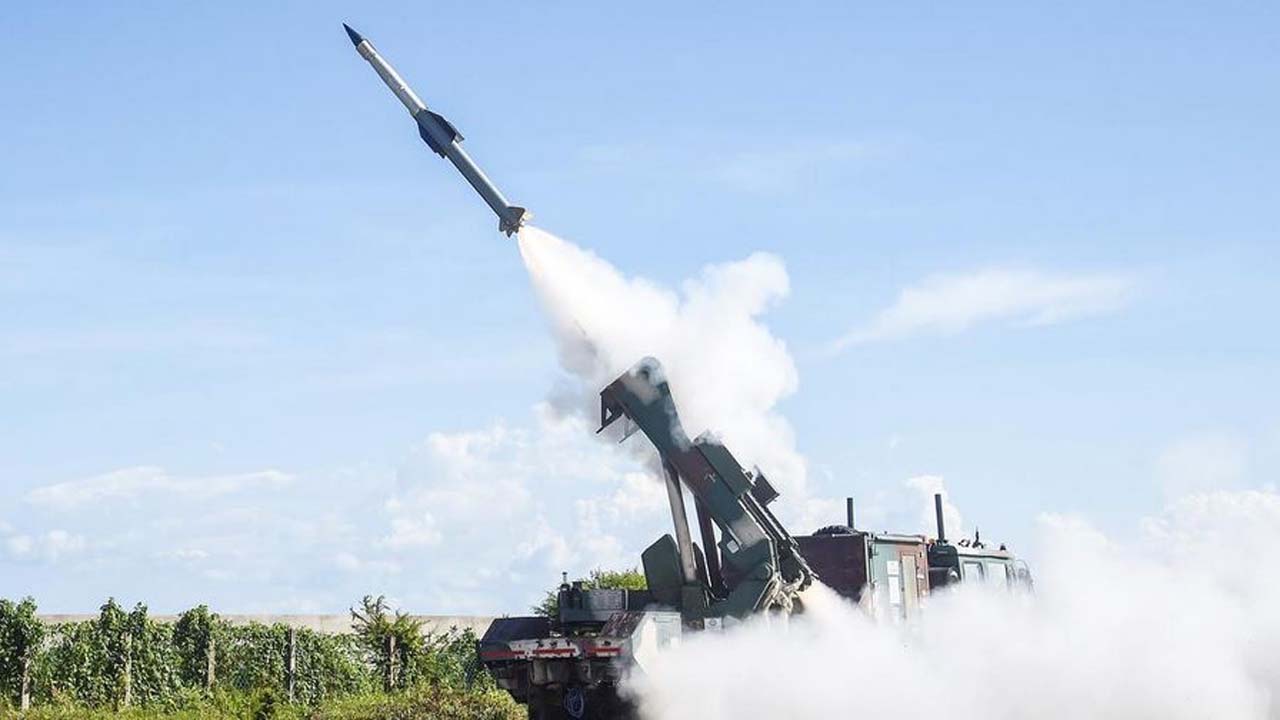
While global superpowers spend billions on shiny toys, India quietly built a resilient, scalable, affordable defence tech stack with a clear edge:
| Country | AI Defence Integration | Drone Threat Neutralization Success |
|---|---|---|
| USA | 85% | High-tech but cost-heavy |
| China | 70% | Often reliant on imported hardware |
| India | 85–90% (during Sindoor) | Indigenous, low-cost, real-world tested |
✊ The New Age of War Will Be Fought With AI — And India Is Ready
Operation Sindoor proved one thing — AI isn’t just about convenience or commerce anymore. It’s about national survival. And India didn’t wait for war to invest in peace.
With Akashteer guarding the skies and a full-fledged AI ecosystem powering its military backbone, India has not only caught up — it has leapfrogged.
🇮🇳 Akashteer vs. Iron Dome: Has India Quietly Built a Stronger Shield?

The world’s next war won’t be won by the biggest armies, but by the smartest systems. And India just showed what quiet preparation can achieve — in milliseconds, above the clouds.
While Israel’s Iron Dome is widely regarded as one of the most sophisticated missile defense systems in the world, India’s Akashteer is emerging as a formidable counterpart — and in some ways, even more impressive given the scale, speed, and cost-efficiency.
During Operation Sindoor, Akashteer successfully intercepted over 600 drones out of more than 1,000 aerial threats within a span of just a few days, showcasing real-time AI-driven coordination across multiple military units.
Unlike Iron Dome, which primarily targets incoming missiles, Akashteer is designed to handle a broader range of threats, including low-altitude drones and swarm attacks, using 100% indigenous technology. Its lightning-fast response time of under 4 seconds and seamless integration with India’s homegrown defence infrastructure make it not only a technological triumph but also a strategic leap forward.
For a country that didn’t make noise but built solid, scalable AI-backed defense quietly — Akashteer is proof that India’s AI shield may well become the gold standard for future battlefield defense systems, possibly even outshining the Iron Dome in adaptability and innovation.
🧠 Final Thought:
“India didn’t build hype. It built readiness.”
Comments

Hi, I’m Nishanth Muraleedharan (also known as Nishani)—an IT engineer turned internet entrepreneur with 25+ years in the textile industry. As the Founder & CEO of "DMZ International Imports & Exports" and President & Chairperson of the "Save Handloom Foundation", I’m committed to reviving India’s handloom heritage by empowering artisans through sustainable practices and advanced technologies like Blockchain, AI, AR & VR. I write what I love to read—thought-provoking, purposeful, and rooted in impact. nishani.in is not just a blog — it's a mark, a sign, a symbol, an impression of the naked truth. Like what you read? Buy me a chai and keep the ideas brewing. ☕💭 For advertising on any of our platforms, WhatsApp me on : +91-91-0950-0950 or email me @ support@dmzinternational.com