Tears, Truth & Golda Meir: The UN Mic Drop That Shook the World
🧨 When Diplomacy Turned into a Masterclass
In a moment that’s already gone viral across diplomatic circles and social media alike, Israeli Ambassador to the UN Danny Danon reminded the world of a brutally honest truth — not with aggression, but with a quote from one of Israel’s most iconic leaders, Golda Meir.
This wasn’t just any quote. This was a thunderbolt. A reality check. A punch wrapped in poetry.
“Mr. Mansour, I want to remind you of the words of our former Prime Minister Golda Meir: ‘Peace will come when you will love your children more than you hate us.’”
He said this in response to Riyad Mansour, the Palestinian Ambassador, who was emotionally overwhelmed during his speech at the UN Security Council.
But why did this moment strike such a chord worldwide?
Let’s rewind a bit.
🎙️ Who Is Danny Danon?
Danny Danon, born in 1971, is no stranger to the high-stakes world of international diplomacy. A seasoned Israeli politician and former Deputy Minister of Defense, he served as Israel’s Permanent Representative to the United Nations from 2015 to 2020.
During his tenure, Danon was known not just for his firm defense of Israeli policies, but for flipping the narrative at the UN, which has long been accused of having a biased tone against Israel. His speeches were sharp, calculated, and often delivered with an undertone of unshakeable national pride.
So, when Danon recently reappeared in headlines, many weren’t surprised — they were just reminded of the kind of firepower he brings to the diplomatic table.
🕊️ Enter Golda Meir: The Iron Lady of the Middle East
To truly appreciate Danon’s mic-drop moment, we need to understand who Golda Meir was.
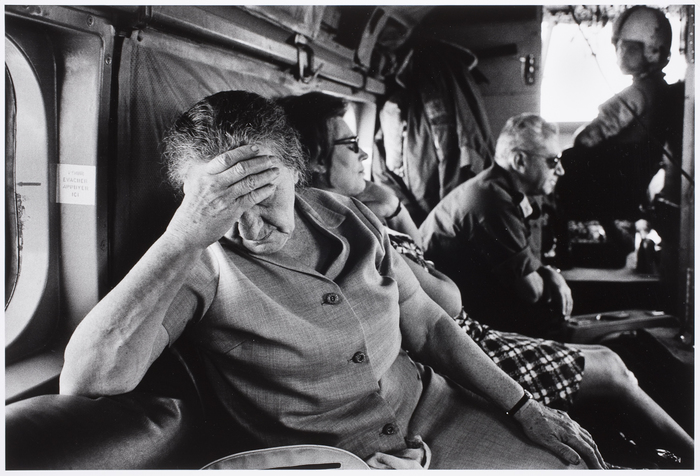
Golda Meir, often dubbed “Israel’s Iron Lady”, was the country’s first and only female Prime Minister (1969–1974). Known for her no-nonsense demeanor and moral clarity, she guided Israel through some of its darkest and most defining moments — including the Yom Kippur War in 1973.
But she was also a humanist. A visionary. A woman who believed peace was possible — but only if both sides truly wanted it.
Her legendary quote, first said in the 1970s, has outlived decades of treaties, conflicts, and broken ceasefires:
“Peace will come when the Arabs will love their children more than they hate us.”
Yes, it stings. Yes, it provokes. But sometimes, the truth has to.
😢 The UN Showdown: More Than Just Words
So what happened at the UN?
Riyad Mansour, representing Palestine, grew emotional while recounting the struggles, deaths, and displacement of his people. It was a heart-wrenching moment — one that drew sympathy, sorrow, and frustration from around the room.
But Danon didn’t counter the tears with data. Or anger. Or whataboutism.
He countered it with Golda — a voice from the past, echoing into the present, asking one haunting question: When will hate take a backseat to hope?
It was a response not aimed to humiliate, but to highlight the futility of perpetual hatred. To remind everyone that the cycle of violence will never end until the next generation matters more than vengeance.
🌍 Why It Matters — Now More Than Ever
In a world drunk on outrage and deafened by ideological noise, this exchange at the UN was a sobering reminder that diplomacy isn’t just about policy — it’s about perspective.
Golda Meir’s quote has survived over 50 years because it captures the essence of what real peace demands: not just negotiations, not just deals, but a fundamental shift in mindset.
Hatred is loud. But love, when finally chosen, is revolutionary.
🔥 Final Thought
Danny Danon didn’t just invoke Golda Meir — he channeled her. In a moment charged with emotion, he pulled out a line forged in decades of war, sorrow, and soul-searching — and held it like a mirror to the world.
Legendary? Without question.
Controversial? Probably.
Necessary? Absolutely.
✍️ By Nishani | www.nishani.in
🕊️ Let’s build a world where we quote peace more often than war. Where we remember children more than we remember borders.
Comments

Hi, I’m Nishanth Muraleedharan (also known as Nishani)—an IT engineer turned internet entrepreneur with 25+ years in the textile industry. As the Founder & CEO of "DMZ International Imports & Exports" and President & Chairperson of the "Save Handloom Foundation", I’m committed to reviving India’s handloom heritage by empowering artisans through sustainable practices and advanced technologies like Blockchain, AI, AR & VR. I write what I love to read—thought-provoking, purposeful, and rooted in impact. nishani.in is not just a blog — it's a mark, a sign, a symbol, an impression of the naked truth. Like what you read? Buy me a chai and keep the ideas brewing. ☕💭 For advertising on any of our platforms, WhatsApp me on : +91-91-0950-0950 or email me @ support@dmzinternational.com