Do AI Creators Even Understand Their Own Creations?
🧠 The Truth Behind Sam Altman’s Misunderstood “Admission”
In today’s clickbait world, a single quote taken out of context can spark a wildfire of misinformation. One such firestorm is this viral headline:
“Sam Altman admits that OpenAI doesn’t actually understand how its AI works.”
Sounds scary, right?
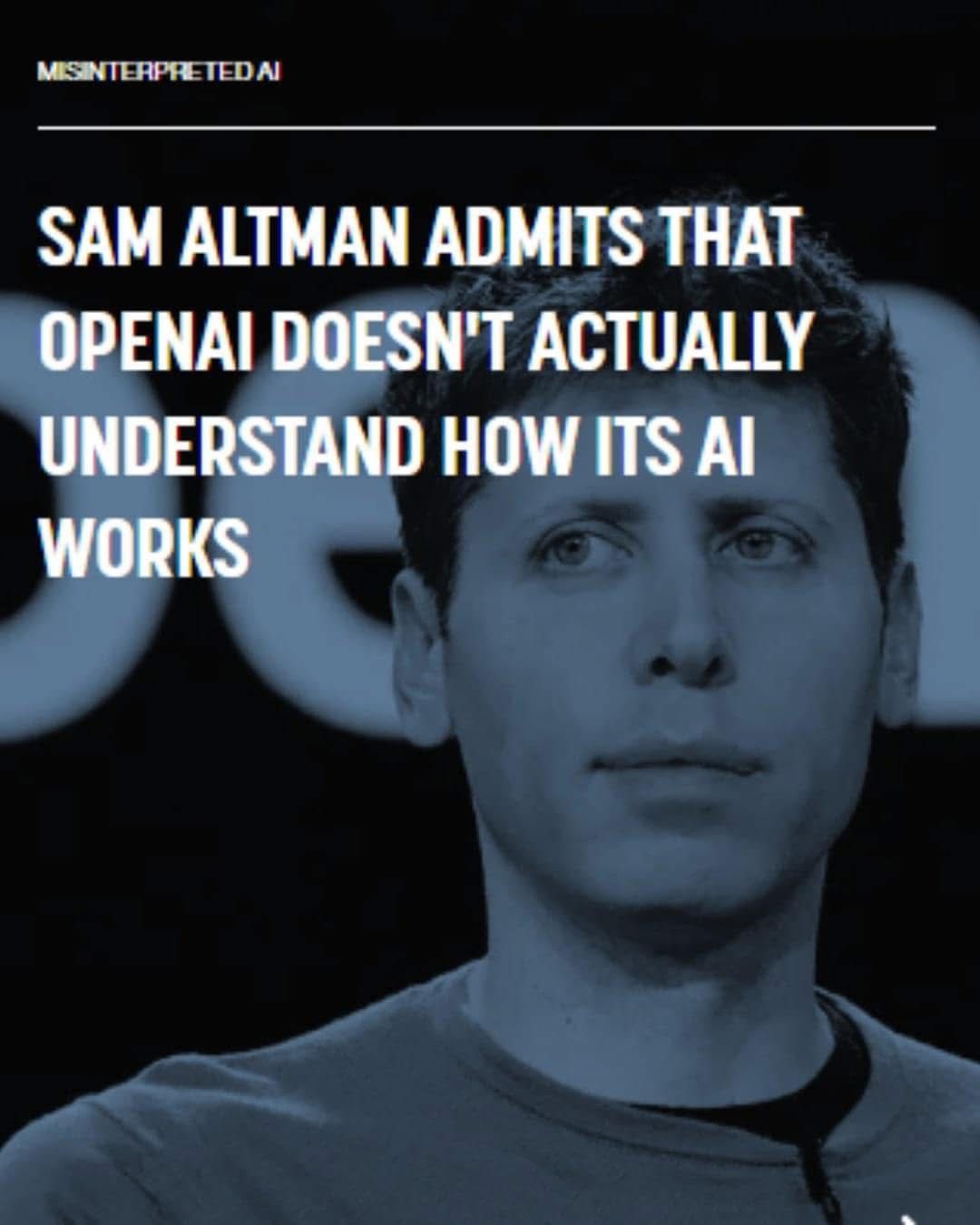
Like someone shouting “I don’t know how to drive!” while hurtling down a highway at 300 km/h. But let’s take a deep breath — and dig deeper.
🔍 The Actual Statement — And What It Means
Sam Altman, CEO of OpenAI, didn’t confess ignorance. What he did acknowledge is a well-known phenomenon in artificial intelligence called emergent behavior. That’s when a system starts showing capabilities that weren’t explicitly programmed into it.
This is common in large-scale AI models like ChatGPT, Google Gemini, Meta’s LLaMA, or Anthropic’s Claude. These models are trained on massive datasets and develop complex internal representations to respond to human input.
Here’s the twist:
Just because developers can’t predict everything the AI will do, doesn’t mean they don’t understand how it works.
🧬 Why AI Seems Like a “Black Box”
AI models — especially deep neural networks — operate with billions of parameters. Their decisions are based on statistical patterns learned from data, not hand-coded rules.
Think of it like training a dog. You can train it to sit, stay, roll over — but sometimes it does something smart or weird that surprises you. You didn’t teach it that. It just figured it out. The same goes for AI.
And let’s be honest — humans don’t fully understand their own brains either. We don’t question that every time someone makes a decision we didn’t expect.
🧠 Science Fact: You Can Use What You Don’t Fully Understand
We’ve used electricity for over a century — long before we had a full understanding of electrons or quantum mechanics. Doctors use anesthesia effectively, even though we still don’t know exactly how it works at the molecular level.
In the same way, we can build and use complex AI systems while still exploring their deeper mechanisms.
👨🔬 So, Is This a Problem?
Yes — but it’s a known and actively researched problem. Fields like:
- AI interpretability
- Model alignment
- Safety and control
…exist specifically to solve these challenges. OpenAI, DeepMind, and others are investing heavily in understanding and improving how these models work internally.
🚨 The Danger Isn’t the AI. It’s the Misinformation.
The biggest threat here isn’t that OpenAI doesn’t “understand” its AI. The threat is in oversimplified, alarmist takes that spread confusion. When we reduce complex scientific challenges to viral soundbites, we:
- Undermine public trust
- Distract from actual safety concerns
- Encourage uninformed fear or blind hype
🧩 Final Thought: Complexity Isn’t Chaos
Sam Altman’s remark wasn’t a confession — it was a call for humility. AI is advancing faster than any tech in history. A little uncertainty is natural. What matters is accountability, transparency, and responsible innovation.
So no, OpenAI isn’t driving blindfolded. They’re just navigating uncharted territory — with a compass, a map, and a lot of people trying to read both at once.
Author’s Note:
Next time you see a spicy AI headline, take a moment to ask — Is this reporting the truth, or just selling fear?
Let’s keep asking the hard questions — but let’s make sure they’re the right questions.
Comments

Hi, I’m Nishanth Muraleedharan (also known as Nishani)—an IT engineer turned internet entrepreneur with 25+ years in the textile industry. As the Founder & CEO of "DMZ International Imports & Exports" and President & Chairperson of the "Save Handloom Foundation", I’m committed to reviving India’s handloom heritage by empowering artisans through sustainable practices and advanced technologies like Blockchain, AI, AR & VR. I write what I love to read—thought-provoking, purposeful, and rooted in impact. nishani.in is not just a blog — it's a mark, a sign, a symbol, an impression of the naked truth. Like what you read? Buy me a chai and keep the ideas brewing. ☕💭 For advertising on any of our platforms, WhatsApp me on : +91-91-0950-0950 or email me @ support@dmzinternational.com