
The Hidden Truth of Nur Khan Airbase: How the U.S. Took Control of Pakistan’s Most Sensitive Military Asset
🛬 A Base That’s Not Really Pakistan’s
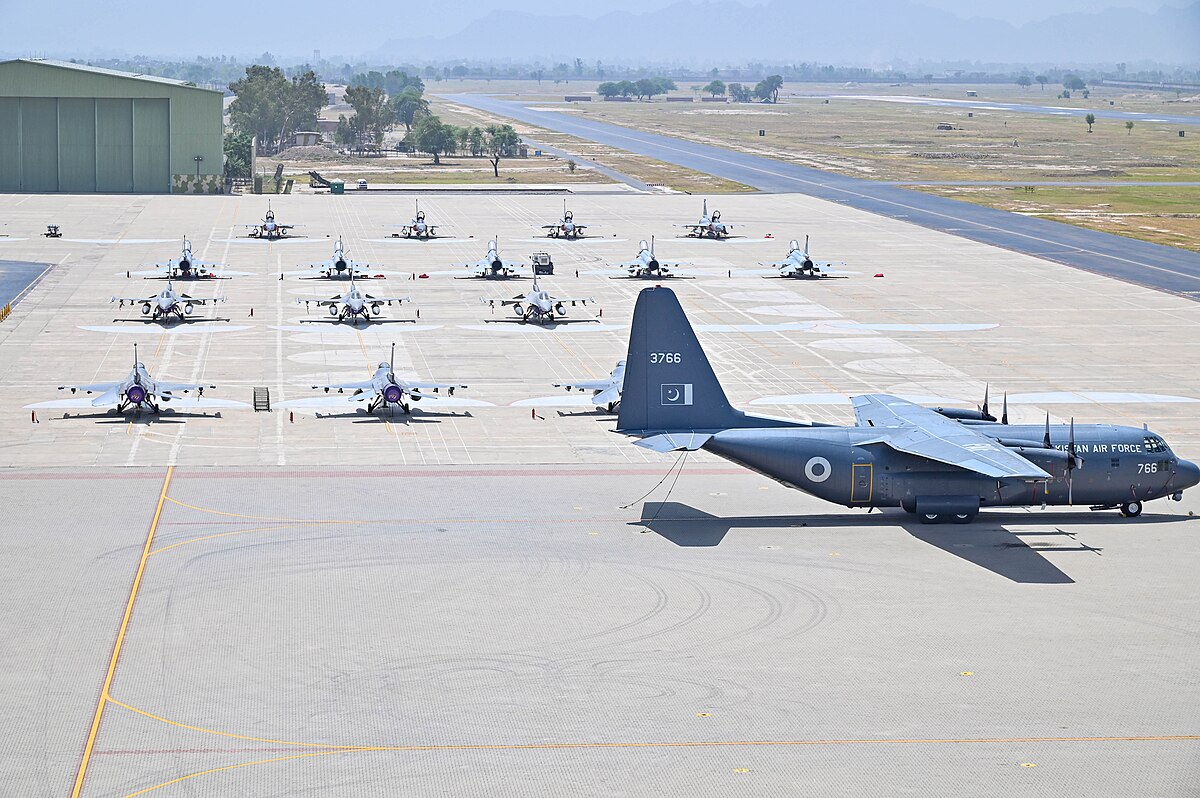
At first glance, Nur Khan Airbase (previously known as Chaklala Airbase) in Rawalpindi appears to be just another key military base in Pakistan. But peel back the surface, and you’ll find a tale of secrets, surrender, and silent superpower control.
Recently, a shocking claim by a Pakistani expert has stirred public attention—the United States, not Pakistan, controls the Nur Khan Airbase, and not even the Pakistani Army is allowed full access inside.
This isn’t a conspiracy theory. It’s an open secret now cracking wide open.
🕵️ How Did the U.S. Get In?
It all traces back to the early 2000s post-9/11 era, when the U.S. launched its “War on Terror.” Pakistan, under General Pervez Musharraf, became a “major non-NATO ally.” In return for billions in military aid and economic bailouts, Pakistan offered silent access to several strategic assets, including airbases.
While the public focused on Bagram in Afghanistan and drone strikes in Waziristan, the U.S. quietly made Nur Khan its South Asian command center for intelligence, drone coordination, and emergency extraction ops.
🚨 What’s Really Inside Nur Khan Airbase?
What’s been hidden from the world:
- CIA Forward Operating Base (FOB): Used for drone strike operations and surveillance over Pakistan, Afghanistan, and even parts of Kashmir.
- Secretive Runway Zones: Separate from the commercial military and PIA zones, some hangars are permanently restricted. Sources say US private military contractors and advanced UAV systems are stationed here.
- NSA Listening Posts: Several satellite dishes and signal interceptors are positioned here for tapping regional communications.
- Storage of Tactical Assets: While unconfirmed, some insiders hint at low-yield tactical nukes or drone-deployed smart weapons stored under joint U.S. oversight.
- Evacuation Hub: Designed as a U.S. “Plan B” exit point in case of regional collapse, complete with high-priority exit protocols for American personnel.
💣 Why Did Pakistan Beg for Ceasefire in Just 36 Hours?
In recent border tensions, India launched precision strikes that reportedly compromised several Pakistani strategic zones. But here’s the catch—one of those zones had links to Nur Khan Airbase’s extended security perimeter.
Within 36 hours of the strikes:
- Pakistan initiated back-channel talks.
- They reached out to the U.S., fearing further strikes could expose or damage U.S. operations at the base.
- Trump declared the ceasefire first—even before India did—raising eyebrows globally. Why the rush?
Because the U.S. couldn’t risk its covert presence and activities being caught in the middle of a military confrontation between India and Pakistan.
🤯 Who’s Controlling Who? The Real Power Dynamic
Pakistan often plays the double game—ally to China in public, partner to America in secret.
- U.S. uses the airbase to monitor both China and Afghanistan, bypassing diplomatic barriers.
- In return, Pakistan gets economic bailouts, diplomatic shielding in FATF, and strategic leverage over India.
But this relationship is not equal. Pakistan is the subordinate here, allowing its sovereignty to be auctioned for dollars and political survival.
🤐 Why the Lies? Why Is Pakistan Saying India Came Begging?
Simple: Narrative warfare. The truth is India had no reason to request ceasefire. It was Pakistan that blinked, afraid further exposure would reveal the American control over sensitive zones like Nur Khan and damage their “Islamic sovereignty” image.
By claiming India requested peace, they aim to save face domestically and mask the panic call they made to Washington.
🔍 The Final Thought: A Nation’s Sovereignty for Rent
The Nur Khan Airbase isn’t just a military zone. It’s a symbol of a country that handed over its deepest secrets for short-term gains.
Pakistanis deserve to ask:
- Who really controls our land?
- Why does our army take orders from foreign governments?
- And at what cost are we selling our independence?
This is not just about military strategy. It’s about the soul of a nation being outsourced—piece by piece, base by base.
💥 It’s time the world sees Pakistan not as a victim, but as a willing host of foreign powers, operating bases that even its own army cannot fully access.
📌 The truth is out there. And now, it’s time to confront it.
Written for: Nishani.in
Topic: Strategic Sovereignty vs. Silent Subjugation – The Nur Khan Airbase Reality
Comments

Hi, I’m Nishanth Muraleedharan (also known as Nishani)—an IT engineer turned internet entrepreneur with 25+ years in the textile industry. As the Founder & CEO of "DMZ International Imports & Exports" and President & Chairperson of the "Save Handloom Foundation", I’m committed to reviving India’s handloom heritage by empowering artisans through sustainable practices and advanced technologies like Blockchain, AI, AR & VR. I write what I love to read—thought-provoking, purposeful, and rooted in impact. nishani.in is not just a blog — it's a mark, a sign, a symbol, an impression of the naked truth. Like what you read? Buy me a chai and keep the ideas brewing. ☕💭 For advertising on any of our platforms, WhatsApp me on : +91-91-0950-0950 or email me @ support@dmzinternational.com