
Why the British Really Left India
Not Gandhi Alone. Not Nehru Alone. The Army Was About to Explode.
🛑 Cut the Textbook Fluff
We’ve all been told the same polite version — Gandhi’s non-violence, Nehru’s speeches, the Cripps Mission, the Cabinet Mission, the tea parties, and Mountbatten’s glowing farewell.
But here’s the unfiltered truth:
The British ran. Not walked. Because their own soldiers — Indian soldiers — were about to flip the Raj upside down.
⚔️ 1946: The Revolt the British Couldn’t Control
India was simmering after World War II. Then came the bombshell moment:
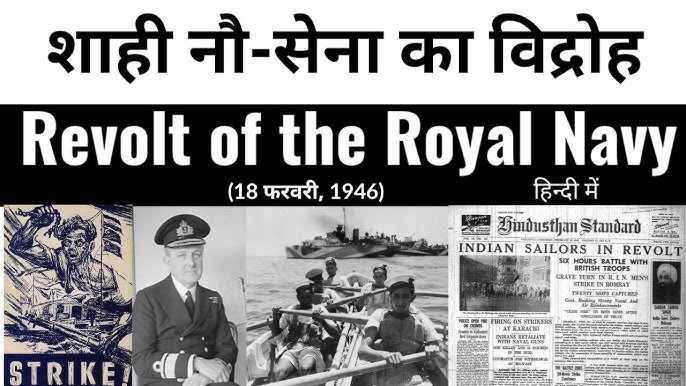
🔥 The Royal Indian Navy Mutiny (February 1946)
- 20,000+ Indian sailors revolted across 78 ships and multiple bases in Bombay, Karachi, and Madras.
- They didn’t ask for a raise. They shouted:
“Quit India!”, “Netaji Zindabad!”, “Jai Hind!” - British officers were taken hostage.
- Civilians, mill workers, railway workers, and students joined the uprising in Bombay.
- The flag of free India was hoisted on naval ships — not by Nehru, not by a politician, but by angry Indian sailors.
This wasn’t just rebellion. It was war inside the Empire.
✈️ Army & Air Force – Silent, But Simmering
- In the Indian Air Force, sympathy was loud. Pilots refused to fly against fellow Indians.
- The Army revolt in Jabalpur was crushed quietly — but it scared the hell out of the British.
- Word spread that soldiers across regiments were ready to rebel.
⚡ The INA Effect: Netaji’s Legacy Set the Fire
Netaji Subhas Chandra Bose didn’t just create the Indian National Army (INA);
he planted an idea:
You can wear the uniform… and still fight for India.
- After the war, INA officers were put on trial by the British.
- Indians — from civilians to soldiers — rose in fury.
Even Jawaharlal Nehru wore his barrister gown to defend them in court.
The British expected loyalty from Indian troops.
What they got was rebellion in uniform.
🧨 Clement Attlee Confessed the Truth
Clement Attlee, the British Prime Minister who signed off on India’s freedom, later revealed it — quietly, without PR fireworks:
The INA trials, the Navy revolt, and the threat of a military uprising made it clear — they couldn’t hold India anymore.
Yes, Gandhi’s movement gave India its moral authority,
but fear of losing their military grip gave the British their final nudge off the cliff.
🧳 August 15, 1947 — An Early Exit
- The British had originally planned to leave by June 1948.
- But panic set in.
They preponed it to August 1947 because they feared:
“If the army revolts fully, we won’t get out. We’ll be thrown out.”
🧠 A History Class They Never Taught Us
Here’s what your textbook didn’t say:
- British India wasn’t scared of marches.
- British India wasn’t scared of resolutions.
- British India was scared of its own army turning its guns on them.
💣 Nishani’s Naked Conclusion:
The British didn’t leave because of peace.
They left because they were staring at the real possibility of civil war — not from the streets, but from their own barracks.
🙏 So Remember This:
India’s freedom was not a polite handover.
It was a pressured exit — triggered by the courage of men who wore British uniforms but dreamt of an Indian flag flying over Red Fort.
Not just Netaji.
Not just Gandhi.
But every unnamed soldier who refused to fire for a foreign king.
This isn’t just history.
This is truth, stitched with blood, betrayal, and the ultimate Indian awakening.
Only on nishani.in
Because truth deserves a platform.
Comments

Hi, I’m Nishanth Muraleedharan (also known as Nishani)—an IT engineer turned internet entrepreneur with 25+ years in the textile industry. As the Founder & CEO of "DMZ International Imports & Exports" and President & Chairperson of the "Save Handloom Foundation", I’m committed to reviving India’s handloom heritage by empowering artisans through sustainable practices and advanced technologies like Blockchain, AI, AR & VR. I write what I love to read—thought-provoking, purposeful, and rooted in impact. nishani.in is not just a blog — it's a mark, a sign, a symbol, an impression of the naked truth. Like what you read? Buy me a chai and keep the ideas brewing. ☕💭 For advertising on any of our platforms, WhatsApp me on : +91-91-0950-0950 or email me @ support@dmzinternational.com