CERN Scientists Turn Lead into Gold — A Real-Life Alchemy Breakthrough
In a breakthrough that would have made ancient alchemists weep with joy, scientists at the European Organization for Nuclear Research (CERN) have done the unthinkable: transformed lead into gold. But before you imagine vaults overflowing with freshly minted gold bars or the collapse of global markets, here’s the reality—this is a triumph of science, not economics.
Let’s dive deep into what really happened, how they did it, and whether this atomic alchemy could reshape the future of precious metals and wealth.
⚛️ The Science Behind the Modern-Day Alchemy

Between 2015 and 2018, CERN’s Large Hadron Collider (LHC), the world’s most powerful particle accelerator, hosted a series of high-energy experiments involving ultra-peripheral collisions of lead ions. These experiments were not aimed at creating gold, but at studying the behavior of matter under extreme conditions.
In these near-miss collisions, lead nuclei—each with 82 protons—passed extremely close to one another without smashing head-on. The intense electromagnetic fields generated in these glancing encounters caused some lead nuclei to eject three protons, turning into gold atoms, which have exactly 79 protons.
This nuclear transmutation, long regarded as a fantasy of medieval alchemists, was observed and recorded for the first time on such a scale. The feat produced a staggering 86 billion gold nuclei—but here’s the twist: the total mass of gold produced was a microscopic 29 picograms. That’s less than a trillionth of a gram, vanishingly small and lasting only fractions of a second before disintegrating.
🔍 Why This Matters – Scientific Significance Over Gold Glimmer

What might seem like a mad scientist’s dream is, in reality, a groundbreaking step in understanding the fundamental forces of nature. This achievement proves that modern physics can indeed manipulate the very building blocks of atoms.
More importantly, the experiment has vast implications for nuclear physics. It sheds light on electromagnetic dissociation—an interaction key to understanding beam losses in high-energy particle accelerators. This can help future collider projects improve efficiency and safety while opening doors to further research into rare nuclear reactions and even the formation of elements in stars.
So no, we’re not making gold to sell. But we’re making strides in science that could unlock the mysteries of the universe.
🏦 Can Gold Be Created in Bulk? The Harsh Reality
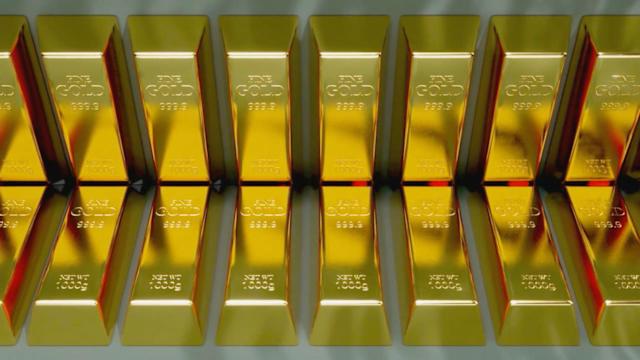
Here’s where dreams meet economics. Even though CERN succeeded in creating gold, the method is anything but practical for commercial use. The energy, machinery, and scale required are beyond comprehension for mass production.
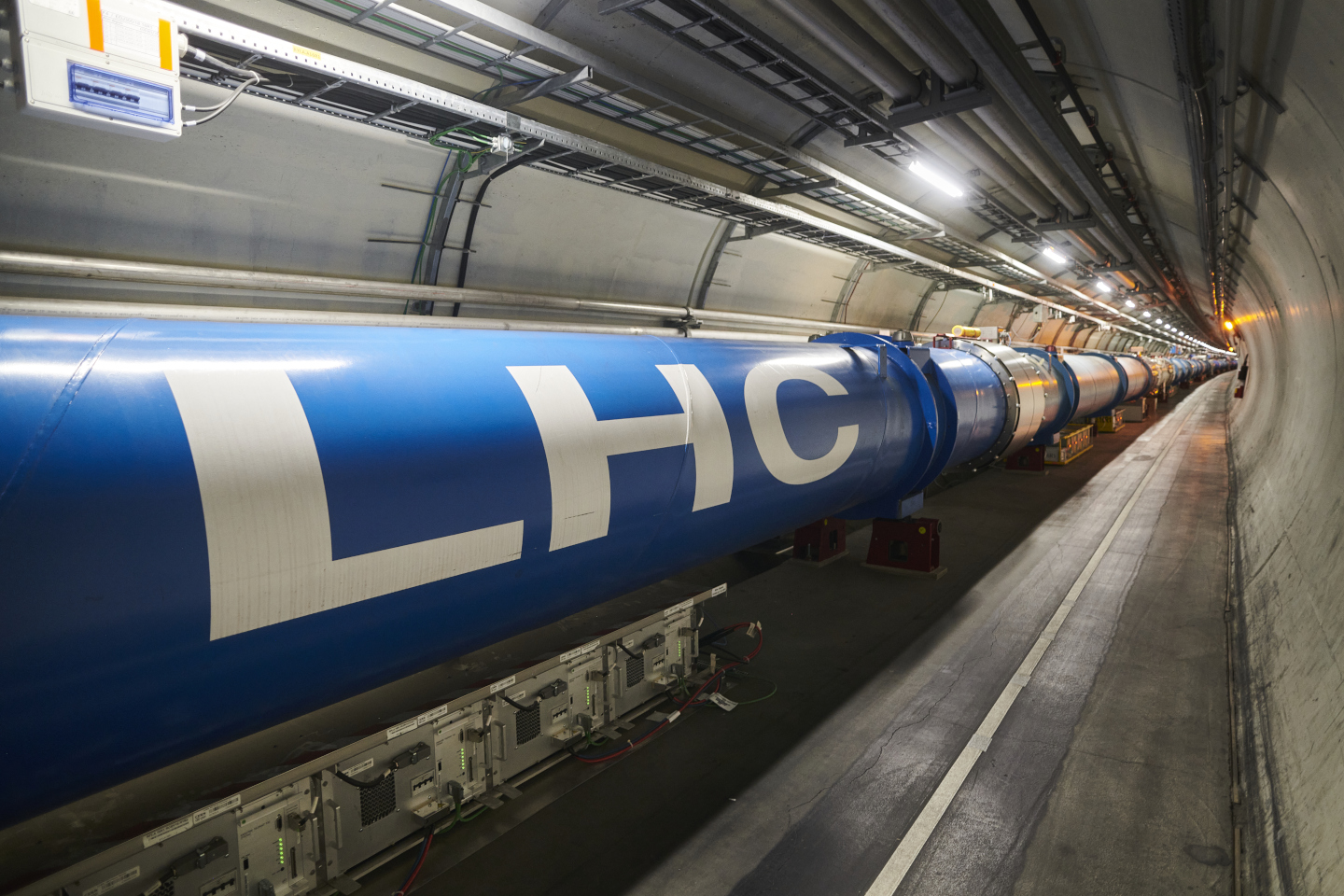
Let’s put this into perspective: the LHC is a 27-kilometer ring buried beneath the French-Swiss border, consuming enormous amounts of power, staffed by thousands of top scientists, and operating on a multi-billion-dollar budget. All this, for a gold yield that couldn’t even be seen by the naked eye.
The cost of creating gold using this method would make it one of the most expensive materials on Earth—utterly unviable as a commodity.
📉 Will It Impact Global Gold Prices?
Absolutely not. While sensational headlines might suggest a future where gold loses its shine due to synthetic production, the reality is that gold’s value remains untouched by this breakthrough.
Gold continues to be a trusted store of wealth, a hedge against inflation, and a symbol of financial security across the globe. The industrial synthesis of gold atoms in such trace amounts doesn’t threaten its status—at least not yet, and not for centuries to come.
In fact, the rarity and effort behind this scientific feat might even elevate gold’s prestige, showing that even with the most advanced technology in human history, nature’s processes remain far superior when it comes to creating valuable elements.
🌟 What the Future Holds
This experiment is not about creating wealth—it’s about understanding creation itself. It’s about asking the big questions: How are elements formed? Can we control atomic structures with precision? Can we unlock new energy sources or materials with superior properties?
As we head into an era where physics, quantum mechanics, and nuclear technology will drive innovation, this gold-from-lead experiment will be remembered as a landmark. Not for what it adds to our bank vaults, but for what it contributes to human knowledge.
✨ Final Thought

The age-old dream of turning lead into gold has finally come true—not through magic, but through science. And in doing so, humanity has once again proven that the universe’s secrets are ours to uncover—not for greed, but for growth.
The real gold here isn’t what glitters—it’s what enlightens.
Comments

Hi, I’m Nishanth Muraleedharan (also known as Nishani)—an IT engineer turned internet entrepreneur with 25+ years in the textile industry. As the Founder & CEO of "DMZ International Imports & Exports" and President & Chairperson of the "Save Handloom Foundation", I’m committed to reviving India’s handloom heritage by empowering artisans through sustainable practices and advanced technologies like Blockchain, AI, AR & VR. I write what I love to read—thought-provoking, purposeful, and rooted in impact. nishani.in is not just a blog — it's a mark, a sign, a symbol, an impression of the naked truth. Like what you read? Buy me a chai and keep the ideas brewing. ☕💭 For advertising on any of our platforms, WhatsApp me on : +91-91-0950-0950 or email me @ support@dmzinternational.com