
Delhi’s ₹15,000 Crore Green Gamble: Can BJP Deliver What Every Government Has Promised? Or Will Delhi Continue Choking Every Winter?
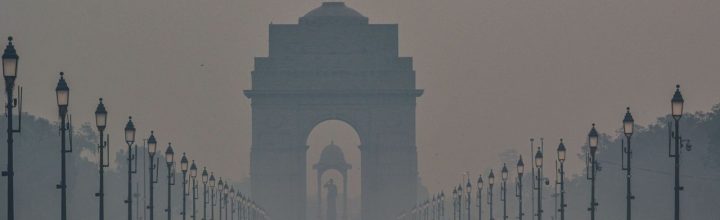
Every year, Delhi lives two completely different lives.
One is the Delhi that appears in travel brochures.
A city of history.
A city of opportunity.
A city of ambition.
A city that powers India’s economy and politics.
The other Delhi arrives quietly around October.
The sky disappears.
The sun becomes a faint orange circle struggling through a thick blanket of smog.
Parents stop allowing their children to play outside.
Morning walks become dangerous.
Hospitals begin filling with asthma patients.
Masks return—not because of a pandemic, but because breathing itself becomes a health risk.
The world’s largest democracy suddenly finds its capital becoming one of the world’s least breathable cities.
Then something fascinating happens.
Everyone becomes an expert.
Some blame farmers.
Some blame vehicles.
Some blame construction.
Some blame neighbouring states.
Some blame previous governments.
Some blame the current government.
Television debates continue.
Political parties exchange accusations.
Experts release reports.
Social media explodes with opinions.
Winter ends.
The air clears.
Everyone moves on.
Until next year.
And the cycle begins again.
Then Came Another Promise…
This time, it wasn’t just another press conference.
It came with a number big enough to make headlines across the country.
₹15,000 Crore.
The Delhi Government under Chief Minister Rekha Gupta has unveiled one of India’s most ambitious electric vehicle policies.
The vision is bold.
A pollution-free Delhi by 2030.
Thousands of crores in incentives.
Massive investments in charging infrastructure.
Support for electric two-wheelers, three-wheelers, cars and commercial vehicles.
Tax benefits.
Scrappage incentives.
No limit on the number of citizens eligible for subsidies.
On paper…
It sounds exactly like the kind of policy Delhi desperately needs.
But there is one uncomfortable truth that history keeps reminding us.
Announcements don’t clean the air.
Execution does.
The Political Battle Everyone Wants to Talk About
The conversation has already started.
“Will BJP succeed where AAP failed?”
But perhaps that question misses something important.
Because if we’re being fair…
The electric vehicle movement in Delhi didn’t suddenly begin this year.
The previous AAP government pushed EV adoption aggressively and made Delhi one of India’s leading cities for electric mobility.
Charging stations began appearing.
Electric buses entered public transport.
Consumers slowly started accepting EVs.
Now BJP has inherited that foundation and is attempting something much larger.
If this policy succeeds…
The victory will not belong entirely to BJP.
If it fails…
The blame cannot rest entirely on one government either.
Cities are not transformed in five years.
Neither are pollution problems created in five years.
Some battles are bigger than election cycles.
This is one of them.
But Here’s What Most People Don’t Realize…
Every winter, millions of people point fingers at vehicles.
“Remove petrol cars.”
“Ban diesel.”
“Push EVs.”
Problem solved.
Unfortunately…
Reality refuses to be that simple.
Imagine removing every petrol and diesel vehicle from Delhi overnight.
Would the city suddenly enjoy blue skies?
Probably not.
Because Delhi’s pollution behaves like a thousand tiny fires instead of one giant blaze.
Construction dust.
Road dust.
Industrial emissions.
Diesel generators.
Open garbage burning.
Seasonal crop residue burning hundreds of kilometres away.
Weather patterns that trap polluted air close to the ground.
Vehicles matter.
But they are only one chapter in a much larger story.
Electric vehicles can reduce one source of pollution.
They cannot solve every source.
Money Isn’t the Biggest Challenge
People often believe governments struggle because they lack money.
That isn’t always true.
Sometimes…
The hardest part begins after the budget is announced.
Can thousands of charging stations actually be built?
Can apartment complexes install charging points without endless disputes?
Can the electricity grid support millions of charging sessions every day?
Can commercial fleets transition without disrupting businesses?
Can subsidies reach ordinary citizens without paperwork becoming another obstacle?
Can public transport electrify fast enough to make a real difference?
Every ambitious policy eventually reaches the same crossroads.
Execution.
Because citizens don’t drive budget announcements.
They drive vehicles.
Can Delhi Really Become Pollution-Free by 2030?
It is an inspiring target.
But perhaps we should ask a different question.
Not…
“Can it happen?”
Instead…
“What has to happen before it can happen?”
Every government department must work together.
Neighbouring states must cooperate.
Industries must comply.
Citizens must change buying habits.
Public transport must improve.
Charging infrastructure must expand faster than vehicle demand.
Electricity generation itself must become cleaner.
This isn’t just an automobile revolution.
It’s an infrastructure revolution.
An energy revolution.
A behavioural revolution.
And What About This Winter?
Here’s where reality meets expectation.
Many people hope that by the coming winter, Delhi’s air will finally improve.
Could there be small improvements?
Possibly.
Will AQI suddenly fall from hazardous levels to healthy levels?
That is highly unlikely.
Because pollution accumulated over decades cannot disappear within a few months.
Replacing millions of vehicles takes years.
Building infrastructure takes years.
Changing consumer behaviour takes years.
Even perfect execution today cannot rewrite tomorrow’s winter overnight.
Nature simply doesn’t work that way.
The Invisible Enemy
Perhaps Delhi’s biggest problem isn’t pollution.
Perhaps it’s memory.
Every November…
People panic.
Every December…
Everyone demands action.
Every January…
Emergency meetings begin.
By March…
The air improves naturally.
By April…
The crisis disappears from public conversation.
By June…
Almost nobody talks about AQI.
Until October returns.
Imagine if we treated pollution the way we treat elections.
Discussed every day.
Demanded accountability every month.
Measured progress every quarter.
Instead of remembering it only when breathing becomes difficult.
Who Has the Upper Hand?
Politically?
The answer isn’t straightforward.
AAP built significant momentum for electric mobility.
BJP now has the opportunity—and the responsibility—to scale it dramatically.
The real winner won’t be the party that makes the biggest announcement.
It will be the party that delivers measurable results.
Not in speeches.
Not on billboards.
Not in advertisements.
But in the air people breathe.
Because no parent has ever looked at their child struggling to breathe and asked,
“Which political party gets the credit?”
They ask only one question.
“When will my child finally breathe clean air?”
The Final Thought
History rarely remembers who announced the biggest budget.
It remembers who changed people’s lives.
If this ₹15,000 crore policy is implemented with discipline, transparency and urgency, Delhi could become the city that proved environmental recovery is possible, even for one of the world’s most polluted capitals.
But if this becomes another document that shines brightly for a few weeks before gathering dust in government files…
Then sometime around November, the same headlines will return.
Schools closed.
Flights delayed.
AQI crosses 500.
Hospitals overwhelmed.
Citizens wearing masks.
And millions of people will once again look up at a grey sky and wonder…
“How many more winters must we sacrifice before clean air becomes more important than politics?”
Because in the end…
Pollution doesn’t vote.
It doesn’t care which party is in power.
It doesn’t read manifestos.
It simply enters every home, every school, every hospital and every pair of lungs.
And that is why Delhi’s battle against pollution is not BJP’s battle.
It is not AAP’s battle.
It is not the government’s battle alone.
It is the battle for the future of every child who calls Delhi home.
Comments

Hi, I’m Nishanth Muraleedharan (also known as Nishani)—an IT engineer turned internet entrepreneur with 25+ years in the textile industry. As the Founder & CEO of "DMZ International Imports & Exports" and President & Chairperson of the "Save Handloom Foundation", I’m committed to reviving India’s handloom heritage by empowering artisans through sustainable practices and advanced technologies like Blockchain, AI, AR & VR. I write what I love to read—thought-provoking, purposeful, and rooted in impact. nishani.in is not just a blog — it's a mark, a sign, a symbol, an impression of the naked truth. Like what you read? Buy me a chai and keep the ideas brewing. ☕💭 For advertising on any of our platforms, WhatsApp me on : +91-91-0950-0950 or email me @ support@dmzinternational.com