
English Shame? Or Economic Game?
🇮🇳 Why India Can’t Afford to Ditch English Just Yet
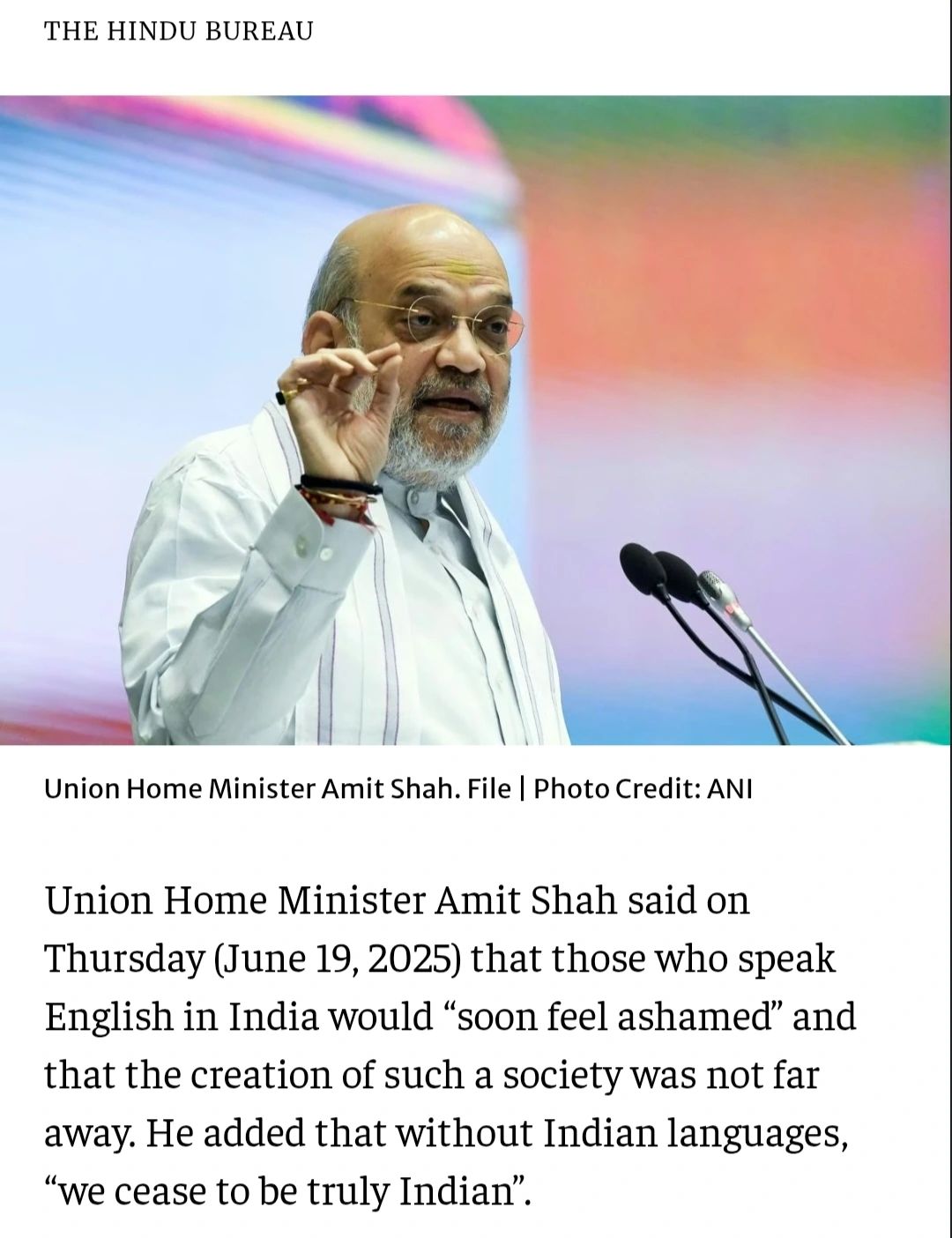
📸 “Soon you’ll feel ashamed to speak English in India” – Amit Shah
Let that sink in. In a nation that built its modern economy on fluency in a colonial language, we now have ministers preaching shame over the very tool that made us a global tech powerhouse.
🇮🇳 The Reality Check: We Don’t Live in Denmark
Let’s get this out of the way first—India is not Scandinavia.
Unlike Sweden or Norway, where nearly 100% of citizens speak their native tongue and English fluently because their population is under 10 million, India is a linguistic tsunami with over 1.4 billion people and 121 major languages. No single Indian language unifies the nation—not even Hindi.
If anything has united us professionally and internationally, it is English.
🧠 The Silicon Paradox: Why Bangalore Boomed
Bangalore—India’s Silicon Valley—was not built on the back of Sanskrit or Tamil. It thrived because it spoke fluent, global-standard English. That’s how:
- 💻 Software Development Outsourcing: The world outsourced to India because our engineers could code and communicate—a combo that China, Russia, and even Brazil struggled to offer at scale.
- ☎️ Call Centers & BPOs: Customer support services for Fortune 500 companies found a home here because Indians could emulate Western accents, use idioms, and resolve issues in fluent English.
- 🌐 IT Startups: Flipkart, Infosys, Zoho, Freshworks—all became global players partly because their pitch decks and products spoke the global language.
- 🎓 EdTech Boom: Platforms like Byju’s, Unacademy, and PhysicsWallah scaled internationally due to English-language content.
Would we be talking about India as the “Next Big Thing” without English? Highly unlikely.
🔍 Let’s Not Rewrite the DNA of Modern Indian Growth
Here’s what English enabled us to do:
| Sector | How English Helped |
|---|---|
| 🧑🎓 Education | Global degrees, journals, and research papers |
| 🧑⚖️ Judiciary | Indian Supreme Court functions in English |
| 📱 Technology | Coding languages, documentation, and AI tools |
| 📈 Economy | Global investor relations and stock market access |
| ✈️ Migration | NRIs thrive because they can communicate |
Our GDP touched $4 trillion not because we clung to linguistic purism, but because we became multilingual and market-ready.
🇮🇳 The Irony of Identity
It’s important to preserve Indian languages—but weaponizing them to induce guilt is cultural extremism. Hindi, Malayalam, Tamil, Kannada, and others are beautiful, vibrant, and essential to our identity. But the truth is, fluency in English is not a betrayal—it’s an economic advantage.
A farmer in Punjab may prefer Punjabi, a tribal in Odisha might prefer Santali, and a CEO in Mumbai might switch between English, Hindi, and Marathi in a single meeting. That’s India’s strength—not a weakness.
🧨 The Danger of Reverse Elitism
Saying “You will feel ashamed for speaking English” is not empowerment. It’s intimidation.
Here’s what it risks:
- ❌ Dividing the population: Between English speakers and “true Indians”
- ❌ Global isolation: Inability to compete or collaborate internationally
- ❌ Economic regression: Loss of foreign investment, tech leadership
English is not a Western enemy. It’s a global currency.
We should be adding languages, not subtracting them.
🌍 Global vs Local: Let Both Thrive
In Sweden, you can find kindergarteners fluent in Swedish and English—without shame.
In Japan, businesses adapt to English without losing Japanese identity.
In Israel, Hebrew coexists with global fluency.
India’s goal should be multilingual mastery—not a monolingual morality campaign.
💬 Final Word: Language Is a Tool, Not a Litmus Test
To be truly Indian is not to speak one language but to respect all of them—and to understand the practical value of English in a world run by emails, codebases, and international deals.
We didn’t conquer the tech world with a “colonial mindset.”
We did it with competence, communication, and confidence.
Let’s not shame the ladder we climbed.
Let’s just build more of them in every Indian language too. 🇮🇳✨
🧠 If India wants to lead the future, we must embrace the global tongue without abandoning our native ones. That’s not betrayal. That’s bilingual brilliance.
Comments

Hi, I’m Nishanth Muraleedharan (also known as Nishani)—an IT engineer turned internet entrepreneur with 25+ years in the textile industry. As the Founder & CEO of "DMZ International Imports & Exports" and President & Chairperson of the "Save Handloom Foundation", I’m committed to reviving India’s handloom heritage by empowering artisans through sustainable practices and advanced technologies like Blockchain, AI, AR & VR. I write what I love to read—thought-provoking, purposeful, and rooted in impact. nishani.in is not just a blog — it's a mark, a sign, a symbol, an impression of the naked truth. Like what you read? Buy me a chai and keep the ideas brewing. ☕💭 For advertising on any of our platforms, WhatsApp me on : +91-91-0950-0950 or email me @ support@dmzinternational.com