India’s Cleanliness Shame: The Starbucks Cup Mentality
Look at the below photo again. Four Starbucks cups. Four silent witnesses to India’s biggest unspoken truth — our filth is not the fault of the poor.
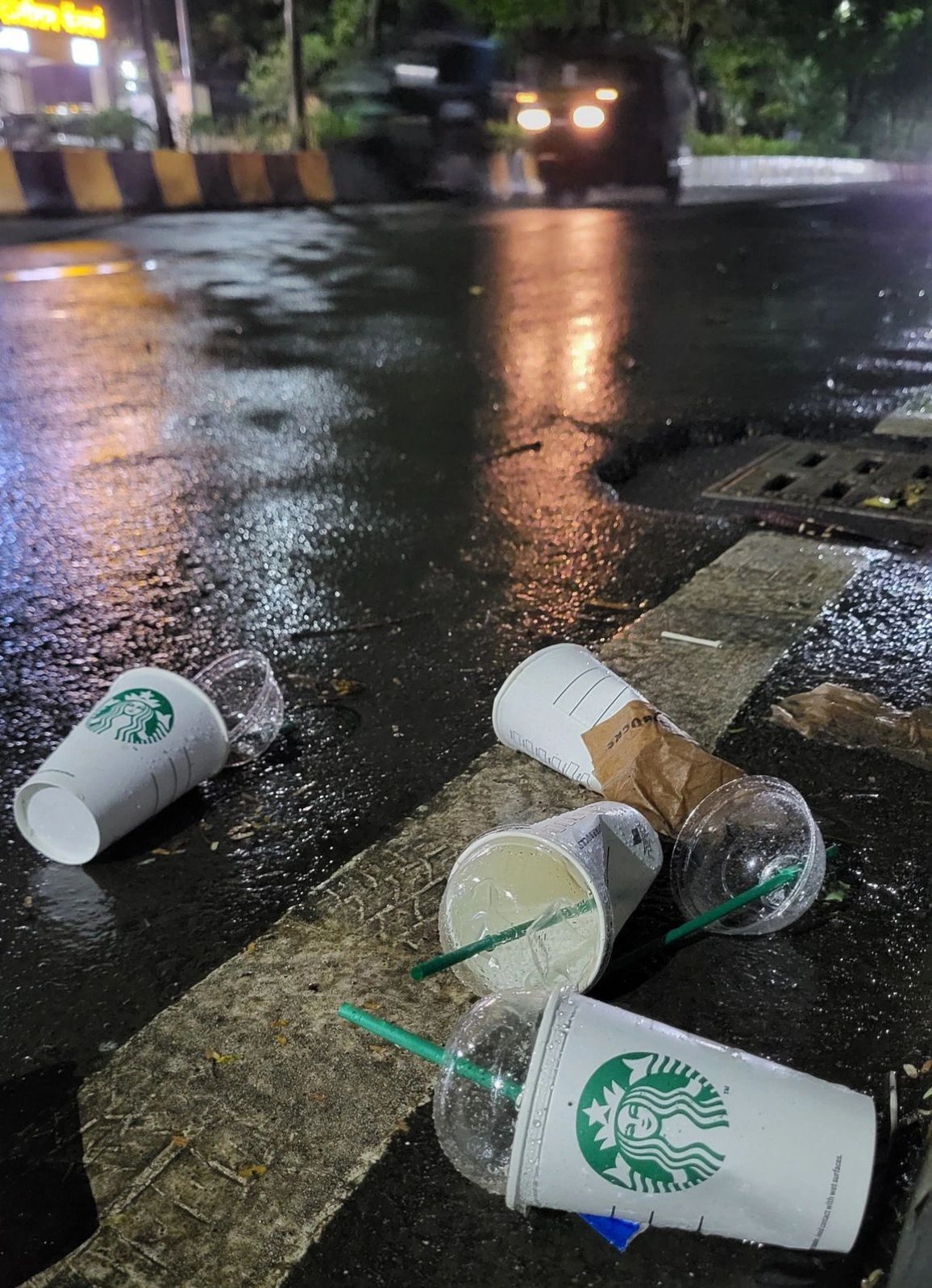
For decades, whenever someone points out India’s garbage-filled streets, we whip out our standard excuses like a magic trick:
- “We have millions of poor people.”
- “Most of our population is uneducated.”
Rubbish.
The people who drank from these cups aren’t selling vegetables on the roadside. They’re not struggling to pay school fees. These are your high-salaried IT crowd, your Instagram foodies, your SUV-driving “educated class” — the same crowd that posts #StarbucksLove and #CafeVibes with a filter, and then throws the cup on the road without a thought.
Let’s get it straight:
India’s filth problem isn’t born in the slums — it’s born in our minds. And the rich, the “elite,” the so-called “responsible citizens” are often worse than the poor when it comes to basic civic sense.
The Hypocrisy Olympics
When these same people travel to the US, UK, Singapore, or Japan, they don’t dare to litter. Why?
- Because they know the fine will hurt more than their overpriced latte.
- Because they know someone will report them, and action will be taken.
- Because in those countries, the law is bigger than their ego.
But in India? They know they can get away with it. No fine. No action. No shame. So, they throw it out the car window, light a cigarette, spit on the road, and carry on scrolling Instagram.
They treat foreign countries like temples and treat their own country like a public toilet.
The Real Mentality: “India is Someone Else’s Problem”
This mindset has a name — Entitlement Filth Syndrome — a toxic mix of colonial hangover and taxpayer arrogance.
- Under the British, public spaces weren’t “ours,” so we never learned to care for them.
- Today, the rich believe “I pay taxes, so someone else should clean my mess.”
They don’t think of the road as theirs. They think of it as “government property,” which is just another way of saying “no one’s property.”
And if no one owns it, then no one is responsible for it. That’s the disease rotting our civic culture.
Why the Poor Often Behave Better
Ironically, you’ll find that the street vendor who earns ₹300 a day is often more careful about where he throws his waste — because he lives there. He knows the smell, the flies, the dirt will come back to him. The Starbucks drinker? They dump their cup and drive back to their gated apartment complex, sealed away from the stink they just contributed to.
The Brutal Truth
India will not become clean because of Swachh Bharat campaigns, glossy ads, or celebrity hashtags. India will become clean only when its own citizens — rich, poor, educated, uneducated — stop acting like entitled freeloaders in their own country.
If you think “It’s just one cup, it doesn’t matter,” you are part of the reason this country is drowning in its own garbage. Your “just one cup” multiplied by 1 billion is the reason drains choke, roads stink, and tourists wrinkle their noses the moment they land.
What Needs to Happen
- Fines That Hurt – ₹5,000 minimum for littering. Enforced, not just written in some rulebook.
- Public Shaming – Your name and photo on a public offenders list. Let society know who the pigs are.
- No VIP Immunity – Whether you’re a tech CEO or a chai seller, the law hits equally hard.
- Education That Sticks – Not textbook lectures, but real consequences from school age for littering.
We are quick to compare India with Singapore, but here’s the uncomfortable truth: Singapore didn’t become clean because its people are born angels. It became clean because its government punished filth and its people stopped tolerating it.
Until we stop treating India like a garbage bin that someone else will clean, no amount of GDP growth, metro projects, or “Smart Cities” will make us truly developed.
And if you’re one of those who proudly says, “I follow the rules abroad but not here because this is India,” then remember this — it’s not “India” that’s dirty. It’s you.
Comments

Hi, I’m Nishanth Muraleedharan (also known as Nishani)—an IT engineer turned internet entrepreneur with 25+ years in the textile industry. As the Founder & CEO of "DMZ International Imports & Exports" and President & Chairperson of the "Save Handloom Foundation", I’m committed to reviving India’s handloom heritage by empowering artisans through sustainable practices and advanced technologies like Blockchain, AI, AR & VR. I write what I love to read—thought-provoking, purposeful, and rooted in impact. nishani.in is not just a blog — it's a mark, a sign, a symbol, an impression of the naked truth. Like what you read? Buy me a chai and keep the ideas brewing. ☕💭 For advertising on any of our platforms, WhatsApp me on : +91-91-0950-0950 or email me @ support@dmzinternational.com