
Journal Entry #006 : You Paid ₹5,000 for a Handloom Saree. The Weaver May Have Received Less Than You Imagine.
One of the most common questions I hear is:
“Why should I spend ₹5,000 on a handloom saree when I can buy something similar online for ₹999?”
It’s a fair question.
But it’s also a question built on an illusion.
Because the two products are rarely the same.
One is made by machines designed to produce thousands of metres every day.
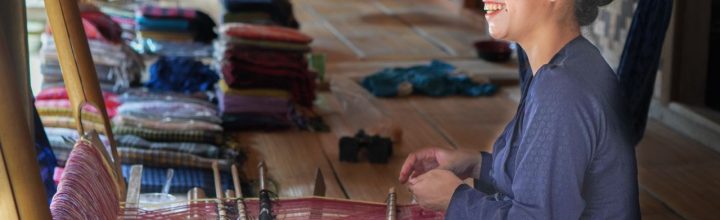
The other may have been woven by a single artisan sitting at a wooden loom, working patiently for days—or even weeks.
Yet what surprises most people isn’t the time it takes.
It’s where the money actually goes.
When customers pay ₹5,000, many imagine that most of that amount reaches the weaver.
I once believed that too.
The reality is far more complicated.
Before the first thread even reaches the loom, someone has already paid for cotton, silk, linen, wool, or another natural fibre.
Then comes spinning.
Sometimes dyeing.
Warping.
Preparing the loom.
Design development.
Sampling.
Rejected samples.
Electricity.
Transport.
Packaging.
Storage.
Photography.
Website costs.
Marketplace commissions.
Payment gateway fees.
GST.
Returns.
Customer support.
Marketing.
Warehousing.
Inventory that never gets sold.
Every one of these costs quietly takes its share before the product reaches a customer.
And somewhere in the middle sits the person whose hands actually created the fabric.
The weaver.
Ironically, the most skilled person in the entire supply chain is often the least visible.
Many consumers imagine handloom as a straight line.
Weaver.
Customer.
Done.
In reality, the journey is often much longer.
Sometimes the cloth changes hands several times before it reaches a retail shelf.
Each intermediary performs a function.
Some coordinate production.
Some finance yarn purchases.
Some handle quality control.
Some specialise in logistics.
Some connect artisans with national markets.
Not every intermediary is unnecessary.
The real problem begins when transparency disappears.
When nobody can clearly answer:
Who made this?
Where was it woven?
What fibres were used?
How much of the selling price reached the artisan?
Those unanswered questions slowly erode trust.
This is one of the reasons we began building blockchain-backed Digital Product Passports at Handlooom.com years ago.
Not because customers enjoy reading technical details.
But because every handmade product deserves an identity.
Imagine buying a painting without knowing the artist.
Or a signed book without the author’s name.
That would feel strange.
Yet millions of handmade textiles are sold every year without preserving the identity of the very people who created them.
Some may ask whether consumers really care.
I believe they increasingly do.
Today’s buyers aren’t only purchasing products.
They’re purchasing values.
Authenticity.
Transparency.
Sustainability.
Craftsmanship.
Human connection.
The future of handloom won’t be determined by who can produce the cheapest fabric.
Machine-made textiles will always win that race.
The future belongs to those who can preserve trust while creating value for every participant in the supply chain.
That includes the farmer who grows the fibre.
The spinner.
The dyer.
The warping specialist.
The weaver.
The tailor.
The finisher.
The logistics partner.
And finally, the customer who chooses handmade over mass production.
People often ask me whether buying handloom is an expense.
I don’t think it is.
It’s an investment.
Not only in a product.
But in a skill that has survived for centuries despite every technological revolution the world has witnessed.
Every purchase quietly answers a larger question.
What kind of world do we want to support?
One where everything is produced faster.
Or one where craftsmanship still has value.
As the founder of Handlooom.com, I’ve come to believe that the true price of a handloom product isn’t measured by the amount printed on its tag.
It’s measured by the number of human hands whose knowledge, patience, and artistry are woven into every thread.
Perhaps the real question isn’t why handloom costs more.
Perhaps the better question is this:
What would it cost us if these skills disappeared forever?
Comments

Hi, I’m Nishanth Muraleedharan (also known as Nishani)—an IT engineer turned internet entrepreneur with 25+ years in the textile industry. As the Founder & CEO of "DMZ International Imports & Exports" and President & Chairperson of the "Save Handloom Foundation", I’m committed to reviving India’s handloom heritage by empowering artisans through sustainable practices and advanced technologies like Blockchain, AI, AR & VR. I write what I love to read—thought-provoking, purposeful, and rooted in impact. nishani.in is not just a blog — it's a mark, a sign, a symbol, an impression of the naked truth. Like what you read? Buy me a chai and keep the ideas brewing. ☕💭 For advertising on any of our platforms, WhatsApp me on : +91-91-0950-0950 or email me @ support@dmzinternational.com