
Save The Weave: Sadhguru’s Call to Preserve Handloom Tradition and Embrace Natural Fibers
In a world characterized by rapid technological advancements and mass production, the age-old tradition of handloom weaving stands as a testament to human creativity, dedication, and artistry. Sadhguru, a spiritual leader and founder of the Isha Foundation, recognizes the profound beauty and significance of handwoven textiles. With a growing concern for the environment and the detrimental effects of synthetic fibers, there is a pressing need to embrace natural fibers and preserve the handloom tradition. In this blog, we delve into the importance of preserving handlooms and exclusively utilizing natural fibers to pave the way for a sustainable and harmonious future.
The Artistry of Handloom Weaving: A Labor of Love
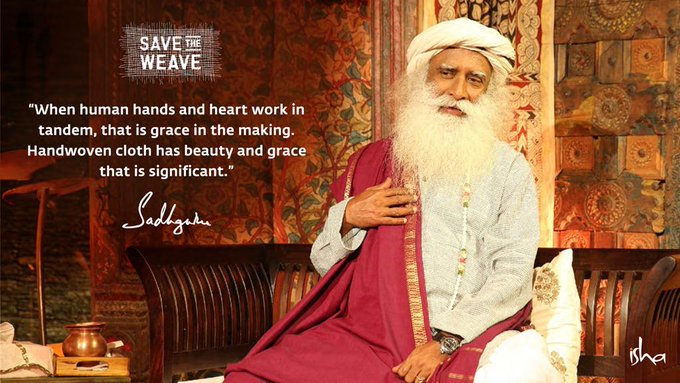
Handwoven textiles are not merely pieces of cloth; they encapsulate the skill, culture, and history of a community. Each thread meticulously placed, each intricate design woven, reflects the dedication of the weaver. Sadhguru’s quote, “When human hands and heart work in tandem, that is grace in the making,” beautifully encapsulates the essence of handloom weaving. The process involves a profound connection between the weaver and the loom, resulting in garments that exude authenticity and uniqueness.
The Need for Preservation

The advent of mass-produced, synthetic fiber-based clothing has threatened the livelihoods of traditional weavers and led to a decline in the handloom industry. As we chase the trends of fast fashion, we often overlook the environmental and cultural consequences of our choices. The handloom tradition, deeply intertwined with rural economies, provides sustainable employment and fosters a sense of pride in craftsmanship. By supporting handloom products, we contribute to the preservation of traditional skills and help uplift marginalized communities.
Synthetic Fibers: The Pollutant Problem
Recent studies in the US have shed light on the alarming impact of synthetic fibers, particularly polyfibers, on the environment. Microplastics from synthetic fabrics pollute our oceans, infiltrate the food chain, and contribute to the degradation of ecosystems. These fibers are non-biodegradable, taking hundreds of years to decompose. As a result, polyfibers have been termed the “largest pollutant now in the universe,” underlining the urgency of transitioning to sustainable alternatives.
Embracing Natural Fibers: A Path to Sustainability

One of the most effective ways to combat the environmental issues posed by synthetic fibers is to return to the use of natural fibers in handloom textiles. Natural fibers, such as cotton, silk, wool, and jute, offer numerous advantages. They are biodegradable, renewable, and require significantly fewer resources to produce. Additionally, their cultivation promotes biodiversity and supports local economies. By opting for handloom products made from natural fibers, we contribute to a cleaner environment and a healthier planet.
Sadhguru’s Vision: Weaving a Sustainable Future

Sadhguru’s teachings often emphasize the interconnectedness of all life forms and the importance of living in harmony with nature. His advocacy for preserving handloom tradition and embracing natural fibers aligns seamlessly with this philosophy. By supporting handloom products, we not only endorse sustainable practices but also invest in products that carry a piece of the weaver’s soul.
Conclusion
In a world grappling with environmental challenges, the wisdom of preserving handloom tradition and prioritizing natural fibers cannot be overstated. Sadhguru’s call to embrace this ethos is a step towards rekindling a sense of reverence for tradition, the environment, and human creativity. By choosing handloom textiles made from natural fibers, we contribute to a movement that seeks to safeguard our planet while celebrating the artistry of the human touch. As we thread the narrative of sustainability and cultural heritage, let us heed Sadhguru’s wisdom and collectively embark on a journey to “Save The Weave.”
Comments

Hi, I’m Nishanth Muraleedharan (also known as Nishani)—an IT engineer turned internet entrepreneur with 25+ years in the textile industry. As the Founder & CEO of "DMZ International Imports & Exports" and President & Chairperson of the "Save Handloom Foundation", I’m committed to reviving India’s handloom heritage by empowering artisans through sustainable practices and advanced technologies like Blockchain, AI, AR & VR. I write what I love to read—thought-provoking, purposeful, and rooted in impact. nishani.in is not just a blog — it's a mark, a sign, a symbol, an impression of the naked truth. Like what you read? Buy me a chai and keep the ideas brewing. ☕💭 For advertising on any of our platforms, WhatsApp me on : +91-91-0950-0950 or email me @ support@dmzinternational.com