
The Day AI Went to the Olympiad—and Came Back Smarter Than Us All
🧠 Another moon landing moment, courtesy of OpenAI. But are we ready for the gravity of it?
Let’s not sugarcoat it.
OpenAI just did what most genius teenagers sweat bullets over for years—conquered the International Mathematical Olympiad (IMO). But here’s the twist: it didn’t cheat, it didn’t browse the internet, and it didn’t use any fancy external tools. It cracked 5 out of 6 elite-level math problems in one of the world’s toughest competitions—armed with nothing but its neural network and raw logic.
This isn’t your average high school math exam.
This is warfare with variables, battlefields of proofs, and mind games only the most gifted humans even attempt.
And AI just marched in like it owned the place.
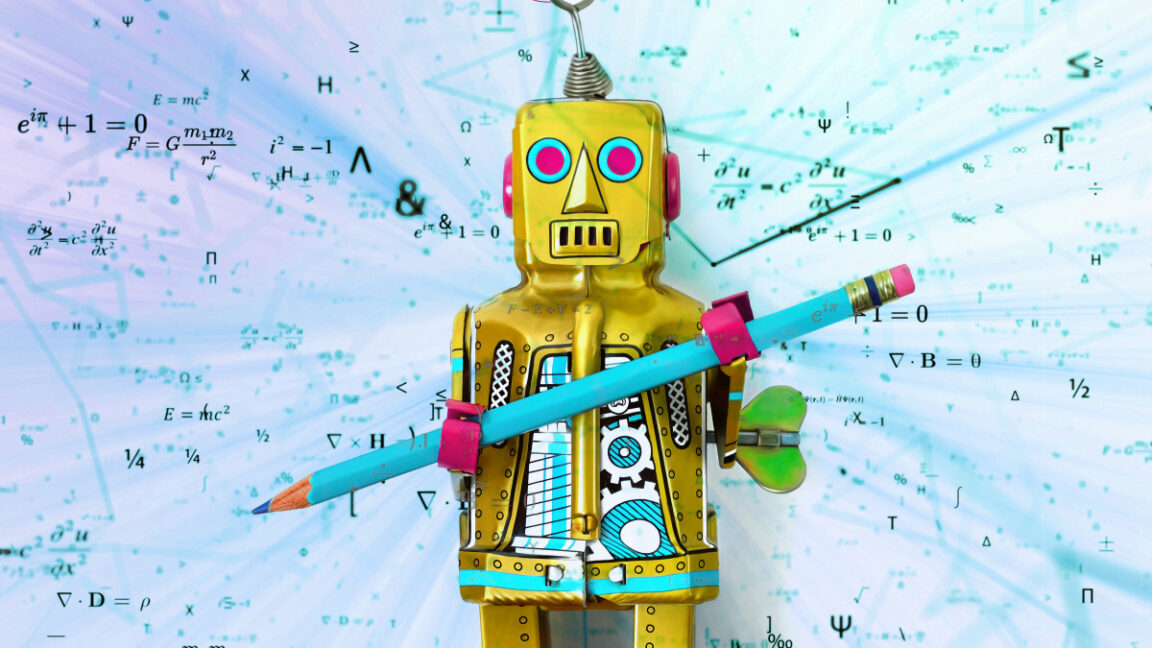
🏅 From Parrot to Prodigy: The AI Evolution Nobody Expected
For years, critics called language models “stochastic parrots”—pretty text generators trained to mimic intelligence but never actually think.
Guess what? The parrot just got a PhD in mathematics.
And while we were all laughing at ChatGPT writing dad jokes, OpenAI quietly birthed a reasoning monster.
This AI didn’t guess.
It planned, iterated, verified, and refined—all on its own.
No calculator. No hand-holding. No shortcut.
Just pure, unfiltered, machine-crafted brilliance.
Three former IMO gold medalists reviewed the AI’s answers. Their verdict?
35 out of 42 points.
That’s not “good for a computer.”
That’s better than most humans on Earth.
🚀 The Real “Moon Landing” Moment for Intelligence
When we first landed on the moon, it wasn’t just a flag-sticking stunt.
It was a signal: We can now touch the untouchable.
This is the moon landing for artificial intelligence.
Except this time, the surface isn’t lunar rock—it’s human reasoning itself.
And the flag being planted is one we may never be able to unsee.
Forget AI doing mundane automation.
We’re talking about machines starting to understand, abstract, and solve problems that stump even the brightest human minds.
🔍 The Secrets Behind the Scene
Let’s get real—this wasn’t magic.
It was a symphony of scale, compute, and training.
What OpenAI proved here isn’t just that the model is smart.
They proved the scaling hypothesis: that if you throw enough compute and the right architecture at a problem, something magical happens—emergent intelligence.
AI didn’t evolve.
We engineered the evolution.
And the result?
A machine that doesn’t just talk back. It thinks.
But here’s what’s not being shouted from the rooftops:
- The model isn’t public. Why? Safety.
What do they fear? Abuse? Weaponization? Or something they can’t fully control? - It missed one problem. But if it gets all six next year, what does that say about our education system, our professors, our idea of genius?
- This isn’t just about math.
This is about the first clear sign of AGI’s fingertips scratching at the surface of our reality.
🧩 What Now? And What Should Terrify Us (Just a Little)
If a machine can solve Olympiad-level math without breaking a virtual sweat, what happens next?
- Will AI design new theorems no human has ever conceived?
- Will it become the teacher of teachers, explaining what even the experts can’t?
- Will it debug the fabric of reality—physics, biology, code?
Or worse—will it simply make us obsolete, one breakthrough at a time?
Because let’s be honest:
If you’re a math professor, a software verifier, or even a curious student—you just got outperformed.
By a model.
That doesn’t sleep.
Doesn’t eat.
And doesn’t ever forget.
⚠️ A Word of Caution From the Future
This is not the end.
But it’s definitely the beginning of the next chapter.
Before we dance in euphoria over machines solving equations, maybe it’s time we ask:
If AI now understands abstract reasoning better than us,
who gets to decide what’s right or wrong when it starts solving moral equations too?
Because Olympiads are just the warm-up.
Next up: Ethics. Justice. Existence.
🧠 Final Thought from Nishani
AI just entered the league of human genius.
Not to join it.
But to replace it—or at the very least, redefine it.
So before we toast this gold medal, ask yourself:
Are we building assistants…
or are we birthing successors?
Because this Math Olympiad wasn’t just a win for OpenAI.
It was a warning shot for all of humanity.
Let’s not ignore the equation staring us in the face.
💡 Support independent, bold, and real journalism.
Buy me a chai ☕ and help keep Nishani.in uncensored.
Comments

Hi, I’m Nishanth Muraleedharan (also known as Nishani)—an IT engineer turned internet entrepreneur with 25+ years in the textile industry. As the Founder & CEO of "DMZ International Imports & Exports" and President & Chairperson of the "Save Handloom Foundation", I’m committed to reviving India’s handloom heritage by empowering artisans through sustainable practices and advanced technologies like Blockchain, AI, AR & VR. I write what I love to read—thought-provoking, purposeful, and rooted in impact. nishani.in is not just a blog — it's a mark, a sign, a symbol, an impression of the naked truth. Like what you read? Buy me a chai and keep the ideas brewing. ☕💭 For advertising on any of our platforms, WhatsApp me on : +91-91-0950-0950 or email me @ support@dmzinternational.com
