
India’s Invisible War: Did We Already Fight a Cyberwar with China in 2021 — and Lose?
A thought-provoking deep dive for Nishani.in
In the age of missiles and media manipulation, wars have evolved. Some no longer need a battlefield or bullets. In fact, the most devastating war India may have faced in the 21st century may have gone unnoticed by most—and unacknowledged by our own institutions. We’re talking about the cyberwar with China in 2021.
And here’s the chilling thought: we may have already lost it.
🔌 The Mumbai Blackout That Wasn’t Just a Blackout
October 12, 2020. Mumbai—India’s financial capital—plunged into a massive power outage, disrupting hospitals, railways, and businesses. At the time, officials blamed it on “human error” and “technical faults.” But behind the diplomatic silence, reports emerged of a far more sinister explanation.
Cybersecurity researchers later linked this event to malware activity from a Chinese hacking group known as RedEcho, which had infiltrated the systems of India’s power grid.
This wasn’t random. It was precise. Timed. Coordinated.
In fact, the breach was traced to multiple Regional Load Despatch Centres (RLDCs), which are responsible for balancing and managing electricity across states. Imagine compromising the brain of a nation’s energy flow—and then simply waiting.
🎯 Who Is RedEcho? And What Was Their Intent?
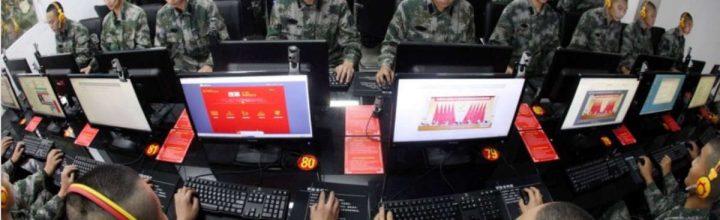
RedEcho is a cyber-espionage group believed to operate under the umbrella of China’s People’s Liberation Army. Their method is quiet: no fireworks, no explosions—just malware silently slipping into the veins of national infrastructure.
They used ShadowPad, a sophisticated remote access trojan (RAT) which has previously been used in operations against multiple countries’ energy and telecom sectors. ShadowPad doesn’t just snoop—it allows attackers to take full control of systems and remain hidden for long periods, gathering intelligence or waiting for the right moment to strike.
The motive? Simple: psychological warfare, deterrence, power projection. This wasn’t an act of curiosity. It was a signal: We can switch you off—anytime.
🧨 What Makes This a War, Not Just Hacking?
Let’s get real. This was not some kid in a basement playing with code. This was an act of state-backed cyber warfare, directed at India’s critical infrastructure during a time of heightened border tensions in Ladakh.
Remember, this was right after the Galwan Valley clashes, where 20 Indian soldiers were killed in a brutal faceoff with Chinese troops. What followed was not just border skirmishes and anti-China sentiments on social media—it was a silent cyberfront opening up in parallel.
India banned over 200 Chinese apps in retaliation. China responded in kind—but also dialed up its cyber activities.
The blackout, coupled with multiple intrusions into India’s power grids, port systems, and even vaccine supply chains, paints a picture of hybrid warfare, where bullets and bytes are equally dangerous.
🤐 Why Didn’t India Acknowledge It Officially?
That’s where the plot thickens.
No government wants to admit its defenses were breached—especially not in the digital realm. Accepting a cyberattack, especially one tied to critical infrastructure, means acknowledging national vulnerability.
India’s official cybersecurity agency, CERT-In, remained largely silent. Some quiet directives were issued to strengthen firewall defenses and initiate security audits—but no bold statement was made.
Why?
- Fear of public panic
- Strategic silence to prevent escalation
- Or worse—lack of full visibility into the breach’s scale
In cyberwarfare, what you don’t see is often more dangerous than what you do.
📉 So… Did We Lose?
If losing means public surrender, no.
If losing means watching your military fall—no.
But in cyberwarfare, losing means your enemy knows more about you than you do about them. It means they have access, control, leverage. And in that sense, India’s power grid, telecom backbone, and essential services were all sitting ducks in 2021.
The fact that no digital ‘retaliation’ was recorded, no official offensive campaign announced, and no transparent incident disclosure made—points to a silent acknowledgement: we were hit, and hit hard.
🧠 The Long-Term Dangers We’re Still Ignoring
The malware may still reside in our systems. Unlike traditional weapons, cyberweapons don’t disappear. They hide in code, activate on command, and can cause devastation without warning.
If China decides to cripple us again digitally, they may not need to write a single new line of code. The backdoors are already open.
Let’s not forget:
- These attacks happened during vaccine development—when the world was already weakened.
- India’s banking sector was also probed for vulnerabilities.
- Several government email servers were scanned and targeted, especially in defence-related institutions.
🔐 What Must India Do Now?
This is not a tech issue. This is national security.
India must:
- Publicly disclose and investigate all cyber breaches—transparency is not weakness.
- Upgrade and harden critical infrastructure with AI-based anomaly detection systems.
- Create a dedicated Cyber Command within the armed forces.
- Strengthen international cybersecurity alliances to share intelligence and response protocols.
- Mandate real-time threat simulations for all power, health, and telecom sectors.
✍️ The Final Thought
We live in a time when war doesn’t look like war. It looks like a blackout. A railway delay. A crashed server. A misbehaving power station. But behind it, there could be a foreign agent tapping on a keyboard, thousands of miles away, holding the lifeline of our nation hostage.
In 2021, we might not have fought a cyberwar with China officially.
But we sure were attacked.
And the real question isn’t whether we lost.
It’s whether we even realized the war had begun.
At Nishani.in, where truth pierces silence, we don’t blink at uncomfortable questions. We light them up.
Comments

Hi, I’m Nishanth Muraleedharan (also known as Nishani)—an IT engineer turned internet entrepreneur with 25+ years in the textile industry. As the Founder & CEO of "DMZ International Imports & Exports" and President & Chairperson of the "Save Handloom Foundation", I’m committed to reviving India’s handloom heritage by empowering artisans through sustainable practices and advanced technologies like Blockchain, AI, AR & VR. I write what I love to read—thought-provoking, purposeful, and rooted in impact. nishani.in is not just a blog — it's a mark, a sign, a symbol, an impression of the naked truth. Like what you read? Buy me a chai and keep the ideas brewing. ☕💭 For advertising on any of our platforms, WhatsApp me on : +91-91-0950-0950 or email me @ support@dmzinternational.com


