
Time Grinds Arrogance into Dust: The Maldives-India Drama and Its Karma-Fueled Climax
A Picture Worth a Thousand Ironies
A viral image now floats around social media: Indian Prime Minister Narendra Modi solemnly signing a document, while Maldives President Mohamed Muizzu stands behind him, unsmiling, watching. Above them, bold words scream:
“Time grinds arrogance into dust.”
And oh boy—does it ever.
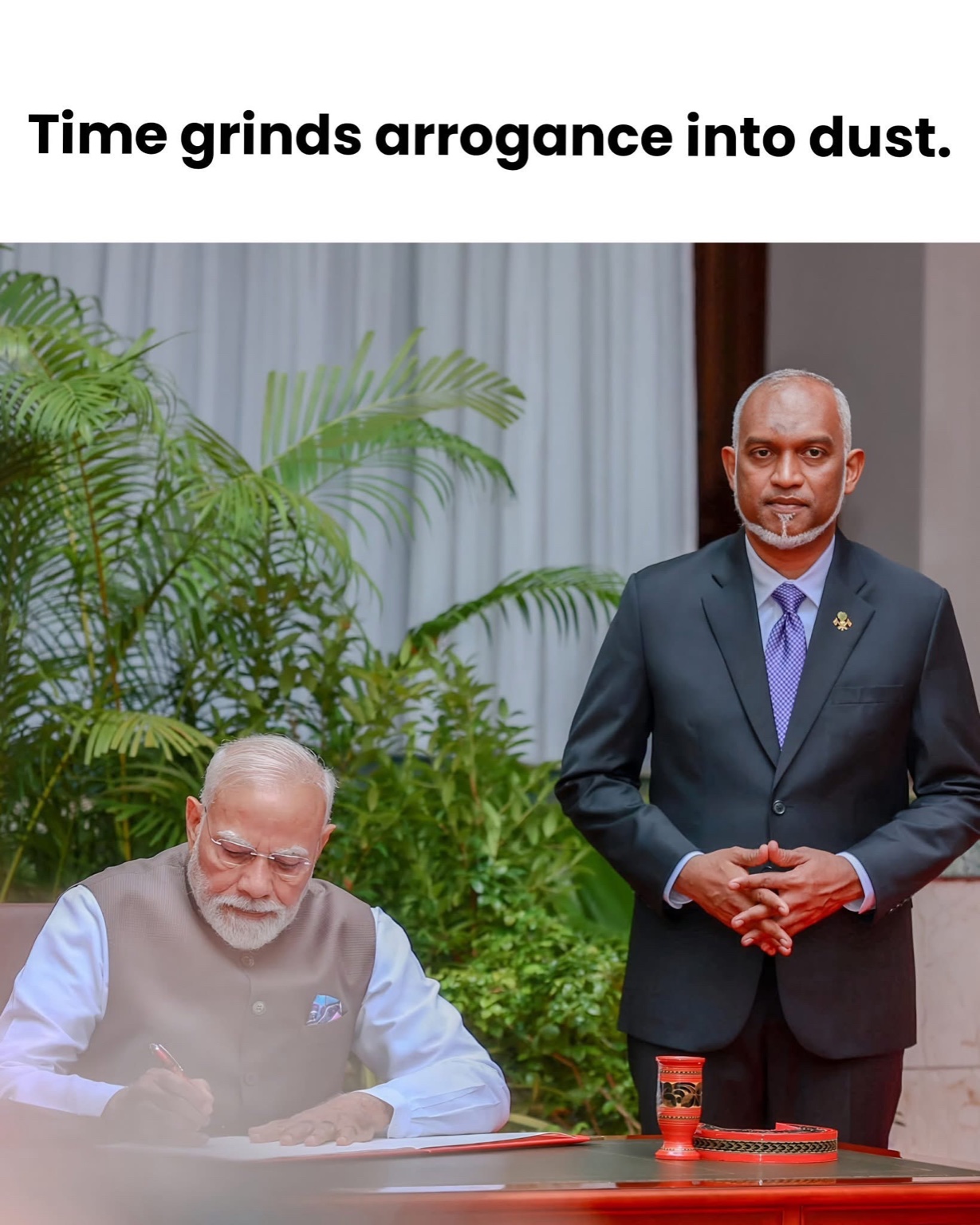
What we’re witnessing isn’t just diplomacy—it’s karma with a clipboard.
Let’s rewind this diplomatic soap opera and unpack the entire saga, one plot twist at a time.
Chapter 1: When a Tiny Island Tried to Poke a Giant
In late 2023, fresh from an election win, Maldivian President Mohamed Muizzu swaggered into office with one mission: play hardball with India. He came riding on the “India Out” campaign—built on the narrative that India’s military and economic presence was a threat to Maldives’ sovereignty.
Then came the now-infamous insult: Three Maldivian ministers made derogatory remarks about PM Modi’s Lakshadweep visit and Indian tourism. One called Indians “terrorists,” and another mocked Indian PM’s photos, calling it a PR stunt.
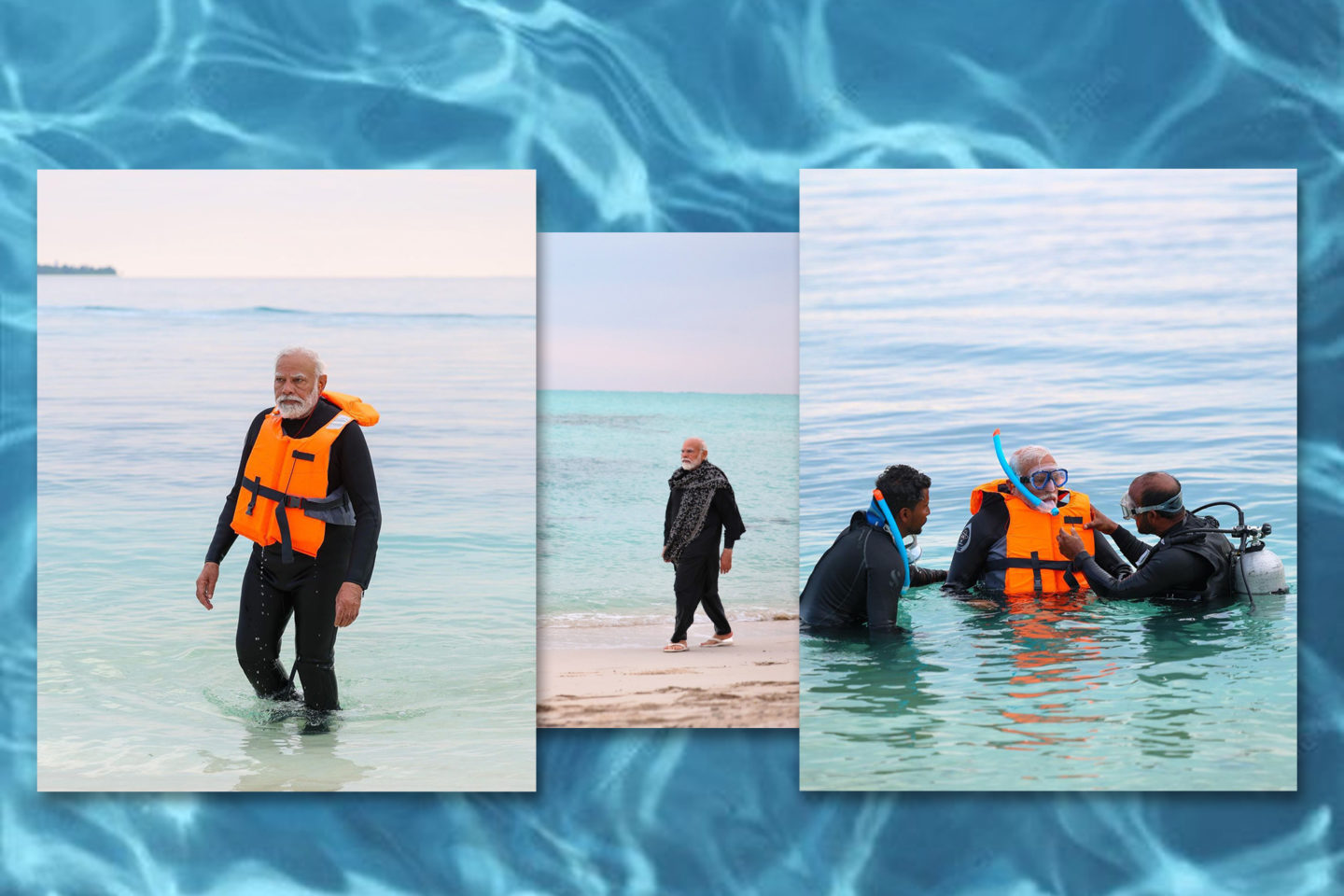
Instead of damage control, President Muizzu doubled down and visited China within days of assuming office—skipping India altogether.
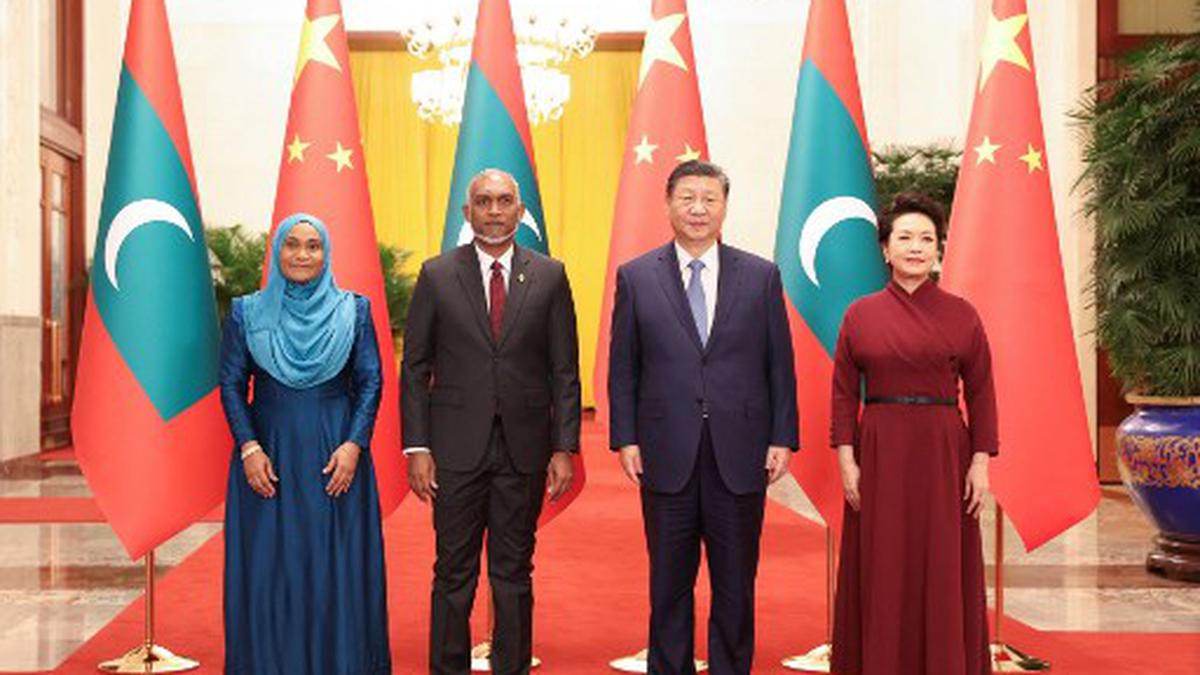
That’s when India, without firing a bullet, responded the Indian way—by boycotting Maldives tourism.
Chapter 2: The Economic Chill: When Indian Tourists Said ‘No Thanks’
Indians weren’t amused. Travel influencers dropped Maldives promotions. Top celebrities chose Lakshadweep or other alternatives. And the average Indian traveller, who had once flooded Maldives’ resorts, simply… stopped booking.
The results? Brutal.
- Indian tourists, who made up more than 20% of Maldives’ arrivals, dropped drastically.
- Maldives’ tourism-dependent economy, already reeling post-COVID, saw sharp revenue slumps.
- Resorts began bleeding money. Some laid off workers.
- Desperate resort owners started pleading anonymously in international media for India to “forgive and forget.”
It’s one thing to bark for sovereignty. It’s another to forget who’s feeding your GDP.
Chapter 3: The Quiet U-Turn: Diplomacy in Desperation
By mid-2024, reality hit Malé like a monsoon wave. President Muizzu softened his tone. Publicly, his office stated they “value India as a strategic partner.” Behind closed doors, diplomats scrambled to re-establish ties.
Muizzu’s arrogance had officially turned into awkward silence.
And then came the photo—the moment where symbolism met irony.
Chapter 4: The Pen and the Paper: India Steps Up, Again
Fast forward to 2025. Despite the insults and boycott, India showed up. PM Modi and Muizzu signed key cooperation agreements, including financial aid and developmental support for Maldives.
Yes, the same leader who once mocked India is now getting support from the same hand he bit.
The same India that was publicly mocked turned around and:
- Agreed to provide financial packages to stabilize Maldives’ fragile economy.
- Committed to infrastructure projects like housing, healthcare, and port development.
- Continued development aid in areas like renewable energy and education.
India did not respond with revenge. It responded with resilience.
Chapter 5: The Moral of the Story — Karma Wears a Suit
This isn’t just about geopolitics. This is a lesson in humility, diplomacy, and that ancient law of the universe—karma.
- Arrogance is intoxicating, but it always comes with a hangover.
- Burning bridges to impress another power (China, in this case) often ends in drowning alone.
- And no matter how small or big a nation is, respect and gratitude matter in international relations.
President Muizzu learned that tough-talking nationalism is easy during campaigns. But sustaining a nation? That takes humility, strategy, and partnerships—not performative pride.
Unknown Nuggets You Probably Didn’t Know:
- Maldivian Debt to China: Maldives owes over $1.4 billion to China, nearly 45% of its external debt. Critics argue Muizzu’s anti-India stance was more about pleasing Beijing than protecting sovereignty.
- India’s “soft power” response: Indian authorities never retaliated harshly. No trade sanctions. No aggressive press statements. Just a calm, effective use of economic diplomacy and public sentiment.
- China’s quiet presence: Even as Maldives distanced itself from India, Chinese tourists did not fill the void. China’s outbound tourism has not yet fully recovered post-COVID. So Maldives got neither the dragon nor the elephant.
- Back-channel diplomacy: It was India’s intelligence and diplomatic backchannel that re-opened the dialogue with Muizzu. The final agreement signed in 2025 had been in silent negotiation since mid-2024.
Conclusion: A Lesson for Every Leader (and Every Human)
Leadership is not measured by soundbites or foreign trips. It’s measured by how you treat partners, how you manage crises, and how you correct your mistakes.
President Muizzu now stands silently behind PM Modi, as history records a moment soaked in symbolism. That image says everything:
- About arrogance meeting its reckoning.
- About karma dressed in khadi.
- And about how time doesn’t scream—it just waits, and grinds.
Final Thought:
When you have power, be kind. When you have pride, be careful. Because the same time that gives you the stage can also switch off your mic.
Let that photo hang in the halls of diplomacy forever.
✍️ Written for Nishani.in
If this moved you, share it. And remember, karma doesn’t need a visa—it visits everyone.
Comments

Hi, I’m Nishanth Muraleedharan (also known as Nishani)—an IT engineer turned internet entrepreneur with 25+ years in the textile industry. As the Founder & CEO of "DMZ International Imports & Exports" and President & Chairperson of the "Save Handloom Foundation", I’m committed to reviving India’s handloom heritage by empowering artisans through sustainable practices and advanced technologies like Blockchain, AI, AR & VR. I write what I love to read—thought-provoking, purposeful, and rooted in impact. nishani.in is not just a blog — it's a mark, a sign, a symbol, an impression of the naked truth. Like what you read? Buy me a chai and keep the ideas brewing. ☕💭 For advertising on any of our platforms, WhatsApp me on : +91-91-0950-0950 or email me @ support@dmzinternational.com