Friendship, Power, and Silence: Is India Losing Its Strategic Voice?

In international politics, friendship between nations is often celebrated. Leaders shake hands, hug on global stages, and call each other “great friends.” But history repeatedly shows that geopolitics is not about friendship. It is about interests, power, and timing.
Since Prime Minister Narendra Modi came to power in 2014, India’s foreign policy has been marked by an effort to maintain friendly relations with almost everyone. On the surface, this looks like a smart strategy. A country that is friends with all major powers should, in theory, face fewer enemies and enjoy more cooperation.
But there is another side to this strategy. Sometimes, trying to be friends with everyone can lead to a situation where no one truly stands with you when it matters most.
This pattern is something many people experience in personal life. Someone may have hundreds of friends, but when a real crisis arrives, only one or two actually show up. The rest disappear. The same logic can apply to nations.
The Trump Factor and India’s Balancing Act
One of the most visible friendships in recent years has been between Narendra Modi and Donald Trump.
The relationship was showcased through massive events such as the “Howdy Modi” rally in the United States and the “Namaste Trump” event in India. Modi even publicly encouraged the Indian diaspora to support Trump during U.S. elections—something extremely rare for a global leader to do.
At the time, it appeared to strengthen India-U.S. relations.
But global politics can change quickly.
Today, Washington is reportedly pressuring India to stop purchasing discounted Russian oil. For India, buying oil from Russia at lower prices has been economically beneficial, especially when global energy prices are unstable.
Donald Trump is reportedly pushing for very high tariffs on exports from India while also pressuring India to increase imports of U.S. raw materials like cotton. This could hurt Indian farmers and domestic industries. India has agreed to discuss the issue, but concrete negotiations are still pending, leaving uncertainty over future trade relations.
Yet geopolitical pressure from the United States forces India into a difficult position: protect economic interests or maintain strategic ties with Washington.
This is the dilemma of balancing friendships with powerful countries whose interests often clash.
US, Israel and Iran: Friends in One Conflict
India historically maintained good relations with multiple powers that do not get along with each other.
For example:
- Israel is one of India’s strongest defense partners.
- Iran has long been important for India’s energy security and regional connectivity.
India even invested heavily in developing the Chabahar Port in Iran, which provides India access to Afghanistan and Central Asia without going through Pakistan.
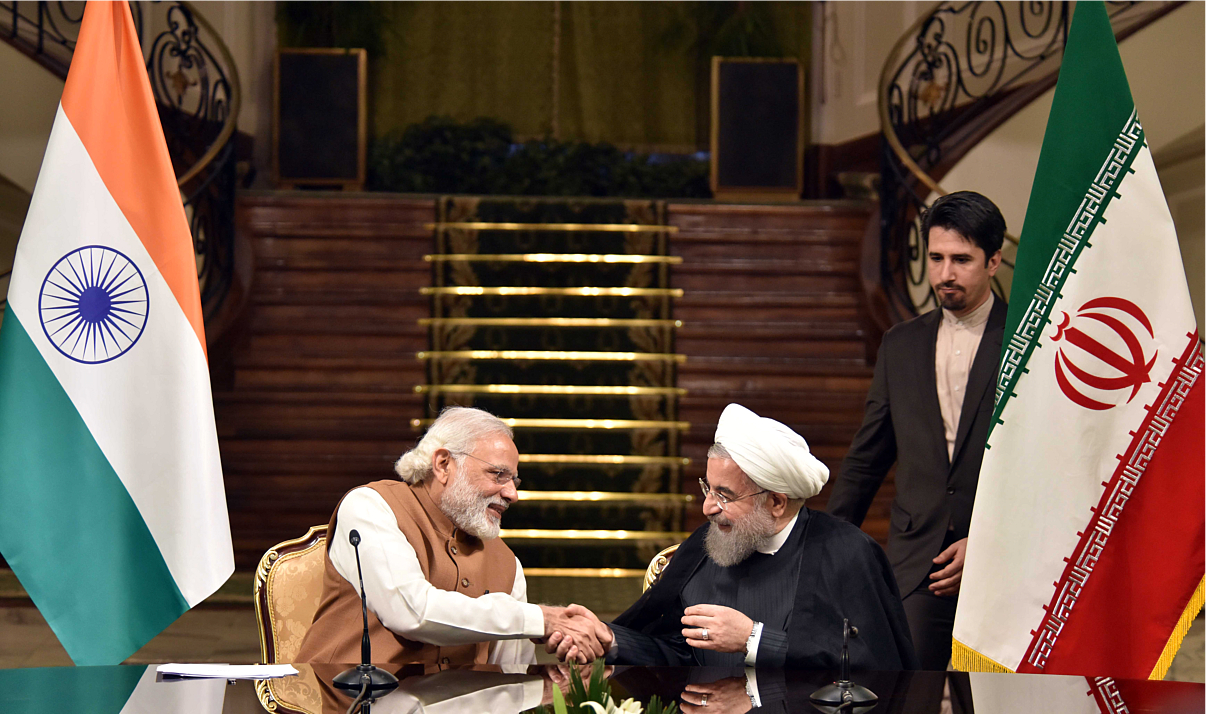
Historically, relations between India and Iran were not new. During the time of Indira Gandhi, India maintained strong diplomatic engagement with Tehran as part of its broader non-aligned foreign policy.
But the current geopolitical situation places India in an uncomfortable position.
The ongoing conflict involving the United States and Israel against Iran has dramatically escalated tensions in the region. The key Iranian Supreme Leader and other leaders and military figures have been targeted and killed in strikes. When such events occur, many countries issue statements expressing concern or condolences.
However, India has remained cautious and largely silent.
A U.S. attack sank the Iranian warship IRIS Dena near Sri Lanka, roughly 300 km from Tamil Nadu, killing many sailors while Sri Lanka rescued several survivors. The ship had reportedly been returning from naval activities linked to India. The incident raises serious questions about how such a conflict reached so close to India’s waters and why India has not raised a stronger voice about it.
This silence raises a question: is India maintaining strategic neutrality, or is it hesitating due to pressure from powerful allies?
When Leadership Meant Defiance
To understand the contrast, many analysts look back at the era of Indira Gandhi. I am not a congress supporter or a BJP supporter but stands with India, a sovereign, socialist, secular, and democratic republic, with its sovereignty established upon the adoption of the Constitution on January 26, 1950.
During the Indo‑Pakistani War of 1971, the United States openly supported Pakistan and even sent the powerful USS Enterprise (CVN-65) into the Bay of Bengal as a show of force.
India did not back down.
Indira Gandhi strongly opposed external interference and moved forward with military and diplomatic decisions that ultimately led to the creation of Bangladesh.
Yesterday, Spain refused to allow the United States to use its bases for attacks on Iran. In response, Donald Trump warned that he may cut relations with Spain. Despite the pressure, Spain maintained its decision, showing a firm stand against being involved in the war.
That period is often remembered as a moment when India demonstrated independent strategic power despite pressure from global superpowers.
The Middle East Conflict Expanding
The current conflict in the Middle East is becoming more complex each day.
Missile exchanges, airstrikes, and military retaliation are spreading across the region. Several Gulf countries hosting U.S. military bases are now involved indirectly as Iran targets those installations.
Even missile interceptors and debris falling from the sky are causing fires and casualties in cities and infrastructure across the region.
Such a rapidly escalating conflict threatens global energy supply routes, trade networks, and regional stability.
For a country like India—heavily dependent on Middle Eastern energy and home to millions of workers in Gulf nations—this conflict is not distant. It directly affects national interests.
The Case for India as a Mediator
India today maintains diplomatic relations with all major players involved in this crisis:
- United States
- Israel
- Iran
- Gulf nations
Very few countries have this level of balanced engagement.
This places India in a unique position. Instead of remaining silent, India could potentially step forward as a mediator or facilitator of dialogue.
Even if such mediation were rejected, the act itself would signal that India is willing to play a responsible global role.
Diplomacy is not only about choosing sides. Sometimes it is about creating a table where opposing sides can sit together.
Friendship vs Leadership
The deeper question is not about supporting one political party or another. It is about understanding what leadership means in global politics.
Friendship between nations is valuable. But leadership requires something more—clarity, courage, and the ability to speak when the world is silent.
India is now the world’s most populous nation and one of its fastest-growing major economies. With that position comes responsibility.
If the world is entering a period of increasing conflict and uncertainty, the question is simple:
Will India remain a careful observer trying to maintain friendships with everyone?
Or will it step forward as a voice of balance, diplomacy, and moral clarity in a chaotic world?
History often remembers nations not for the friendships they kept—but for the moments when they chose to stand up and lead.
Comments

Hi, I’m Nishanth Muraleedharan (also known as Nishani)—an IT engineer turned internet entrepreneur with 25+ years in the textile industry. As the Founder & CEO of "DMZ International Imports & Exports" and President & Chairperson of the "Save Handloom Foundation", I’m committed to reviving India’s handloom heritage by empowering artisans through sustainable practices and advanced technologies like Blockchain, AI, AR & VR. I write what I love to read—thought-provoking, purposeful, and rooted in impact. nishani.in is not just a blog — it's a mark, a sign, a symbol, an impression of the naked truth. Like what you read? Buy me a chai and keep the ideas brewing. ☕💭 For advertising on any of our platforms, WhatsApp me on : +91-91-0950-0950 or email me @ support@dmzinternational.com