
India’s Biggest Problem Isn’t Politics—It’s Our Voting Mindset

After World War II, Singapore wasn’t a dream—it was a warning. A swampy, overcrowded island with no natural resources, no drinking water security, high unemployment, and deep social tensions. Most nations didn’t expect it to survive—let alone thrive.

Then came Lee Kuan Yew—a leader who didn’t believe in excuses.
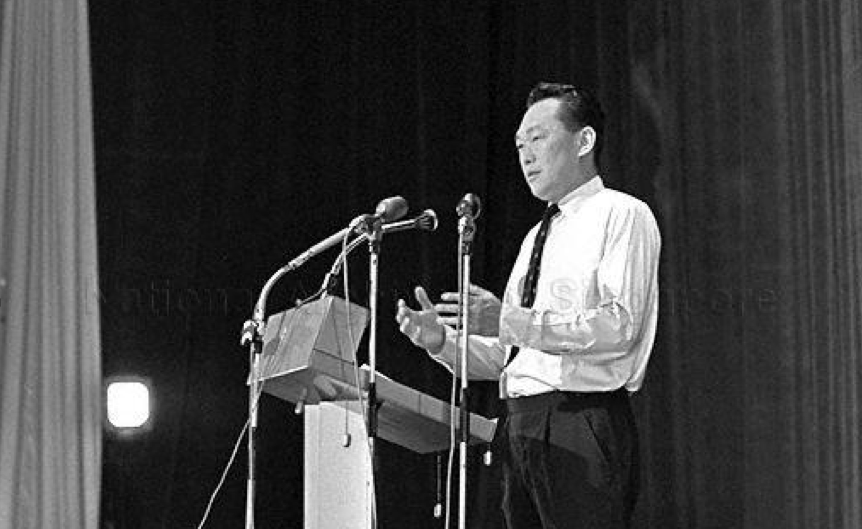


The Brutal Reality: Singapore Started With Almost Nothing
No oil.
No minerals.
No farmland.
Not even enough drinking water—they still import a significant portion today.
What they had instead:
- A strategic location
- A determined leadership
- And a willingness to do what others wouldn’t
Today, Singapore stands as:
- One of the richest countries per capita
- One of the cleanest and safest cities on Earth
- A global hub for finance, shipping, and business
So what changed?
The Singapore Formula: Ruthless Efficiency Over Empty Promises
1. Corruption Was Not “Managed”—It Was Destroyed
Singapore treated corruption like a disease—not a side effect.
- Ministers and officials were paid competitive, high salaries
- Independent anti-corruption agencies had full authority—even over top leaders
- Punishments were strict, fast, and non-negotiable
There was no space for “adjustment culture.”
Now contrast this with India:
- Corruption flows from top to bottom
- It’s built into processes
- People expect to pay extra to get basic work done
In many cases, corruption isn’t hidden—it’s normalized.
2. Meritocracy Over Identity Politics
Singapore focused on competence.
- The best minds were identified early and nurtured
- Government roles were based on capability, not connections
- Policies were built for long-term growth, not short-term popularity
In India:
- Decision-making is often influenced by elections and vote banks
- Talent frequently takes a backseat to influence
3. Planning Cities Like Systems, Not Accidents
Singapore didn’t grow randomly—it was engineered.
- Strict urban planning laws
- Massive investment in public housing (most citizens live in well-maintained government-built homes)
- Clean, efficient public transport
India:
- Cities expand without structure
- Infrastructure struggles to keep up
- Traffic, pollution, and waste are constant challenges
4. Turning Weakness Into Advantage
Singapore had no water → Built advanced recycling systems
No natural resources → Became a global trade and finance powerhouse
Limited land → Built vertically and used space efficiently
India has:
- Rivers, mountains, forests, coastlines
- A massive workforce and talent pool
Yet faces:
- Water mismanagement
- Pollution
- Underutilized economic potential
Tourism: Created vs Wasted Potential


Singapore built attractions from scratch:
- Iconic skyline and luxury architecture
- Futuristic parks and urban spaces
- Integrated resorts and entertainment hubs
- One of the most efficient and beautiful airports in the world
India, on the other hand, already has:
- Ancient heritage sites
- Natural beauty across every climate zone
- Cultural diversity unmatched globally
But struggles with:
- Cleanliness
- Infrastructure
- Tourist experience management
Singapore created tourism.
India inherited it—but hasn’t fully optimized it.
The Core Difference: Discipline vs “Adjust Culture”
Singapore operates on:
- Strict enforcement of rules
- Heavy penalties for violations
- Citizen accountability
India often operates on:
- Flexibility in rules
- Informal workarounds
- A mindset of “everyone does it”
One system runs on discipline.
The other runs on negotiation.
If India Adopted the Singapore Model
Let’s be practical.
If India implemented:
- Strict anti-corruption systems with real consequences
- Merit-based governance
- Long-term infrastructure planning
- Accountability at every level
The outcome could be massive:
- Cities like Mumbai, Chennai, and Bangalore could become global benchmarks
- Tourism could grow exponentially
- Foreign investment would increase
- Public services would actually function efficiently
India already has what Singapore didn’t:
Scale, resources, diversity, and human capital.
But Here’s the Real Barrier
Singapore transformed because:
- Leadership was uncompromising
- Citizens adapted to discipline
India faces challenges because:
- Leadership often bends to political pressure
- Citizens are used to bending rules
You can’t build a world-class system on shortcuts.
Final Thought
Singapore proves that a nation doesn’t need resources to succeed—it needs clarity, discipline, and execution.
India proves that having everything doesn’t guarantee success.
The real question is not whether India can become like Singapore.
The real question is:
Are we ready to change the way we function as a system—from top leadership to everyday behavior?
India isn’t short of potential—it’s short of the kind of leadership that demands discipline, delivers results, and refuses to compromise like Lee Kuan Yew did.
But here’s the uncomfortable truth: such leaders don’t appear by accident; they are chosen by citizens.
As long as votes are driven by caste, religion, nepotism, short-term benefits, freebies or emotional narratives, the system will keep producing politicians who play safe instead of building bold.
Every election becomes less about the future of the country and more about immediate gains, and that slow compromise is exactly what drags progress down year after year.
If India truly wants transformation, it won’t start in Parliament—it will start at the polling booth, when citizens begin to choose competence over comfort, vision over division, and accountability over familiarity.
Until then, the country will keep waiting for a leader it is not yet ready to elect.
Until that changes, everything else remains just potential.
Comments

Hi, I’m Nishanth Muraleedharan (also known as Nishani)—an IT engineer turned internet entrepreneur with 25+ years in the textile industry. As the Founder & CEO of "DMZ International Imports & Exports" and President & Chairperson of the "Save Handloom Foundation", I’m committed to reviving India’s handloom heritage by empowering artisans through sustainable practices and advanced technologies like Blockchain, AI, AR & VR. I write what I love to read—thought-provoking, purposeful, and rooted in impact. nishani.in is not just a blog — it's a mark, a sign, a symbol, an impression of the naked truth. Like what you read? Buy me a chai and keep the ideas brewing. ☕💭 For advertising on any of our platforms, WhatsApp me on : +91-91-0950-0950 or email me @ support@dmzinternational.com


