
Rich Dad Poor Dad — A Book That Starts Fires. But Doesn’t Build Houses.
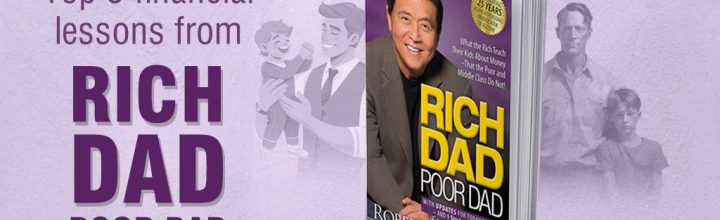
The Book That Started A Million Conversations
In 1997, Robert Kiyosaki published a slim, chatty book about two father figures — one educated, one streetwise — and what they each taught him about money. Nearly three decades later, Rich Dad Poor Dad has sold over 40 million copies in 51 languages and sits on more entrepreneurial bookshelves than almost any other title in history. It is simultaneously the most recommended and most criticized book in the self-help finance genre. That contradiction alone is worth examining.
What the Book Actually Says
Strip away the anecdotes, the repetition, and the evangelical energy, and Kiyosaki’s argument reduces to a handful of ideas. The rich don’t work for money — money works for them. Assets put money in your pocket; liabilities take it out. Your house is not an asset. The tax system rewards business owners and investors, not employees. Schools teach you to be an employee, not an owner. Financial literacy is more valuable than a degree.
These are genuinely powerful framings. For a first-generation entrepreneur — someone raised in a household where a government job was the summit of ambition — reading these ideas can feel like someone handed them a map they never knew existed. That emotional shift, that permission to think differently about money, has real value. You cannot dismiss it.
The Camp That Swears By It
The believers argue that Rich Dad Poor Dad does something rare: it disrupts the salary-trap narrative at an emotional level, not an intellectual one. Most people intellectually know they should invest. They still don’t. Kiyosaki doesn’t lecture — he tells stories. The assets vs liabilities framework, imprecise as it is, gives first-time readers a mental model they can actually hold in their heads. The emphasis on passive income, on building businesses, on using tax structures intelligently — these ideas, however roughly sketched, have genuinely changed trajectories.
Many of India’s early-2000s internet entrepreneurs cite it. Many of the founders you now read about in the business press read this book at 19 or 22 and felt something shift. The spark is real.
The Camp That Rejects It
The critics are equally serious — and many of them are right.
The most damning accusation is that Kiyosaki’s own wealth was built primarily on selling the book and its franchise, not on the real estate investing he evangelizes. His company, Rich Global LLC, filed for bankruptcy in 2012. He has never provided a verifiable account of who “Rich Dad” actually was, and investigative reporters have found strong reason to believe the mentor is fictional. The book’s tax and legal advice is US-centric at best and dangerously generic at worst. Applied in India, large parts of it simply don’t translate.
More structurally, the book has no second act. It tells you to buy assets and build passive income. It doesn’t tell you how. It romanticizes leverage — using debt to buy assets — without a single serious chapter on what happens when the market moves against you. It dismisses the salaried class in a way that can lead younger readers into reckless decisions with borrowed capital. Financial advisors have spent careers cleaning up the aftermath of people who read Rich Dad and promptly took personal loans to “invest in assets.”
The book also has a class blindness problem. Not everyone can take the same risks with the same safety net. The freedom Kiyosaki describes requires a floor — one many people don’t have.
Verdict: Should Entrepreneurs Read It?
Yes. Once. Before the age of 25. With a critical mind switched on.
Rich Dad Poor Dad is not a manual. It is a mindset shift. That is both its power and its limit. As a first door — the one that opens you to the idea that money is a system you can learn to navigate rather than a force that happens to you — it remains useful. As a blueprint, it will get you hurt.
The entrepreneurs who benefited most from this book are those who read it and immediately went looking for what it didn’t tell them. They followed Kiyosaki’s curiosity, not his conclusions. They then picked up Benjamin Graham, or studied CA frameworks, or found a real mentor. They treated Rich Dad as the ignition, not the engine.
The ones who got hurt are those who read it as gospel. Who quit stable income before they had cash flow. Who confused debt for leverage and activity for progress. The book does not protect those readers. It cannot — it was never designed to.
For Indian Entrepreneurs Specifically
India’s market has its own physics. Real estate here is illiquid, opaque, often litigious, and deeply location-dependent. Tax structures are different. Access to capital is harder. Family obligations are real variables. Systemic barriers by caste, region, and gender exist in ways the book has no framework for. Applying Kiyosaki’s American mid-century lens directly to an Indian entrepreneurial journey is like navigating Mumbai traffic with a map of Chicago.
The Indian entrepreneur needs Rich Dad’s restlessness and drive. They need to discard his playbook and build their own.
Final Line
Read the book. Argue with it loudly. Let it light a fire under you — then build something the fire can’t burn down.
Comments

Hi, I’m Nishanth Muraleedharan (also known as Nishani)—an IT engineer turned internet entrepreneur with 25+ years in the textile industry. As the Founder & CEO of "DMZ International Imports & Exports" and President & Chairperson of the "Save Handloom Foundation", I’m committed to reviving India’s handloom heritage by empowering artisans through sustainable practices and advanced technologies like Blockchain, AI, AR & VR. I write what I love to read—thought-provoking, purposeful, and rooted in impact. nishani.in is not just a blog — it's a mark, a sign, a symbol, an impression of the naked truth. Like what you read? Buy me a chai and keep the ideas brewing. ☕💭 For advertising on any of our platforms, WhatsApp me on : +91-91-0950-0950 or email me @ support@dmzinternational.com


