
The Storm Is Coming. Both Modi and Rahul Said So. Here Is Why You Should Listen
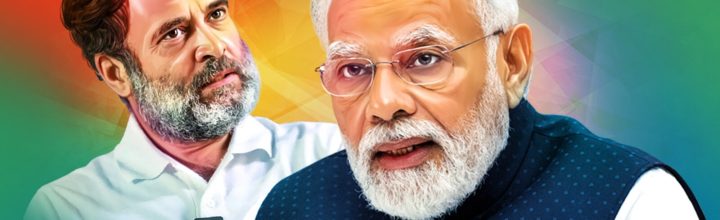
When the ruling party and the opposition agree that trouble is coming, it is time to stop scrolling and start paying attention.
Prime Minister Narendra Modi, speaking to the Indian diaspora in the Netherlands just days ago, warned that decades of progress against poverty stood at serious risk if cascading global crises were not urgently addressed. He called this a “decade of disasters.” On the other side of the aisle, Leader of Opposition Rahul Gandhi, while visiting his Raebareli constituency, warned that India is on the brink of an unprecedented “economic storm,” directly attacking the government’s fiscal policies. These two men agree on almost nothing. When they both raise the alarm, the alarm is real.
So what exactly is coming? Let’s break it down simply.
What Triggered the Warning
The immediate trigger is the fuel price hike. Petrol prices in major cities are now nearing ₹100+ per litre, while diesel has crossed ₹100 per litre in several regions. The government calls it a “calibrated” response to global crude volatility. The opposition calls it the opening shock of a wider crisis. Both sides are partly right.
But fuel is just the visible tip. The real storm has five layers underneath it.
Layer 1 — US Tariffs Are Hurting Indian Exports. America is India’s largest export market. In FY 2025–26, India’s exports to the US inched up only marginally to USD 87.31 billion, while imports from the US surged sharply to USD 52.90 billion, narrowing the surplus. That surplus is India’s cushion. When it shrinks, the rupee weakens and the trade deficit grows. This is already happening.
Layer 2 — The Middle East Crisis Is Killing Our Export Routes. India’s Commerce Secretary pointed out in March 2026 that exports to the Middle East declined by 57.95 per cent due to regional tensions, a drop of USD 3.5 billion in a single month. India’s western trade corridor is bleeding.
Layer 3 — Fuel Price Rise Creates an Inflation Chain Reaction. When diesel goes up, freight costs go up. When freight costs go up, vegetables, cement, clothing, and manufactured goods all become more expensive. Rahul Gandhi warned that the rising cost of fuel will not remain limited to petrol and diesel alone but will trigger a wider inflationary cycle affecting essential goods and services. He is not wrong on this point, whatever your politics.
Layer 4 — Global Growth Is Slowing. The World Bank has warned that newly imposed US tariffs on Indian exports could weigh on South Asia’s economic growth in 2026, with regional growth forecast to decelerate from 6.6% in 2025 to 5.8%. India will not escape that drag.
Layer 5 — Poverty Risk Is Real. Modi warned that decades of hard-won progress against poverty stood at serious risk if the world’s cascading crises were not urgently addressed. That is not a political statement. That is a structural truth. India lifted hundreds of millions out of poverty over two decades. A sustained inflationary shock can push a significant portion of them back.
When Will You Feel It, and Where
This is not a 2027 problem. It is a right-now problem unfolding in stages.
Now (May–July 2026): Fuel and food inflation is already biting household budgets. Freight and logistics costs are rising. SMEs and traders — the backbone of India’s informal economy — are the first to feel the squeeze.
Mid-2026 (August–October): Export-dependent sectors like textiles, gems, and pharma will show stress in earnings. Rupee depreciation pressure will increase. Any further crude oil spike accelerates all of the above.
Late 2026 onward: If global demand slows further and the US tariff standoff continues, Indian IT services could see client budget cuts. Job creation will slow. Consumer demand — already weak in rural India — will take a sharper hit.
How Do Other Countries Compare
India is in a better position than most of its neighbours. Sri Lanka is still recovering. Bangladesh’s garment economy is under severe tariff pressure. Pakistan is on an IMF leash. China is dealing with a domestic demand crisis and being shut out of Western markets. India’s tariff exposure under Trump’s measures remains relatively lower than Vietnam, Bangladesh, and China, which face rates ranging from 31% to 46%. But “better than the worst” is not the same as “safe.”
What You Should Do
If you run a business: Build cash reserves now. Do not overcommit to credit-funded expansion this year. Diversify your supplier base away from any single geography.
If you are a salaried individual: This is a bad year to take on a big EMI. Review your discretionary spending. Increase your SIP in index funds — not because markets will boom, but because rupee cost averaging works best when markets are volatile.
If you are a farmer or rural trader: Lobby hard for diesel subsidies through your local representative. The fuel price hike is your most immediate enemy.
The storm has a name. It is called the confluence of global trade fragmentation, geopolitical conflict, and domestic inflation. It does not care about your politics. Prepare accordingly.
Comments

Hi, I’m Nishanth Muraleedharan (also known as Nishani)—an IT engineer turned internet entrepreneur with 25+ years in the textile industry. As the Founder & CEO of "DMZ International Imports & Exports" and President & Chairperson of the "Save Handloom Foundation", I’m committed to reviving India’s handloom heritage by empowering artisans through sustainable practices and advanced technologies like Blockchain, AI, AR & VR. I write what I love to read—thought-provoking, purposeful, and rooted in impact. nishani.in is not just a blog — it's a mark, a sign, a symbol, an impression of the naked truth. Like what you read? Buy me a chai and keep the ideas brewing. ☕💭 For advertising on any of our platforms, WhatsApp me on : +91-91-0950-0950 or email me @ support@dmzinternational.com


