
How Three Faiths Explain the Many Ways We Die
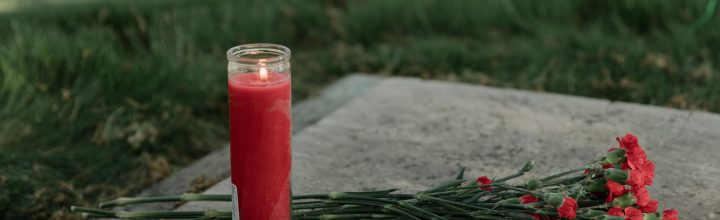
Death comes to everyone, but not in the same way. Some people live to old age and pass peacefully. Some die suddenly in an accident. Some end their own life. Some never even take their first breath. Across history, three major faiths — the Vedic tradition of India, Christianity, and Islam — have tried to explain what these different deaths mean.
The Vedic View: Death by Karma
In Vedic thought, death is called maranam. The texts say it can come from natural causes like old age and disease, or from unnatural causes like accident, murder, or suicide. Which kind of death a person gets is linked to karma, the record of past actions. The soul does not end at death. It moves on, and the Bhagavad Gita says that a person’s last thought at the moment of death shapes the next birth.
The Vedas also make an interesting distinction. A death that comes at the right time, in the right way, is called kaal mrityu, a “timely death.” A death that comes too early, through accident, murder, or ordinary suicide, is called akaal mrityu, an “untimely death.” This is seen as less fortunate for the soul.
At the same time, ancient Hindu texts describe a very different, deliberate kind of death — giving up the body through fasting or penance, usually by elderly sages or the terminally ill, seeking release from the world. This is treated as spiritual completion, not the same as suicide out of despair, which the scriptures strongly discourage. Death before birth is less directly addressed in the earliest texts, but the broader idea of karma applies — the soul is thought to carry forward from a past life and begin again.
The Biblical View: Death Entered Through Sin
Christianity teaches that death was not part of God’s original plan. Genesis says death came into the world after Adam and Eve disobeyed God. Since then, death has touched everyone, whether through old age, illness, accident, or violence. Hebrews 9:27 puts it simply: it is set for people to die once, and after that, to face judgement.
For a believer, death is not the end. It is described as a doorway, a release from the limits of the body, leading to eternal life with God. This is why many Christians say they do not fear death but see it as a passing over.
Suicide has long been a difficult subject for the church. Traditionally, it was viewed as a serious sin because it takes a life that belongs to God alone. In recent times, many Christian communities have taken a more compassionate view, recognising the influence of severe mental suffering on such deaths, while still holding to life as sacred.
On children lost before birth, through miscarriage or stillbirth, Christian teaching has debated the question for centuries. Most churches today comfort grieving families with the belief that these small lives are held safely by God’s mercy, even without formal doctrine settling every detail.
The Quranic View: A Fixed Appointed Time
Islam teaches that every soul has an ajal, an appointed time of death, fixed by Allah. The Quran says no soul can die except by Allah’s permission, at a time already written down, and that this time can be neither delayed nor advanced, even by a moment.
This belief covers every kind of death — old age, illness, accident. All are seen as happening exactly when they were meant to happen, as part of divine will. Death in the service of a just or righteous cause is honoured as a form of martyrdom.
Suicide, however, is clearly forbidden. It is treated as one of the gravest sins, because life is seen as a trust given by God, not something a person owns to end. Death before birth is not deeply detailed in the Quran itself, but Islamic scholars generally hold that such a soul is innocent and returns to God’s mercy.
Science looks at the same four deaths from a different angle, explaining mechanism where faith explains meaning. Doctors never actually write “old age” as a cause of death on a certificate — there is always a specific failure behind it, such as heart disease, cancer, or organ failure, driven at the cellular level by a process called senescence, where the protective caps on chromosomes, called telomeres, shorten with every cell division until cells can no longer divide and begin to break down, worsened over the years by damage from oxygen byproducts known as oxidative stress, until enough cells and organs weaken together and the body cannot recover.
An accident, by contrast, kills through sudden physical damage — massive blood loss, a severe head injury, or a shock great enough to stop the heart or lungs before the body can respond — with road crashes the leading cause of this kind of death worldwide, followed by falls and drowning, and unlike natural death, there is usually no long build-up at all.
Suicide is now understood in medical research as a serious public health problem rather than a personal weakness, usually linked to conditions like depression or overwhelming stress that alter brain chemistry and affect judgement and hope, shaped by genetics, past trauma, and a person’s surroundings, with the important finding being that timely support and treatment can prevent it.
And death before birth is explained mostly by chromosomal errors in the developing embryo, where cells end up with too many or too few chromosomes to survive, along with uterine problems, hormone imbalances, infections, or long-term conditions like uncontrolled diabetes, while later stillbirths are more often linked to placental problems or birth defects, and in most early losses doctors are never able to pin down an exact cause at all.
A hard question follows naturally from all this — why are some children born with life-threatening illness, and is it a punishment?
Every tradition here answers no.
The Vedic view holds it as prarabdha karma, consequences from a soul’s own past actions rather than any outside penalty, though older texts framing it harshly are now widely rejected by modern teachers.
In the Bible, Jesus was asked directly whether a man’s blindness came from his own sin or his parents’, and he rejected the question itself, saying neither had sinned.
Islam calls it a test rather than a punishment, holding that children who die before growing up are innocent and pass straight into God’s mercy.
Science, meanwhile, points to genetic mutations or errors in early development — random copying mistakes in DNA that carry no moral weight at all.
A Common Thread
Read together, these three traditions do not agree on every detail. But they agree on something deeper — death is never treated as meaningless. Whether explained through karma, sin, or divine decree, each faith insists that how and when a person dies carries weight far beyond the moment itself. That is perhaps the one thing every tradition, and every grieving family, can quietly agree on.
Comments

Hi, I’m Nishanth Muraleedharan (also known as Nishani)—an IT engineer turned internet entrepreneur with 25+ years in the textile industry. As the Founder & CEO of "DMZ International Imports & Exports" and President & Chairperson of the "Save Handloom Foundation", I’m committed to reviving India’s handloom heritage by empowering artisans through sustainable practices and advanced technologies like Blockchain, AI, AR & VR. I write what I love to read—thought-provoking, purposeful, and rooted in impact. nishani.in is not just a blog — it's a mark, a sign, a symbol, an impression of the naked truth. Like what you read? Buy me a chai and keep the ideas brewing. ☕💭 For advertising on any of our platforms, WhatsApp me on : +91-91-0950-0950 or email me @ support@dmzinternational.com