
Should You Quit Beer After 40?
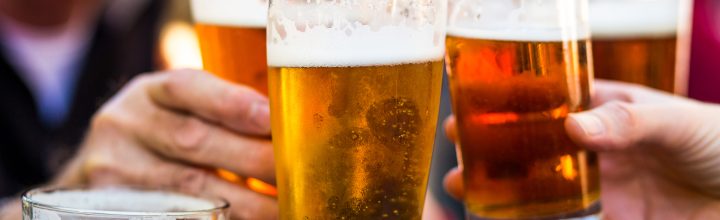
Beer: The Brew That Binds Us — But Should There Be an Expiry Date on Your Pint?
Crack open a cold one, they say. It’s a tradition, a celebration, a comfort. For centuries, beer has played a central role in social life—from ancient Mesopotamian feasts to modern backyard barbecues. But as science takes a closer look at the long-term effects of our beloved brew, the party might not be as harmless as we thought.
A recent claim by a neurologist has sparked heated conversations: **there’s an exact age when one should stop drinking beer—**and it’s not 70, or even 60. According to the report, after age 40, the body and brain may begin to experience alcohol in a dramatically different, less forgiving way. The neurologist argues that the cumulative effects of alcohol, including beer, can accelerate brain aging, reduce cognitive resilience, and even raise the risk of neurodegenerative diseases.
Beer: The Social Lubricant or the Silent Saboteur?
Let’s be real—beer isn’t just a drink; it’s a cultural icon. From India’s Kingfisher to Germany’s Hefeweizen to America’s craft IPA explosion, beer connects people across continents and cultures. It eases nerves, fuels laughter, and marks moments.
But what we often ignore is that beer is not just fermented joy; it’s also a neurotoxin in disguise when consumed beyond moderation—especially as we age.
In our 20s and 30s, the liver and brain are more forgiving. But by our 40s, the body’s ability to process alcohol starts declining. Sleep gets lighter, hangovers get nastier, and brain fog starts feeling suspiciously permanent. Over time, even a seemingly harmless bottle a day may silently chip away at brain health.
Is Science Killing the Buzz?
Not necessarily. The point isn’t to villainize beer—but to reframe our relationship with it. The neurological insight isn’t a call to go teetotal. It’s a reminder that our body’s needs and limits evolve with age. What once felt like fun can become an unnoticed slow-down of our cognitive machinery.
Science suggests that alcohol impairs the brain’s ability to regenerate neurons and may contribute to hippocampal shrinkage—the part of your brain responsible for memory. Regular beer intake in your 40s and beyond might subtly speed up this process.
So, Should You Quit Beer After 40?
It depends. If you’re drinking moderately—say, one beer a couple of times a week—and living an otherwise healthy lifestyle, the occasional pint isn’t a crime. But if “beer o’clock” is a daily ritual, it might be time to rethink that pattern.
A Better Buzz: Conscious Cheers
Instead of quitting, how about shifting the ritual? Try alcohol-free craft beers that taste just as good without the neural tax. Explore fermented non-alcoholic drinks like kombucha or chilled herbal infusions. Or simply limit your alcohol days and let your liver thank you.
The golden rule? Listen to your body. Beer is best enjoyed when it enhances life—not when it becomes a crutch or silent saboteur.
The Bottom Line
Beer has its place in our lives, but as with all things—context, moderation, and timing are everything. The neurologist’s claim may not sit well with every beer lover, but it raises a crucial point: aging gracefully sometimes means putting the bottle down—or at least knowing when to say, “That’s enough for today.”
After all, the best high is a healthy mind.
Comments

Hi, I’m Nishanth Muraleedharan (also known as Nishani)—an IT engineer turned internet entrepreneur with 25+ years in the textile industry. As the Founder & CEO of "DMZ International Imports & Exports" and President & Chairperson of the "Save Handloom Foundation", I’m committed to reviving India’s handloom heritage by empowering artisans through sustainable practices and advanced technologies like Blockchain, AI, AR & VR. I write what I love to read—thought-provoking, purposeful, and rooted in impact. nishani.in is not just a blog — it's a mark, a sign, a symbol, an impression of the naked truth. Like what you read? Buy me a chai and keep the ideas brewing. ☕💭 For advertising on any of our platforms, WhatsApp me on : +91-91-0950-0950 or email me @ support@dmzinternational.com


