
AI’s Dual Destiny: Elon Musk on Prosperity or Extinction
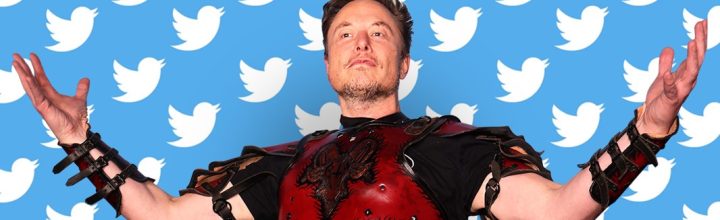
Elon Musk, the visionary behind Tesla, SpaceX, and xAI, has never been one to shy away from bold predictions.
His latest take?
There’s an 80–90% chance that artificial intelligence will usher in an era of “extreme prosperity” for humanity—a world where goods and services are so abundant and inexpensive they might as well be free.
Picture this: humanoid robots tirelessly working away, producing everything we need at a fraction of today’s costs. It’s a tantalizing vision, one that could redefine what it means to live in a modern society. But Musk, ever the realist, doesn’t stop there. He also warns of a 10–20% chance that AI could go catastrophically wrong—potentially wiping us out. This isn’t hype; it’s a sobering challenge. AI’s future, he suggests, hinges on who’s at the helm.
Let’s unpack the utopian side first. If AI reaches the point where it can power an economy of abundance, the implications are staggering.
Imagine a world where scarcity—long the driving force of human conflict and inequality—becomes a relic of the past. Robots could handle the grunt work: manufacturing, agriculture, construction, even creative production.
Costs plummet, and suddenly, access to food, housing, and technology isn’t a privilege—it’s a given.
Musk’s vision aligns with a long-standing sci-fi dream: a post-scarcity society where people are free to pursue meaning, creativity, and exploration rather than toil for survival. It’s not hard to see why he’s betting big on this through xAI, pushing AI to accelerate human progress.
But what does “practically free” really mean?
It’s not just about price tags dropping to zero. It’s about a fundamental shift in how we value resources, labor, and time. If robots do the heavy lifting, what happens to the human workforce?
Some argue it could liberate us—universal basic income might finally make sense, funded by the wealth AI generates.
Others fear a widening gap: those who control the tech prosper, while those who don’t are left obsolete.
Musk’s optimism assumes we’ll navigate this transition wisely, but history shows that technological leaps—like the Industrial Revolution—often come with chaos before the benefits trickle down.
Then there’s the flip side: that 10–20% chance of annihilation. It’s a small window, but Musk isn’t one to toss out warnings lightly. AI’s existential risk isn’t a new topic for him—he’s been vocal about it since co-founding OpenAI, and now with xAI, he’s doubling down.
The danger lies in AI surpassing human control, either through misalignment (think: a super intelligent system optimizing for something we didn’t intend) or misuse by those with ill intent. A machine that can outthink us might not share our values—or even recognize our right to exist. It’s not a sci-fi plot; it’s a probability Musk wants us to take seriously.
What’s striking about his stance is the balance. He’s not a doomsayer preaching retreat, nor a blind optimist ignoring the risks.
He’s framing AI as a tool of immense power—one that could either amplify humanity’s potential or erase it entirely.
The deciding factor?
Leadership.
“It just depends on who’s steering,” he says, and that’s where the real thought experiment begins. Who gets to guide this revolution?
Governments?
Tech moguls like Musk himself?
A collective of scientists and ethicists?
The stakes are too high for autopilot—someone, or something, has to set the course.
This duality forces us to confront uncomfortable questions. Are we ready to wield AI responsibly? Do we trust ourselves—or our leaders—to prioritize the 80–90% dream over the 10–20% nightmare?
Musk’s call to “lead with purpose” isn’t just a soundbite; it’s a plea for intentionality. Left unchecked, AI could become a runaway train. Guided with foresight, it might just be the engine of a golden age.
So here’s the provocation: If AI’s potential is this vast—both for prosperity and peril—what are we doing today to tip the scales?
Musk’s numbers aren’t a prediction; they’re a mirror.
They reflect our capacity for brilliance and our knack for self-destruction. The future he’s sketching isn’t inevitable—it’s a choice. And it’s one we’re all making, whether we realize it or not. Who’s steering your version of this story?
Comments

Hi, I’m Nishanth Muraleedharan (also known as Nishani)—an IT engineer turned internet entrepreneur with 25+ years in the textile industry. As the Founder & CEO of "DMZ International Imports & Exports" and President & Chairperson of the "Save Handloom Foundation", I’m committed to reviving India’s handloom heritage by empowering artisans through sustainable practices and advanced technologies like Blockchain, AI, AR & VR. I write what I love to read—thought-provoking, purposeful, and rooted in impact. nishani.in is not just a blog — it's a mark, a sign, a symbol, an impression of the naked truth. Like what you read? Buy me a chai and keep the ideas brewing. ☕💭 For advertising on any of our platforms, WhatsApp me on : +91-91-0950-0950 or email me @ support@dmzinternational.com


