Mileva Marić: The Forgotten Mind Behind the Genius?
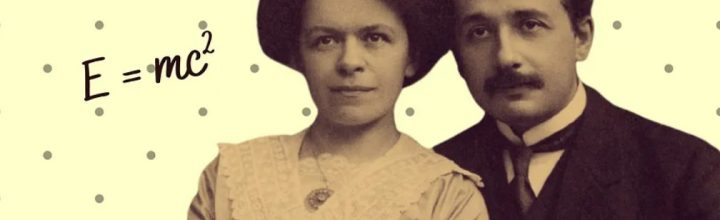
🔬 She had the brain. He got the fame.
In a world that celebrates genius, we often forget to ask: At what cost? And whose cost?
Meet Mileva Marić. Born in 1875 in a small Serbian town, she didn’t just break barriers—she stormed into spaces where women weren’t even allowed to breathe, let alone speak the language of math and physics.
She was Albert Einstein’s first wife. But her story? Much more than that.
📚 The Girl Who Outsmarted Most Boys
At a time when women were expected to master cooking, not calculus, Mileva chose a different syllabus. Her brilliance led her to the Royal Serbian High School and later to ETH Zurich, one of Europe’s most prestigious science schools.
Here, she became the only woman in her physics class. And there, she met a wild-haired fellow named Albert Einstein.
Together, they shared more than textbooks—they shared ideas, calculations, dreams… and eventually, a child.
👶🏽 Lieserl: The Lost Chapter
In 1902, Mileva gave birth to a daughter named Lieserl in secret. What happened to her remains one of the biggest mysteries in Einstein’s life. Some say she died young. Some say she was given up for adoption.
One thing is clear: Mileva went through the pain alone, while Einstein built a career.
💔 Marriage or a Merger?
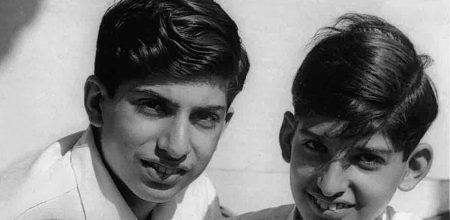
They married in 1903 and had two sons: Hans Albert and Eduard.
- Hans became a professor.
- Eduard, however, suffered from schizophrenia and spent his life in psychiatric care.
- Mileva was left to manage it all: her child’s illness, her husband’s rising fame, and her fading existence.
Einstein? He was already deep into an affair with his cousin Elsa.
📝 The Nobel Divorce Deal
Einstein finally divorced Mileva in 1919. But here’s the catch—he promised to give her the entire Nobel Prize money if he ever won it.
Guess what? In 1921, he did. And true to his word (for once), he handed over the money. But let’s not call it generosity—it was reparation for a broken woman holding a broken family.
She used it to buy a home and take care of Eduard, who needed round-the-clock attention. Meanwhile, Einstein married Elsa and posed as the prophet of physics.
🧠 Did Mileva Contribute to Einstein’s Theory of Relativity?
This is where the world gets awkward.
- Some letters show Einstein calling it “our work.”
- Mileva was known to be stronger in mathematics—the very foundation of relativity.
- She had access to his manuscripts and often reviewed his calculations.
But history, as usual, had no patience for a woman’s contributions—unless she died saving a man in a movie.
🏚️ Final Years: Genius in Shadows
Mileva never remarried. She struggled financially, gave math tuitions, and cared for Eduard till the end. She never got back into science—not because she lost interest, but because the world lost interest in her.
She died in Zurich in 1948, buried in an unmarked grave. Forgotten. Faded.
Only decades later did people start asking: Was she the silent partner in one of the greatest scientific revolutions of all time?
🔍 Reflection: What if She Was a Man?
If Mileva had been born male, would the world have called her a genius? Would schools have taught “Marić’s Theory of Relativity”?
Or is this another case of history writing women in footnotes while men get monuments?
🧵 In the End…
Mileva Marić was not just Einstein’s wife.
She was a mathematician, a mother, a mystery, and a martyr of patriarchy in science.
We may never know the full truth of her role in Einstein’s work. But what we do know is this:
“Behind every celebrated man, there may stand a woman—forgotten, uncredited, but never undeserving.”
Let’s remember Mileva—not just for who she married,
but for who she was.
✍️ Written by Nishanth Muraleedharan (Nishani)
🟢 For more unsung stories, unheard voices, and uncomfortable truths, visit nishani.in
Comments

Hi, I’m Nishanth Muraleedharan (also known as Nishani)—an IT engineer turned internet entrepreneur with 25+ years in the textile industry. As the Founder & CEO of "DMZ International Imports & Exports" and President & Chairperson of the "Save Handloom Foundation", I’m committed to reviving India’s handloom heritage by empowering artisans through sustainable practices and advanced technologies like Blockchain, AI, AR & VR. I write what I love to read—thought-provoking, purposeful, and rooted in impact. nishani.in is not just a blog — it's a mark, a sign, a symbol, an impression of the naked truth. Like what you read? Buy me a chai and keep the ideas brewing. ☕💭 For advertising on any of our platforms, WhatsApp me on : +91-91-0950-0950 or email me @ support@dmzinternational.com