Kerala’s Nativity Card Bill: A Bold Identity Move or a Political Minefield?
What does it mean to be a Keralite — and should a smart card be the one to decide?
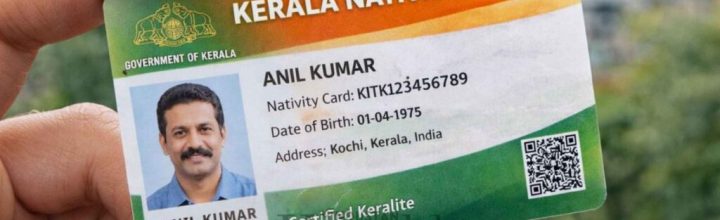
In a move that has sparked equal parts celebration and controversy, the Kerala Legislative Assembly passed the Nativity Card Bill in February 2026, giving legal backing to a state-issued identity document that officially certifies a person as a native of Kerala. The bill, first conceptualised through a cabinet decision in December 2025, aims to replace the familiar but cumbersome nativity certificate with a permanent, photo-embedded smart card — one that could eventually carry advanced security features like chips and holograms.
But beneath the administrative convenience lies a far more provocative question: in a nation already grappling with the politics of identity, citizenship, and belonging, what does it mean for a state to issue its own identity card?
What Exactly Is the Nativity Card?
At its core, the Nativity Card is a permanent, reusable identity document that certifies someone as a native of Kerala. Think of it as an upgrade to the old nativity certificate — a paper document that residents had to obtain repeatedly for different government services. The new card would function as a single, legally recognised proof of nativity, usable across state government services, administrative processes, and social purposes.
The Tahsildar has been designated as the issuing authority, while village offices will maintain official registers. Applicants will need to submit prescribed forms along with required documents and fees. The government has also reserved the power to add additional details to the card over time, and will issue notifications specifying which departments can accept it as an authoritative document.
Who Qualifies as a “Native of Kerala”?
The bill defines eligibility through three key pathways. First, any person born in Kerala who has not acquired foreign citizenship qualifies. Second, a person with at least one ancestor born in Kerala — provided neither the applicant nor that ancestor holds foreign citizenship — is also eligible. Third, and perhaps most significantly for the vast Keralite diaspora, individuals born outside the state because their parents or ancestors were living elsewhere for employment or livelihood reasons are included, so long as they haven’t taken up foreign citizenship.
The exclusion clause is straightforward: anyone who has voluntarily acquired foreign citizenship is ineligible. And if someone obtains foreign citizenship after receiving the card, it becomes invalid.
The Political Storm
This is where the story gets interesting. The bill was passed during an Assembly session that the Congress-led United Democratic Front (UDF) had boycotted entirely — not over the Nativity Card itself, but over an unrelated controversy surrounding the Sabarimala gold loss case. The result was that this potentially historic piece of legislation sailed through without a single word of debate.
Finance Minister K.N. Balagopal described the passage as a “historic moment” aimed at safeguarding minority communities and ensuring no Keralite has to struggle to prove their identity. Chief Minister Pinarayi Vijayan had earlier framed the initiative around the fundamental idea that no person should face difficulty proving their existence or place of residence.
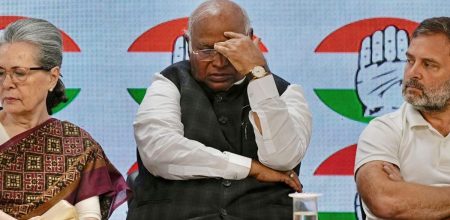
The BJP, however, has been sharply critical. The party labelled the initiative “dangerous separatist politics,” arguing that citizenship and identity are Union subjects governed by the Citizenship Act of 1955. Legal experts have raised similar concerns, noting that nativity certificates have historically been limited to proving domicile for state-level purposes like educational reservations and public employment — not as quasi-citizenship documents.
Some commentators have connected the timing of the bill to the Centre’s implementation of the Citizenship Amendment Act (CAA), suggesting the LDF government is positioning the card as a counter-narrative. Whether the card is a genuine administrative reform or a political statement dressed in bureaucratic clothing depends largely on whom you ask.
The Deeper Question
Stripped of partisan noise, the Nativity Card raises a question that resonates far beyond Kerala’s borders: in an increasingly mobile, interconnected world, how should identity be documented, verified, and protected?
Kerala’s diaspora is massive. Millions of Keralites live and work across India and the globe, from the Gulf states to Europe to North America. For these communities, proving ties to their home state has long been an exercise in bureaucratic frustration — gathering documents, visiting village offices, navigating outdated systems. A single, permanent, legally backed card could genuinely simplify their lives.
Yet the absence of legislative debate is troubling. A bill that defines who is and isn’t a “native” of a state carries weight. It draws boundaries around belonging. The fact that it passed in an empty chamber, without the scrutiny that democratic lawmaking demands, sets what many observers have called a “bad precedent.”
What Comes Next
The card’s real impact will depend on execution. The government has indicated that a detailed Standard Operating Procedure will follow, along with notifications clarifying the card’s scope and acceptance across departments. The promise of future security features — chips, holograms, and digital verification — suggests ambitions that go well beyond a simple laminated ID.
Whether the Nativity Card becomes a mundane piece of administrative infrastructure or a flashpoint in India’s ongoing identity politics remains to be seen. For now, Kerala has staked its claim: proving you belong should not be a burden. How the rest of the country responds to that proposition may tell us more about ourselves than any card ever could.
The Nativity Card Bill was passed by the Kerala Legislative Assembly on February 25, 2026.
Comments

Hi, I’m Nishanth Muraleedharan (also known as Nishani)—an IT engineer turned internet entrepreneur with 25+ years in the textile industry. As the Founder & CEO of "DMZ International Imports & Exports" and President & Chairperson of the "Save Handloom Foundation", I’m committed to reviving India’s handloom heritage by empowering artisans through sustainable practices and advanced technologies like Blockchain, AI, AR & VR. I write what I love to read—thought-provoking, purposeful, and rooted in impact. nishani.in is not just a blog — it's a mark, a sign, a symbol, an impression of the naked truth. Like what you read? Buy me a chai and keep the ideas brewing. ☕💭 For advertising on any of our platforms, WhatsApp me on : +91-91-0950-0950 or email me @ support@dmzinternational.com