Nepotism: The Spine of Congress Power — From 1947 to 2025
India didn’t just inherit freedom in 1947. It also inherited a political dynasty that slowly turned a national party into a family enterprise. Call it legacy if you’re polite. Call it nepotism if you’re honest.
This is not hate. This is history.
The First Question Nobody Likes to Answer
How did nepotism become the DNA of the Congress party?
Let’s rewind.
Jawaharlal Nehru: Power Before Democracy (1947)
When India became independent, Jawaharlal Nehru was not the natural choice to be Prime Minister.
That title belonged to Sardar Vallabhbhai Patel:
- He had wider support within the Congress Working Committee
- He unified more than 560 princely states
- He was respected across ideological lines
So what happened?
The Mahatma Gandhi Factor
Mahatma Gandhi did not hold any constitutional post, but his moral authority was absolute. He favoured Nehru, not Patel.
Patel stepped aside — not because he lost, but because Gandhi insisted.
That single decision planted the seed:
Leadership by preference, not by process
The Gandhi Surname: How It Entered Nehru’s Bloodline
Here’s a fact many miss (or pretend to miss):
Jawaharlal Nehru was NOT a Gandhi.
- Indira was born Indira Nehru
- She married Feroze Gandhi
- Feroze Gandhi had no relation to Mahatma Gandhi
- The surname was adopted earlier for nationalist symbolism
But politically, the surname worked like magic.
From then on, “Gandhi” became a brand, not a coincidence.
Indira Gandhi: Centralisation on Steroids
Indira Gandhi didn’t just inherit power.
She re-engineered Congress to make sure no one else ever could.
Key moves:
- Removed strong regional leaders
- Reduced internal democracy
- Turned Congress into a high-command party
- Emergency (1975–77): democracy paused, power preserved
Congress stopped being a movement.
It became a command-and-control company, CEO: Gandhi.
Rajiv Gandhi: The Accidental PM
Rajiv Gandhi never planned to enter politics.
But after Indira Gandhi’s assassination:
- Congress leaders didn’t look for competence
- They looked for bloodline continuity
Rajiv was launched.
Experience optional.
Sonia Gandhi: Power Without Position
After Rajiv Gandhi’s assassination, Congress collapsed electorally.
Enter Sonia Gandhi.
She:
- Held no elected constitutional post
- Yet controlled PM selection
- Chose Manmohan Singh as PM
- Retained final authority as Congress President & UPA chairperson
This is where the “remote control PM” narrative didn’t come from BJP propaganda alone — it came from visible power dynamics.
Manmohan Singh Era: Governance Without Authority
Let’s be fair:
- Manmohan Singh was personally honest
- Economically competent
But politically?
He was never the final decision-maker.
Major controversies during UPA rule:
- 2G Spectrum allocation scandal
- Coal allocation (Coalgate)
- Commonwealth Games scam
- Adarsh Housing scam
- AugustaWestland helicopter deal
- IPL money trail controversies
Courts later dismissed or diluted several cases — but politically, the damage was irreversible.
The perception stuck:
“Power without accountability.”
Rahul Gandhi: Inheritance Without Impact
Rahul Gandhi was launched, relaunched, and rebranded repeatedly:
- Youth icon
- Reluctant politician
- Angry reformer
- Bharat Jodo traveller
But one question remains unanswered:
What has he administratively built or executed?
Congress workers still wait for clarity.
Voters already moved on.
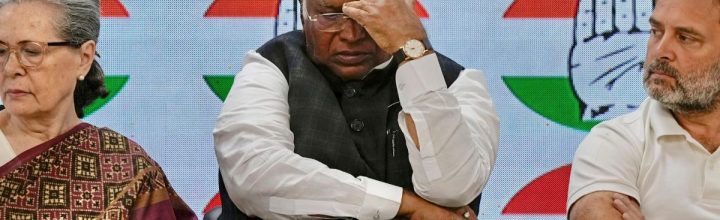
Kharge: President in Name, Not in Power
Mallikarjun Kharge is a veteran.
No one doubts his experience.
But reality check:
- Key decisions? High Command
- Strategic calls? Gandhi family
- Tough questions? “High command will respond”
So ask bluntly:
If the president can’t speak freely, why have the post at all?
This is not leadership.
This is delegation theatre.
Did Nepotism Kill Congress Growth?
Short answer: Yes.
Long answer:
- Regional leaders were suffocated
- Merit-based leadership died
- Grassroots energy evaporated
- Young talent migrated elsewhere
Congress didn’t lose elections.
It lost relevance.
Why BJP Won Big in 2014
BJP didn’t just sell development.
They sold contrast:
- Dynasty vs self-made
- High command vs decisive leadership
- Policy paralysis vs speed
Whether one agrees with BJP today or not, 2014 was a rejection of Congress-style nepotism, not just an endorsement of Modi.
BJP Today: Different Problems, Same Warning Signs
Now flip the lens.
BJP today faces its own credibility crisis:
- Joblessness
- Air pollution
- Rising inequality
- Aggressive privatisation
- Corporate concentration
- Overuse of religious identity
Sanatan Dharma slogans don’t create employment.
Temples don’t reduce AQI.
Faith cannot replace fiscal accountability.
Power that stops listening eventually stops winning.
The Brutal Truth for Nishani Readers
- Congress collapsed because it trusted surname over systems
- BJP risks decline if it trusts emotion over economics
- Democracy dies not with coups — but with comfort
India doesn’t need dynasties.
India doesn’t need gods in politics.
India needs accountable leaders who can be questioned without fear.
Until parties understand that,
history will keep repeating itself — just with different flags.
And voters?
They eventually collect the bill.
Comments

Hi, I’m Nishanth Muraleedharan (also known as Nishani)—an IT engineer turned internet entrepreneur with 25+ years in the textile industry. As the Founder & CEO of "DMZ International Imports & Exports" and President & Chairperson of the "Save Handloom Foundation", I’m committed to reviving India’s handloom heritage by empowering artisans through sustainable practices and advanced technologies like Blockchain, AI, AR & VR. I write what I love to read—thought-provoking, purposeful, and rooted in impact. nishani.in is not just a blog — it's a mark, a sign, a symbol, an impression of the naked truth. Like what you read? Buy me a chai and keep the ideas brewing. ☕💭 For advertising on any of our platforms, WhatsApp me on : +91-91-0950-0950 or email me @ support@dmzinternational.com