
Operation Lion’s Roar: The Day the World Changed
Wake up. The world you went to sleep in last night no longer exists.
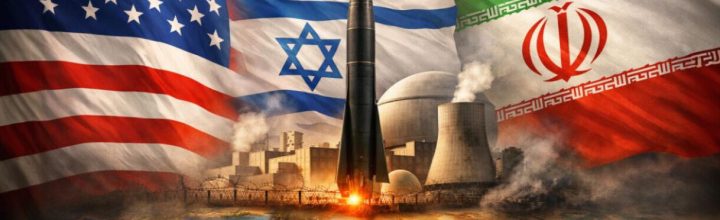
In the early hours of Saturday, February 28, 2026, the United States and Israel launched a coordinated joint military assault on Iran. Not a warning shot. Not a limited probe. A full, sustained, multi-target attack on the Islamic Republic — its capital, its command centres, its military infrastructure, and the offices of its Supreme Leader. Operation Lion’s Roar has begun. And nothing about the Middle East — or the world — will ever be the same.
The Missiles That Woke Tehran
Multiple explosions tore through central Tehran in broad daylight. University Street, the Jomhouri area, the northern Seyyed Khandan district — smoke rising over the city skyline in thick, black columns. The first strike landed near the offices of Supreme Leader Ayatollah Ali Khamenei himself. The IRGC intelligence headquarters was targeted. Government buildings crumbled. The Iranian Ministry of Defence was hit.
Here is the part that should chill you: cellphone communications across Tehran went completely dark before the missiles arrived. No calls. No warnings. No chance to respond. Iran was blinded first — electronically paralysed — and then struck. This was not improvised. This was months of planning executed with cold, surgical precision on a Saturday morning when nobody expected a daytime attack.
Khamenei is not in Tehran. He has been moved to a secure location. His whereabouts are unknown. The 86-year-old Supreme Leader of Iran is in hiding right now as his capital burns.
The Switzerland Betrayal — Talks Were Working, But War Was Already Decided
Here is the most disturbing truth buried beneath the smoke and sirens: Iran’s delegates in Switzerland were negotiating in good faith. Three rounds of talks had taken place. Iran had affirmed it would never build a nuclear weapon and had agreed to IAEA oversight of its enrichment program.
The Omani foreign minister — who mediated the talks — had even announced a breakthrough, saying Iran agreed to never stockpile enriched uranium. Diplomats on both sides described the atmosphere as serious and productive. But while Iranian negotiators were sitting at the table in Geneva, Israeli and American military planners were finalising the strike date.
The shocking reality is that Netanyahu never wanted a deal — he wanted Iran destroyed. And Trump, who publicly claimed he preferred diplomacy, had already given Netanyahu the green light months ago. The Switzerland talks were not a genuine peace process. They were a clock — run down deliberately to give the appearance of diplomatic effort before the bombs were always going to fall. Iran came to negotiate. America and Israel came to buy time.
The Real Reason — It Was Never Just About Nuclear Weapons
Strip away the official statements and the justifications about nuclear threats, and the real picture becomes clear. Israel under Netanyahu has long believed that a powerful, missile-armed Iran represents an existential civilisational threat — not just a military one.
Iran funds Hezbollah, Hamas, the Houthis, and Iraqi militias. It dreams openly of a Middle East without Israel. Netanyahu has spent decades arguing that Iran must be broken permanently, not contained or negotiated with.
For Trump, the calculation is different but equally raw — a weakened Iran means cheaper oil, a compliant Gulf, a historic legacy moment, and a massive geopolitical win against China and Russia who back Tehran. A destroyed Iranian regime reshapes the entire energy and power architecture of the world in America’s favour. This was never purely about uranium enrichment. It was about who controls the Middle East for the next fifty years.
Trump and Netanyahu — Their Words Were Always the Warning
President Trump went on Truth Social at 2:30 AM and confirmed it himself: “A short time ago, the United States military began major combat operations in Iran. They can never have a nuclear weapon — NEVER.” He had warned for weeks. He said “really bad things” would happen. He assembled two aircraft carrier strike groups, B-52 bombers, warships, and submarines across the region. He gave Iran three rounds of nuclear talks in Switzerland. Iran refused to say the only words that mattered — “we will not build a nuclear weapon.” So the weapons spoke instead.
Israeli PM Netanyahu personally named this operation. His Defence Minister Israel Katz declared a full national state of emergency across Israel, moving hospital patients underground, closing airspace, telling citizens to stay near shelters. Because Israel is already bracing for what comes next — Iranian retaliation.
Netanyahu had warned with chilling clarity just days earlier: “If the ayatollahs make a mistake and attack us, they will face a response they cannot even imagine.” Those words now hang over the entire region like smoke.
Iran Is Silent. That Is the Most Terrifying Part.
There has been no official Iranian retaliation. Not yet. Iranian state television acknowledged the blasts without explanation. The government has gone quiet. Airspace is closed.
Do not mistake this silence for weakness. Iran is calculating. It is assessing its damage, securing its leadership chain, activating its global network of proxies, and choosing the precise moment and method to strike back with maximum devastation. Iran had already warned the entire world that American military bases across the Gulf — Qatar, Bahrain, Kuwait — would be targets the moment war began. During the last conflict in June 2025, Iran fired missiles directly at the US Al Udeid Air Base in Qatar. This time, the strike is bigger. The retaliation will not be smaller.
The Houthis in Yemen have repositioned their missiles. Iranian-backed militias in Iraq have declared they will open fronts against US forces. Hezbollah is watching from Lebanon. Russia and China — who have been arming, funding, and shielding Iran for years — will ensure Tehran has the resources to survive and strike back.
What Happens Next Will Define a Generation
The Strait of Hormuz carries a fifth of the world’s oil. If Iran blockades it, global energy markets collapse overnight. Oil prices will explode. Economies already on the edge will fall.
Inside Iran, a population already in mass revolt against its own regime is now being bombed by foreign powers. History tells us this can go two ways — it can break a regime, or it can unite a traumatised nation in fury against the attackers.
The world is watching whether this ends in ceasefire, catastrophic regional war, or regime change in Tehran. Nobody — not Trump, not Netanyahu, not Khamenei in his bunker — knows the answer.
What we know is this: diplomacy died this morning over Tehran. The next seven days will determine whether the world steps back from the edge — or falls over it.
History is not something that happened to other people in other times. It is happening now. And every single one of us is in it.
Stay updated at nishani.in
Comments

Hi, I’m Nishanth Muraleedharan (also known as Nishani)—an IT engineer turned internet entrepreneur with 25+ years in the textile industry. As the Founder & CEO of "DMZ International Imports & Exports" and President & Chairperson of the "Save Handloom Foundation", I’m committed to reviving India’s handloom heritage by empowering artisans through sustainable practices and advanced technologies like Blockchain, AI, AR & VR. I write what I love to read—thought-provoking, purposeful, and rooted in impact. nishani.in is not just a blog — it's a mark, a sign, a symbol, an impression of the naked truth. Like what you read? Buy me a chai and keep the ideas brewing. ☕💭 For advertising on any of our platforms, WhatsApp me on : +91-91-0950-0950 or email me @ support@dmzinternational.com


