The AI Tsunami Is Coming — And We’re Not Ready
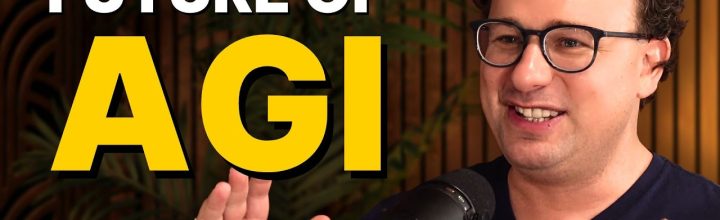
Dario Amodei, the CEO of Anthropic — the company behind Claude, one of the world’s most advanced AI systems — sat down with Indian investor and Zerodha co-founder Nikhil Kamath on his podcast People by WTF, and what he had to say should make every one of us stop and think.
His message was clear:
An AI tsunami is heading our way, and society is dangerously underprepared.
“It’s Not a Trick of the Light”
Amodei compared the current AI moment to watching a massive wave form on the horizon — visible, undeniable, and fast-approaching. Yet instead of preparing, most people are convincing themselves it isn’t real.
“It’s as if this tsunami is coming at us. It’s so close, we can see it on the horizon, and yet people are coming up with explanations like, ‘Oh, it’s not actually a tsunami — it’s just a trick of the light.’”
This isn’t a warning from a doomsday prophet. This is coming from the man actively building the very technology he’s cautioning us about.
That alone should make us listen.
🌊 What Exactly Is Coming? Here’s What Dario Amodei Predicts
1. 🤖 AI Is Reaching Human-Level Intelligence — Faster Than You Think
Amodei believes AI systems are approaching human-level performance across multiple domains far sooner than most experts expect. We’re not talking about decades from now. We’re talking about a timeline already playing out.
The economic and geopolitical consequences of this shift, he says, are going to be enormous.
2. 💻 Coding and Tech Jobs Are First in Line
If you or someone you know works in software development, this one hits close to home.
Amodei was direct:
Coding will be the first professional domain to be significantly automated.
AI systems are already handling a growing share of coding tasks, mathematics, and scientific research.
That said, he was nuanced. Higher-level software engineering — architecture decisions, product thinking, user understanding, and managing AI systems — may remain a human domain for longer. It’s not about replacing engineers overnight, but about transforming what the job looks like.
3. 🤝 Human-Centered Jobs Have More Time — But Not Forever
Not all jobs are equal in the face of AI disruption.
Roles that require deep human interaction, empathy, and emotional intelligence are harder to automate. Healthcare workers, teachers, therapists, and creative professionals who connect deeply with people will see change arrive more slowly.
But “more slowly” is not the same as “never.”
4. 💊 Medicine Is About to Be Transformed
Here’s the hopeful part.
Amodei — who trained as a biologist and biophysicist before pivoting to AI — believes one of the most profound near-term impacts of AI will be in healthcare.
“My instinct is we’re about to cure a lot of diseases.”
AI’s ability to process biological complexity — protein structures, disease patterns, drug interactions — at a scale no human team can match could unlock medical breakthroughs that would otherwise take decades.
This is arguably the most exciting dimension of the AI era.
5. ⚠️ Power Is Concentrating in Dangerous Ways
Amodei was remarkably candid about something uncomfortable: AI’s extraordinary power is concentrating in just a handful of companies — including his own — and it’s happening fast, and somewhat by accident.
“It’s happened almost overnight, almost by accident.”
He added that he’s “somewhat uncomfortable” with this reality.
When the CEO of one of the world’s top AI labs openly admits discomfort with his own industry’s power structure, it’s worth paying attention.
He’s pushing for regulation, even though — as he himself acknowledged — warning people about AI risks isn’t great for business.
“Warning about risks is not in our commercial interest. That’s not a good marketing strategy, and that’s not the reason we do it.”
6. 🧠 The De-Skilling Risk Is Real
One of the more subtle but serious concerns Amodei raised is what happens when we outsource our thinking to AI.
Studies on AI-assisted coding already show a “de-skilling” effect — people relying on AI tools may gradually lose the ability to do certain things independently.
This applies to education too. If students use AI to write their essays, think through their problems, and generate their ideas — what happens to critical thinking over time?
Amodei sees critical thinking as our “last real edge” as humans — the skill we must protect and nurture even as AI becomes more capable.
🔑 What Should You Do With This Information?
Amodei isn’t asking us to panic. He’s asking us to be honest.
The wave is forming. The question isn’t whether it will arrive — it’s whether we’ll be ready when it does.
For individuals, that means investing in skills AI can’t easily replicate: deep human connection, creative judgment, critical thinking, and the ability to work alongside AI rather than compete against it.
For governments and institutions, it means creating governance frameworks before disruption outpaces policy — not after.
For all of us, it means paying attention. Not dismissing this as hype. Not assuming it’s someone else’s problem.
The Bottom Line
The tsunami is visible on the horizon. How we prepare in the next few years will define what the next few decades look like.
What are your thoughts on AI’s impact on your work and life? Share in the comments below.
— Team nishani.in
Comments

Hi, I’m Nishanth Muraleedharan (also known as Nishani)—an IT engineer turned internet entrepreneur with 25+ years in the textile industry. As the Founder & CEO of "DMZ International Imports & Exports" and President & Chairperson of the "Save Handloom Foundation", I’m committed to reviving India’s handloom heritage by empowering artisans through sustainable practices and advanced technologies like Blockchain, AI, AR & VR. I write what I love to read—thought-provoking, purposeful, and rooted in impact. nishani.in is not just a blog — it's a mark, a sign, a symbol, an impression of the naked truth. Like what you read? Buy me a chai and keep the ideas brewing. ☕💭 For advertising on any of our platforms, WhatsApp me on : +91-91-0950-0950 or email me @ support@dmzinternational.com