The Future of AI Research Assistants: Is OpenAI’s Deep Research Worth $200/Month?
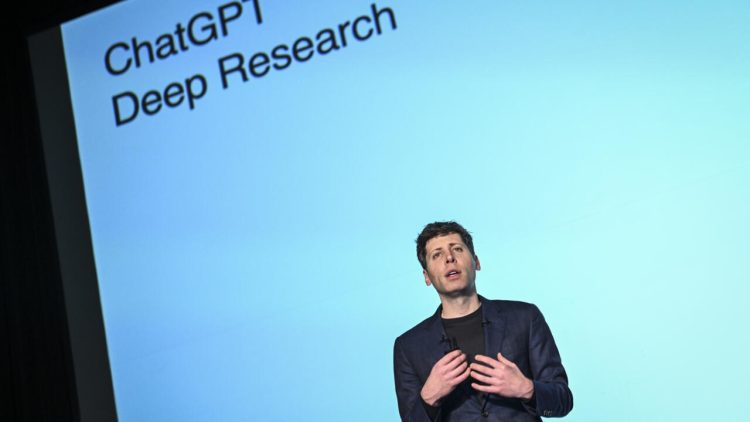
OpenAI just launched Deep Research, an autonomous AI research assistant designed to do in-depth knowledge work for you 24/7. This is not just another chatbot or search engine; it’s an AI-powered research agent that combines multi-step reasoning, real-time web search, and OpenAI’s latest o3 model to deliver incredibly detailed and well-structured reports.
How Does It Work?
- You provide it with a question or task.
- It autonomously searches the web, verifies sources, and compiles comprehensive insights.
- The AI refines its research over multiple iterations, taking anywhere between 1 to 30 minutes to generate results.
- The final output can be a 10,000+ word research report synthesized from various sources, often surpassing human experts in depth and clarity.
This is like having a round-the-clock research assistant who never sleeps, never gets tired, and can become an expert in any domain almost instantly. But is it worth the $200 per month price tag? And what if someone comes up with a better, open-source alternative?
What Can Be Achieved With Deep Research?
- Faster Decision-Making for Businesses & Startups
- Companies can delegate competitive analysis, market research, and technical feasibility studies to Deep Research.
- Founders can get instant insights on emerging trends, investor landscapes, and business strategies.
- Scientific and Technical Advancements
- Researchers can use Deep Research to analyze thousands of papers and synthesize key findings.
- It can help scientists cross-reference fields, leading to breakthroughs in AI, medicine, and climate change.
- Academic and Professional Upskilling
- Students can generate study materials, literature reviews, and research summaries.
- Lawyers, financial analysts, and consultants can get deep insights on evolving legal frameworks, stock trends, or corporate strategies.
- Content Creation and Journalism
- Writers, bloggers, and investigative journalists can use it to fact-check and enhance their articles.
- It can help build thought-leadership content for influencers, academics, and policy-makers.
- AI-Assisted Government and Policy Research
- Policymakers can analyze historical data, global case studies, and expert opinions before making critical decisions.
- It could help in drafting regulatory frameworks for AI, sustainability, and public welfare initiatives.
Is $200 Per Month Justified?

For individuals and small businesses, $200/month is not cheap. However, when compared to hiring a human research assistant (who could cost $3,000+ per month), the price is significantly lower. If Deep Research can truly replace multiple research interns or employees, the ROI becomes compelling.
However, there are potential downsides:
- The AI is still evolving and might not be 100% reliable for high-stakes research.
- $200 is steep for independent researchers, students, or freelancers.
- The accessibility of its real-time web search and how it prioritizes sources are still under scrutiny.
What If Deep Seek or Alibaba Creates a Better Open-Source Alternative?
What happens if a competitor—perhaps Deep Seek, Alibaba, or another AI lab—develops a more powerful, open-source alternative?
Imagine an AI research assistant that:
- Is open-source and community-driven.
- Offers lifetime free access with optional premium features.
- Integrates more diverse knowledge bases and does not lock users into a proprietary model.
This would disrupt the market overnight. If a powerful AI research agent can be used for free, OpenAI’s $200/month model could quickly become obsolete.
Potential players who could challenge OpenAI include:
- Alibaba’s DAMO Academy – known for its advances in AI research.
- DeepMind – if it commercializes its own knowledge AI.
- Google’s Gemini AI – with real-time search integration.
- An open-source movement – following the success of projects like Stable Diffusion for image AI.
If AI-driven research becomes democratized, knowledge work could be revolutionized at a global scale, allowing even small businesses and underfunded researchers to access world-class intelligence.
Final Verdict: Buy or Wait?
Should you pay $200/month for Deep Research today?
✅ Yes, if you are a business, researcher, or professional who needs high-quality, automated research regularly.
✅ Yes, if you want early access to cutting-edge AI before competitors.
❌ No, if you are an individual without urgent research needs.
❌ No, if you believe open-source alternatives will soon emerge.
While Deep Research is game-changing, the AI space evolves rapidly. If Deep Seek, Alibaba, or an open-source project democratizes AI research, the $200/month model may not hold up. Until then, Deep Research is the closest thing we have to a super-intelligent research assistant available today.
What do you think? Would you pay $200 for it, or would you wait for open-source competitors to catch up? Let me know your thoughts!
Comments

Hi, I’m Nishanth Muraleedharan (also known as Nishani)—an IT engineer turned internet entrepreneur with 25+ years in the textile industry. As the Founder & CEO of "DMZ International Imports & Exports" and President & Chairperson of the "Save Handloom Foundation", I’m committed to reviving India’s handloom heritage by empowering artisans through sustainable practices and advanced technologies like Blockchain, AI, AR & VR. I write what I love to read—thought-provoking, purposeful, and rooted in impact. nishani.in is not just a blog — it's a mark, a sign, a symbol, an impression of the naked truth. Like what you read? Buy me a chai and keep the ideas brewing. ☕💭 For advertising on any of our platforms, WhatsApp me on : +91-91-0950-0950 or email me @ support@dmzinternational.com