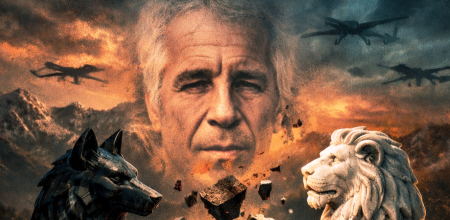
US & ISRAEL ATTACK IRAN: What the World Is Saying, What Iran Can Hit Back With, and the 4 AM Ultimatum
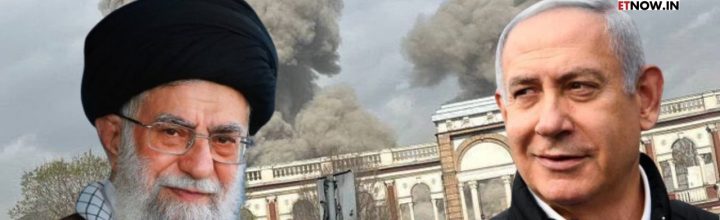
On the morning of Saturday, February 28, the United States and Israel launched a massive coordinated assault on Iran — their second in under a year, and by far the most extensive. US President Trump announced “major combat operations” on Truth Social, accusing Iran of rejecting every chance to renounce its nuclear ambitions. Israeli Defence Minister Israel Katz called it a “preemptive strike to eliminate threats to Israel.”
The operation — codenamed Operation Epic Fury (US) and Operation Shield of Judah (Israel) — struck Tehran, Isfahan, Karaj, Kermanshah, and Qom. Targets included Iran’s Ministry of Intelligence, Ministry of Defence, the office of Supreme Leader Khamenei, the Atomic Energy Agency, and nuclear sites at Natanz and Fordow. Iran’s IRGC commander and Defence Minister are believed to have been killed. Iran fired back immediately — launching missiles at Israel and striking US bases in Bahrain, Qatar, the UAE, Jordan, and Kuwait.
Iran’s Conditional Offer — The 4 AM Ultimatum
In a significant diplomatic signal amid the chaos, Iran has sent word: if the US and Israel halt their strikes before 4 AM Tehran time, Iran will stop all retaliatory attacks on US bases across GCC countries and cease firing at Israel.
Tehran has made one thing emphatically clear — it did not start this war. Iran had been at the negotiating table in Geneva just days before the attack, with Oman’s Foreign Minister stating a peace deal was “within reach.” The bombs fell anyway.
Iran’s position is that it is exercising its right of self-defence against an unprovoked aggression. As of this writing, neither the US nor Israel has responded to Iran’s conditional offer. Trump described the campaign as “massive and ongoing,” giving no indication of any pause. The world is watching whether this narrow window for de-escalation stays open or slams shut in the coming hours.
Russia and China: Words, Not Action
Russia called the strikes “a pre-planned and unprovoked act of armed aggression” violating the UN Charter. Putin labelled it “completely without foundation or justification.” Kremlin deputy Medvedev warned of nuclear war risks.
China’s Xi Jinping called for an immediate ceasefire, saying “armed force is not the correct way to resolve international disputes.” Both leaders jointly condemned Israel’s actions and agreed there is no military solution.
However, neither country is militarily intervening — Russia is tied down in Ukraine, and China is playing a long strategic game, quietly feeding Iran intelligence via spy ships in the Gulf of Oman while publicly condemning the attack.
India: Awkward Silence After Modi’s Jerusalem Visit
PM Modi was in Israel just 48 hours ago, declaring India stands “shoulder to shoulder” with Israel against terrorism. He received an award from Netanyahu. Now Netanyahu has attacked India’s long-standing partner, Iran — the country that built the Chabahar port with India and backed India on Kashmir internationally.
India has issued no condemnation. The Embassy in Israel simply advised Indian nationals to take shelter. Congress slammed Modi for “moral cowardice.” India is caught between its US-Israel strategic axis and its historic friendship with Iran — and chose silence.
Iran’s Weapons: Still Dangerous
Despite losses in the June 2025 Twelve-Day War, Iran retains an estimated 1,000–1,500 ballistic missiles, including the Khorramshahr-4 (2,000 km range, 1,500 kg warhead), the Sejjil-2 solid-fuel missile, and the Fattah — a hypersonic-class weapon that is extremely difficult to intercept.
Iran’s short-range missiles targeting Gulf US bases were barely touched in 2025 and number in the thousands. Its Shahed kamikaze drone swarms can saturate air defences through sheer volume. Iran also possesses anti-ship supersonic cruise missiles that threaten the USS Abraham Lincoln and USS Gerald R. Ford — both currently operating in the region.
Critically, Iran has an extensive underground “missile city” tunnel network across at least 24 sites that is difficult to fully destroy from the air.
What Experts Expect
Defence analysts agree: Iran cannot defeat the US militarily, but it can make this extremely painful. The Atlantic Council’s Iran team says Tehran “needs to give Trump a bloody nose or it will perpetually be at risk.”
The most dangerous immediate threat is short-range missile salvos at US bases in the Gulf — arriving in minutes, harder to intercept. Iran could also blockade or mine the Strait of Hormuz, through which 20% of global oil flows — an economic weapon that would hit every country on earth.
Cyberattacks are expected to surge. The CSIS notes a 700% rise in Iranian cyberattacks on Israel after the June 2025 strikes. Experts describe Iran’s strategy as “controlled chaos” — not victory, but raising the cost of continuation so high that Washington hesitates before the next round.
The 4 AM deadline is ticking. The region — and the world — is holding its breath.
— nishani.in | February 28, 2026
Comments

Hi, I’m Nishanth Muraleedharan (also known as Nishani)—an IT engineer turned internet entrepreneur with 25+ years in the textile industry. As the Founder & CEO of "DMZ International Imports & Exports" and President & Chairperson of the "Save Handloom Foundation", I’m committed to reviving India’s handloom heritage by empowering artisans through sustainable practices and advanced technologies like Blockchain, AI, AR & VR. I write what I love to read—thought-provoking, purposeful, and rooted in impact. nishani.in is not just a blog — it's a mark, a sign, a symbol, an impression of the naked truth. Like what you read? Buy me a chai and keep the ideas brewing. ☕💭 For advertising on any of our platforms, WhatsApp me on : +91-91-0950-0950 or email me @ support@dmzinternational.com