Who’s Really Buying These ₹1 Crore Cars?

“Dead Economy, huh?” — The Truth Behind India’s ₹1 Crore Car Craze
💰 Everyone says the economy is slow, people are struggling, and businesses are down.
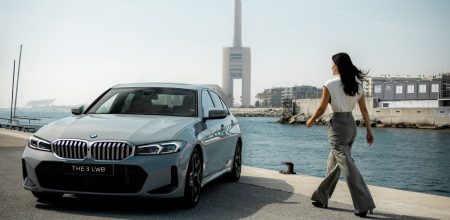
But then — during just nine days of Navratri — Mercedes-Benz sold one luxury car every 6 minutes in India.
Each car cost around ₹1 crore on average.
Let’s get real. The “one Mercedes every six minutes” story is not driven by middle-class ambition — it’s powered by India’s top 1%.
1️⃣ The Buyers: India’s New Power Class
The real buyers of these luxury cars fall into three major categories:
🏢 (A) Corporate Elite — The Top 1%
These are founders, CXOs, real estate barons, and industrial families who operate in the ₹10-100 crore annual income bracket.
They’re not buying a car — they’re buying visibility.
Their Mercedes is not just for comfort; it’s a mobile office, status certificate, and asset depreciation tool all in one.
In many cases, these cars are billed under company accounts. That means:
- The car becomes a business asset.
- It enjoys tax benefits under depreciation laws.
- Fuel, driver salary, and maintenance become deductible business expenses.
So the buyer’s mindset isn’t “I spent ₹1 crore,” it’s “I optimised ₹1 crore.”
This group drives nearly 60–70% of Mercedes India’s high-end sales.
💼 (B) Upper Middle Class of Metro Cities
Then comes the top 5–10% — senior executives, tech entrepreneurs, and stock market veterans.
These are not the old-money rich — these are the new-age earners.
Many of them are:
- Startup founders who exited companies.
- Mid-40s IT professionals with global salaries.
- Finance, consulting, or real estate experts who made crores in the bull market.
Their psychology? Rewarding themselves for survival.
They say: “I’ve worked 20 years for this. I deserve it.”
But here’s the catch — this group doesn’t represent the middle class. They’ve broken out of it.
They are the upper crust of the urban salaried class, living in ₹3-5 crore apartments and spending ₹1 crore on a car as a statement of “arrival.”
For Mercedes, this is the fastest-growing customer segment — aspirational, self-made, debt-friendly, and socially visible.
🧑💼 (C) The “Showcase Buyers” — Celebrities, Influencers, Politicians
A smaller but noisy group: film stars, social media icons, and politicians who need optics.
Luxury cars here are pure image currency.
Some even use leasing or financial partnerships to keep buying new models without full payment.
They are few in number but high in visibility — creating the illusion that “everyone is buying Mercedes.”
In truth, they are the billboards of aspiration for the other two groups.
📊 What This Reveals About the Indian Economy
1. The Economy Is Not Dead — It’s Divided.
India’s GDP is growing. But it’s not inclusive growth.
The Mercedes story shows how wealth is concentrated, not distributed.
Top 1% of Indians now hold more than 40% of national wealth.
The bottom 50% own just 3%.
So yes, some people are buying cars worth crores — because the rest can’t even afford scooters.
Economic growth today is a K-shaped recovery — the rich curve upward, the rest flatten downward.
2. The “Middle Class” Is Hollowing Out.
The traditional middle class — once proud of owning a Maruti, saving for a flat, and paying EMIs — is shrinking.
Rising cost of living, high education expenses, medical inflation, and stagnant salaries have pushed many downwards.
They are earning more but saving less.
So while luxury brands report record sales, the real middle class is buying used cars, not new ones.
The ₹1 crore Mercedes doesn’t represent middle-class aspiration — it represents middle-class alienation.
3. India’s Growth Is Driven by Consumption, Not Creation.
Luxury car sales don’t signal industrial progress — they signal spending power at the top.
It’s not factories expanding; it’s imported cars being sold to local elites.
That means the profit doesn’t stay fully in India either — it flows out through imports and royalties.
So the country celebrates consumption, but not production.
That’s a dangerous imbalance — one that creates economic glitter without backbone.
4. Emotional Inflation: When Lifestyle Outpaces Reality
A ₹1 crore car has now become a normal aspiration among the upper middle class.
That’s emotional inflation — where people feel poorer not because they earn less, but because the benchmark of “success” keeps rising.
Social media and peer comparison fuel it.
And while a few make it, many stretch EMIs beyond reason just to look “upgraded.”
This illusion of affluence hides the real cracks beneath India’s consumer story.
5. What Mercedes Sales Actually Prove
They prove that India’s luxury segment is alive and kicking — but only for a very thin slice of society.
It’s not proof of a healthy middle class. It’s proof of an expanding wealth gap.
When one group buys ₹1 crore cars while another group can’t buy ₹100 worth of vegetables, you’re not looking at progress — you’re looking at polarity.
🪞 Nishani’s Mirror Moment
Let’s call it what it is:
India is not a poor country anymore — it’s a country unequally rich.
We have billionaires, unicorn founders, stock market millionaires, and influencers flaunting luxury lifestyles.
But at the same time, 90% of Indians still earn below ₹25,000 per month.
That’s not prosperity — that’s imbalance dressed as success.
And every Mercedes on the road reminds us — the distance between “India shining” and “India struggling” is now measured in traffic lanes.
✊ The Real Lesson
A Mercedes selling every six minutes doesn’t mean India is progressing.
It means a few Indians are doing extremely well — while the rest are still waiting for their engine to start.
The real growth story is not about luxury showrooms — it’s about the millions of silent engines of this country:
the farmers, the weavers, the artisans, the small business owners, the delivery riders, and the teachers — the ones who keep the wheels turning without making headlines.
When they start thriving — not just surviving — that’s when we can truly say the Indian economy is alive.
Nishani’s final word:
“The sound of a Mercedes engine is loud.
But the silence of a struggling middle class is louder.
If luxury is booming while livelihoods are shrinking, that’s not growth — that’s imbalance with good PR.”
Comments

Hi, I’m Nishanth Muraleedharan (also known as Nishani)—an IT engineer turned internet entrepreneur with 25+ years in the textile industry. As the Founder & CEO of "DMZ International Imports & Exports" and President & Chairperson of the "Save Handloom Foundation", I’m committed to reviving India’s handloom heritage by empowering artisans through sustainable practices and advanced technologies like Blockchain, AI, AR & VR. I write what I love to read—thought-provoking, purposeful, and rooted in impact. nishani.in is not just a blog — it's a mark, a sign, a symbol, an impression of the naked truth. Like what you read? Buy me a chai and keep the ideas brewing. ☕💭 For advertising on any of our platforms, WhatsApp me on : +91-91-0950-0950 or email me @ support@dmzinternational.com