
₹100 vs ₹1.5 Lakh: What a Spit Reveals About a Country
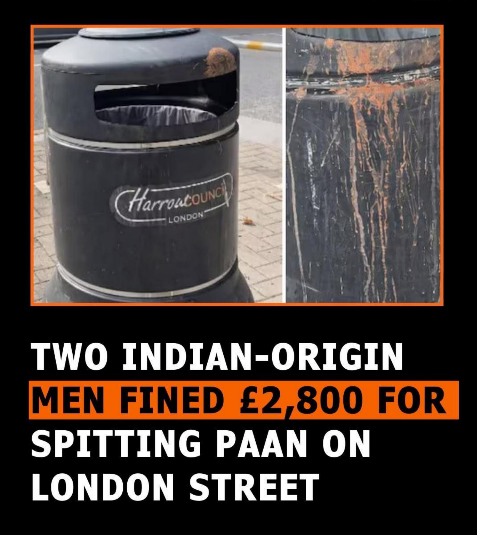
Two men in London spit paan on the road.
Not a crime in their mind. Not even a big deal.
Until the bill came.
£100 ignored.
Case filed.
Final damage: £1,391 each (₹1.5 lakh+).
Suddenly, that harmless red stain became one of the most expensive habits of their life.
Now pause.
Ask yourself one uncomfortable question:
If this same rule existed in India… what would our streets look like?
The Truth We Walk Past Every Day
Let’s not pretend we don’t see it.
- Fresh red stains on walls
- Corners turned into “unofficial spitting zones”
- Public buildings decorated with paan art
- “Do Not Spit” boards… ironically surrounded by spit
We don’t even react anymore.
We’ve normalized it.
Somewhere along the way, we decided:
“Public space = nobody’s responsibility.”
The VIP Illusion
Here’s where things get almost funny… and painful.
Whenever a big foreign leader visits India, what happens?
- Roads get cleaned overnight
- Walls get painted
- Slums get hidden
- And in some cases… roads and areas are literally covered with sheets, green cloth, or tin panels
Not fixed.
Not improved.
Just covered.
Why?
Because we know the truth:
We can clean the country. We just choose not to—unless someone important is watching.
London Didn’t Become Clean by Motivation Speeches
Let’s be brutally honest.
People don’t suddenly become disciplined because of awareness campaigns or slogans.
They become disciplined when:
- There is a rule
- The rule is enforced
- And breaking it hurts
That’s it.
In London, you spit → you pay.
You ignore → you pay more.
You repeat → you face court.
No debates. No excuses. No “chalta hai”.
India Doesn’t Lack Rules. It Lacks Consequences.
India actually has laws against public spitting.
But enforcement?
Let’s just say… the paan stains are winning.
Imagine this:
- ₹500 fine for spitting
- Ignore it → ₹10,000 penalty
- Repeat → legal case
Do you think people will still casually spit after chewing paan like it’s a birthright?
Not a chance.
Cleanliness Is Not a Cultural Problem. It’s a System Problem.
We often blame habits, culture, or “people won’t change.”
That’s lazy thinking.
Because the same person:
- Throws garbage here
- Follows rules strictly in Dubai
- Pays fines quietly in Singapore
- Behaves perfectly in London
So what changed?
Not the person. The system.
The Cost We Don’t Calculate
That one spit is not free.
It costs:
- Cleaning manpower
- Chemicals
- Water
- Public health risks
- Infrastructure damage
- And most importantly… dignity of public spaces
London spends £30,000+ yearly just cleaning paan stains.
Now imagine India’s cost.
Actually, don’t.
We’ve already accepted the loss.
What If India Took a Stand?
Imagine this version of India:
- No red-stained walls
- No “hidden” streets before VIP visits
- No embarrassment when foreigners visit
- No need to pretend cleanliness
Just normal, everyday discipline.
Not because people became saints.
But because the system stopped being weak.
The Real Question
We don’t need another Swachh Bharat slogan.
We don’t need more posters.
We need one thing:
Do we have the courage to enforce rules equally—on everyone?
Because the day that happens:
- Paan stains will disappear
- Public spaces will improve
- And India won’t need to “prepare” for visitors
It will already be ready.
Final Thought
A country doesn’t become clean when people feel like it.
It becomes clean when not being clean becomes expensive.
London proved it with one fine.
India already knows it.
The only thing missing?
Action.
Comments

Hi, I’m Nishanth Muraleedharan (also known as Nishani)—an IT engineer turned internet entrepreneur with 25+ years in the textile industry. As the Founder & CEO of "DMZ International Imports & Exports" and President & Chairperson of the "Save Handloom Foundation", I’m committed to reviving India’s handloom heritage by empowering artisans through sustainable practices and advanced technologies like Blockchain, AI, AR & VR. I write what I love to read—thought-provoking, purposeful, and rooted in impact. nishani.in is not just a blog — it's a mark, a sign, a symbol, an impression of the naked truth. Like what you read? Buy me a chai and keep the ideas brewing. ☕💭 For advertising on any of our platforms, WhatsApp me on : +91-91-0950-0950 or email me @ support@dmzinternational.com