
The Three Young Keralites Who Took On Bollywood’s Propaganda Machine — And Almost Won
On the evening of February 26, 2026, three young people stood outside the Kerala High Court in Kochi, exhausted but resolute. Freddy V. Francis, Advocate Sreerag Shylan, and Advocate Ferha Azeez had just accomplished something extraordinary — they had convinced a single-judge bench to stay the release of one of Bollywood’s most controversial films, The Kerala Story 2: Goes Beyond, just hours before its worldwide theatrical premiere. The photograph of the trio, posted by Freddy on social media, went viral within minutes — a symbol of resistance that resonated with millions of Keralites across the globe.
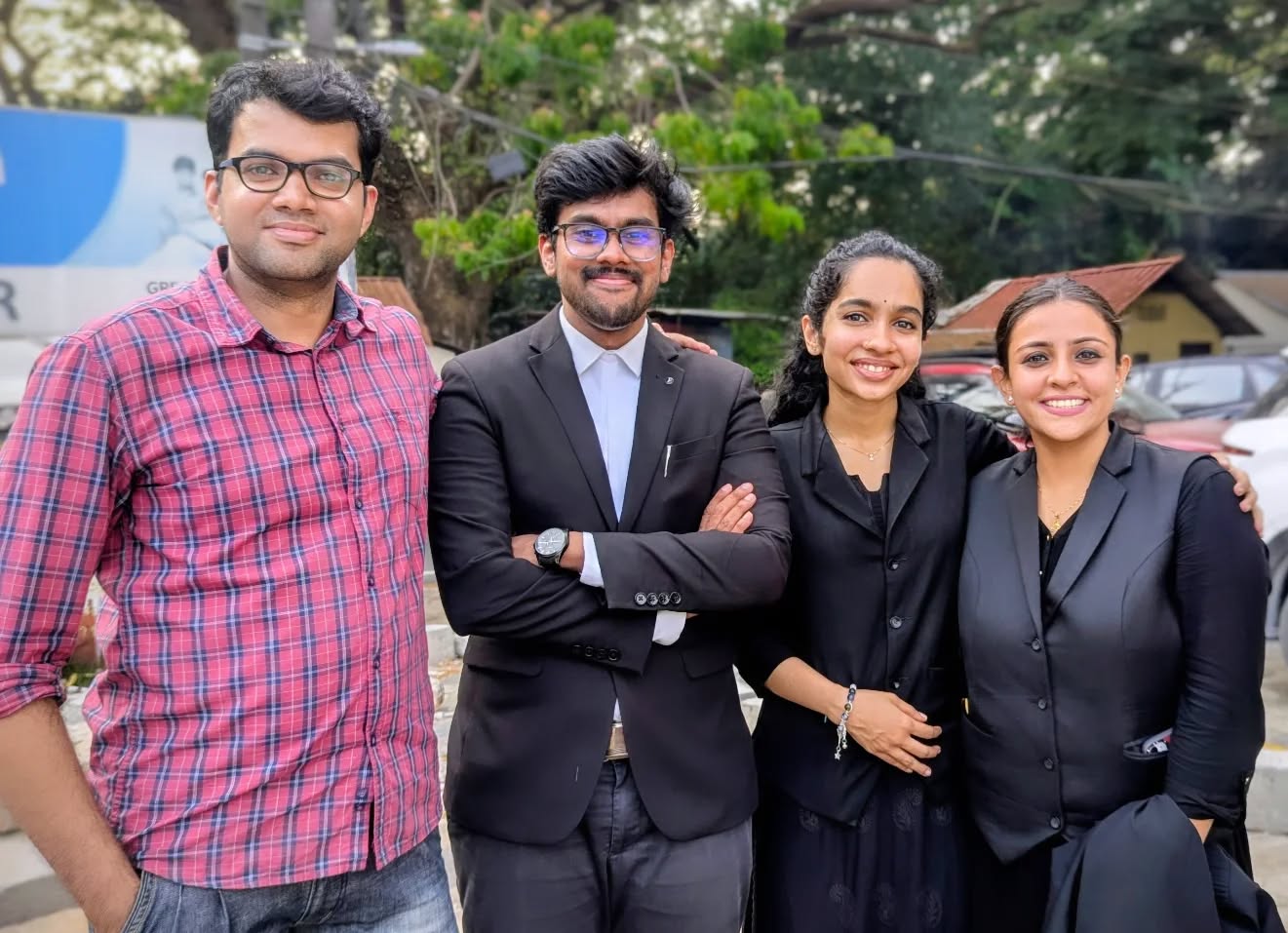
But their triumph was short-lived. By 7:30 PM the same evening, the film’s producers had rushed to a Division Bench, and within hours, the stay was lifted.
This is the story of how ordinary citizens fought a multi-crore propaganda machine — and what it means for every Keralite, everywhere.
Who Are These Three?
Freddy V. Francis is a content creator and social media influencer from Kochi, currently living and working in Spain. A former UPSC aspirant with a sharp understanding of politics and policy, Freddy uses satire and commentary to dissect political narratives on Instagram. His bio says he’s here to “roast, fry or boil” — and his content consistently challenges power structures. But Freddy is no stranger to consequences. He has faced waves of online abuse and death threats for his political commentary, including threats directed at his elderly parents back in Kerala.
Freddy’s decision to file the petition against Kerala Story 2 was deeply personal. He told the court that after the release of the original The Kerala Story in 2023, he faced severe racial profiling and discrimination in Spain. The film’s narrative — which painted Kerala as a breeding ground for ISIS recruitment — made it difficult for him to live and work abroad. He argued that the sequel would only deepen this damage.
Advocate Sreerag Shylan is a young corporate lawyer practising at the Kerala High Court. During his law school days, he made his mark at national-level competitions and developed a keen interest in constitutional law and public interest matters. In the courtroom, it was Sreerag who led the legal arguments for Freddy’s petition. He argued that the film was being promoted as “based on true events” despite admitting during the first film’s Supreme Court proceedings that it was fictional. He pointed out a critical contradiction: the makers themselves said the sequel’s victims were not from Kerala, yet they kept “Kerala” in the title — a deliberate branding of hate.
Advocate Ferha Azeez is a practising lawyer at the Kerala High Court with experience spanning several years, including notable cases involving LGBTQ+ rights. In 2021, she represented the LGBTQ+ community in a landmark case where the court directed the Kerala government to frame guidelines against forced conversion therapy. In the Kerala Story 2 case, Ferha was part of the legal team that built the constitutional arguments around Articles 14, 19, and 21 — framing the petition not as a political statement, but as a fundamental rights issue touching the reputation and dignity of every Keralite.
The Legal Battle: 72 Hours That Shook Bollywood
The drama unfolded at breakneck speed.
February 25 (Tuesday): Freddy’s petition, along with one filed by Kannur resident Sreedev Namboodiri, came before Justice Bechu Kurian Thomas. The petitioners argued that the film’s trailer and promotional material associated Kerala with terrorism, forced conversions, and the tagline “Sharia law will be enforced across all of India.” The judge expressed willingness to watch the film. Crucially, the producers declined the court’s offer to screen the movie — a decision that would later work against them.
February 26 (Wednesday-Thursday): Justice Thomas passed a landmark interim order staying the film’s release for 15 days. He observed that the CBFC had shown a “manifest absence of application of mind” while certifying the film and that the content had the “potential to distort public perception and disturb communal harmony.” He noted that Kerala could be portrayed globally as “a hub of fanaticism and communal division.”
February 26 (Evening): Within hours, producer Vipul Amrutlal Shah’s legal team — armed with senior advocates flown in from Delhi — filed an urgent appeal before a Division Bench. The hearing began at 7:30 PM and lasted over two hours. Sreerag and the petitioners’ team were given barely 10 minutes notice and received copies of the appeal documents just before the hearing began.
February 27 (Friday): The Division Bench of Justices Dharmadhikari and Balakrishnan lifted the stay, ruling that since the CBFC had watched the entire film, there was a presumption of proper certification. The film was cleared for release in over 1,500 theatres worldwide.
The Political Dimension
The original Kerala Story (2023) was heavily promoted by the ruling BJP at the national level. Prime Minister Narendra Modi endorsed it during Karnataka election rallies, calling it an exposé of a “conspiracy.” BJP-ruled states made it tax-free. The film earned over ₹300 crore and won national awards — despite being forced to add disclaimers that its figures were inauthentic and its story fictionalised.
The sequel follows the same playbook. At its Delhi promotion event, 37 women claiming to be “victims of love jihad” were presented — none from Kerala. Both the CPI(M) and Congress in Kerala have called the franchise “hate propaganda” serving the “Sangh Parivar agenda.” Kerala Chief Minister Pinarayi Vijayan described it as an attempt to portray a land of religious harmony as a centre of terrorism.
Yet, the producer insists: “We have nothing to do with any political party.”
The Real Impact on Keralites
This isn’t about a film. It’s about 2.5 million Non-Resident Keralites (NRKs) spread across the Gulf, Europe, Americas, and beyond. It’s about the nurse in London, the engineer in Munich, the teacher in Dubai — all of whom carry “Kerala” as part of their identity.
Freddy Francis told the court he was subjected to racial profiling in Spain after the first film. The petitioners produced documented evidence of unrest and ill-will directed at Keralites across India after 2023. A popular travel vlogger, Sujith Bhakthan, posted a video from Fiji after spotting the film’s poster in a local theatre, calling it “a global defamation campaign against Kerala.”
Kerala spends crores annually building its “God’s Own Country” tourism brand. Meanwhile, a film franchise using the state’s name associates it with terrorism in over 1,500 theatres worldwide. The irony is crushing.
What the Producer and Director Said — And Didn’t Say
Producer Vipul Amrutlal Shah maintained that the film “doesn’t insult Kerala” and targets only “criminals.” Director Kamakhya Narayan Singh called it “fact-based” and said society needs to be “sensitised.” When the single bench stayed the film, the producers moved with extraordinary speed — securing a Division Bench hearing within hours. When critics questioned the urgency, the producers cited sold overseas distribution rights and commercial commitments.
The most telling moment came in court when the producers’ senior counsel argued: “Kerala doesn’t have dignity as such. The dignity is of India.” For millions of Keralites, that one sentence said everything about how the makers view their state.
The Government’s Silence
Perhaps the most damning aspect of this saga is what didn’t happen. The Kerala government — which publicly condemned the film — never joined the case as a petitioner. It was left to a content creator living in Spain and a resident of Kannur to fight for the state’s reputation, represented by young lawyers who received 10 minutes’ notice for a Division Bench hearing against some of India’s most expensive senior advocates.
As legal commentators have noted, when the government spends public money building Brand Kerala and the film allegedly causes reputational damage worldwide, remaining a mute spectator is inexcusable.
The Bigger Picture
Freddy, Sreerag, and Ferha may not have won the final round. The film is now playing across the world. But what they achieved in those 72 hours is significant. A single-judge bench of a High Court examined the evidence and found prima facie merit in their arguments. A constitutional court acknowledged that the right to reputation is a fundamental right and that a Keralite living abroad can be personally injured by a film that brands their homeland as a terror hub.
The legal fight is far from over. The writ petitions remain pending. The CBFC has been directed to re-examine representations. And a precedent has been set — citizens can challenge the weaponisation of cinema against an entire community.
Three young Keralites stood up when their government wouldn’t. That photograph outside the High Court isn’t just a moment — it’s a movement.
What are your thoughts on the Kerala Story 2 controversy? Drop your comments below.
Comments

Hi, I’m Nishanth Muraleedharan (also known as Nishani)—an IT engineer turned internet entrepreneur with 25+ years in the textile industry. As the Founder & CEO of "DMZ International Imports & Exports" and President & Chairperson of the "Save Handloom Foundation", I’m committed to reviving India’s handloom heritage by empowering artisans through sustainable practices and advanced technologies like Blockchain, AI, AR & VR. I write what I love to read—thought-provoking, purposeful, and rooted in impact. nishani.in is not just a blog — it's a mark, a sign, a symbol, an impression of the naked truth. Like what you read? Buy me a chai and keep the ideas brewing. ☕💭 For advertising on any of our platforms, WhatsApp me on : +91-91-0950-0950 or email me @ support@dmzinternational.com