
The Ghost Is Dead. But Gaza’s War Is Very Much Alive — And India Can’t Stay Silent.
They called him the Ghost. For three years, Izz al-Din al-Haddad survived Israeli assassinations, American bounties, drone strikes, and a war that flattened everything around him. He used Israeli hostages as human shields. He moved through rubble like smoke. He outlived Yahya Sinwar, Mohammed Sinwar, Mohammed Deif — every commander above him fell, and he kept rising.
On Friday night, a precise Israeli airstrike on an apartment building in Gaza City’s al-Rimal neighbourhood ended that. Al-Haddad, his wife, and his daughter were killed together. By Saturday morning, his body was wrapped in Hamas and Palestinian flags, carried through the streets of Gaza City by mourning crowds.
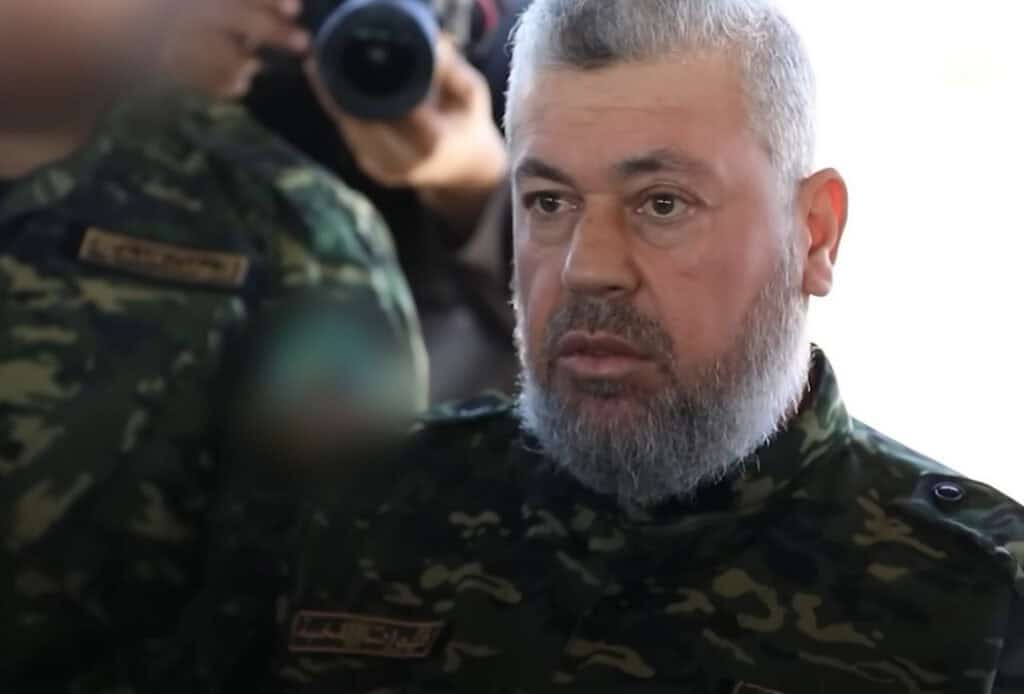
Israel called it a historic achievement. Netanyahu hinted at what comes next: Israel now controls 60% of Gaza, and “tomorrow we shall see.”
Read that carefully. That is not the language of a ceasefire. That is the language of a man who just removed the last obstacle and is telling you — plainly — that the next phase is coming.
The Ceasefire Was Already Dead
Let’s be honest about something the diplomatic community refuses to say out loud: the US-brokered ceasefire that went into effect last October was a fiction maintained for optics. Since it began, Israeli strikes have killed over 850 Palestinians inside Gaza. Four Israeli soldiers were killed in the same period. Both sides have accused each other of violations. The top diplomat overseeing the deal admitted last week it was “far from perfect.” That is a polite way of saying it was broken before the ink dried.
Al-Haddad’s killing is not a violation of the ceasefire — it is the ceasefire’s funeral. Israel has now eliminated every senior Hamas commander who was present on October 7. Sinwar is gone. Deif is gone. Now the Ghost is gone. Netanyahu has no political incentive to stop here, and every military argument to push forward.
The IDF’s Southern Command has already been placed on heightened operational readiness — their own words — anticipating Hamas retaliation. That retaliation, when it comes, will give Israel the pretext it needs for what military planners have been quietly sketching for months: a full resumption of ground operations and the seizure of the remaining 40% of Gaza.
The war is not ending. It is reloading.
U.S. President Donald Trump makes a major statement amid rising tensions between the United States and Iran.
And Then There Is the World Nobody Is Watching
While Gaza burns again, the WHO declared a global health emergency today — a new Ebola outbreak in the Democratic Republic of Congo, caused by the Bundibugyo strain, for which there is no approved vaccine. Eighty-seven dead, 246 suspected cases, already crossing into Uganda with cases now confirmed in Kampala. Experts say the outbreak had been spreading silently long before anyone detected it.
No vaccine. No cure. Crossing borders. Sound familiar?
Ebola was first identified in 1976 in two simultaneous outbreaks in South Sudan and the Democratic Republic of Congo, named after the Ebola River where it was discovered.
For decades it struck in isolated bursts across Central Africa — contained each time through aggressive contact tracing, patient isolation, and international emergency response, not vaccines.
The worst outbreak in history hit West Africa between 2014 and 2016, infecting over 28,600 people across Guinea, Liberia, and Sierra Leone before it was finally brought under control.
The current 2026 outbreak is a different and more dangerous beast — it involves the Bundibugyo strain, first discovered only in 2007 in Uganda, the rarest and least understood of all Ebola strains, with no approved vaccine and no specific treatment available anywhere in the world.
With 246 suspected cases, over 80 confirmed deaths, and cases already crossing from DRC into Uganda’s capital Kampala, the WHO has declared its highest global alarm level today.
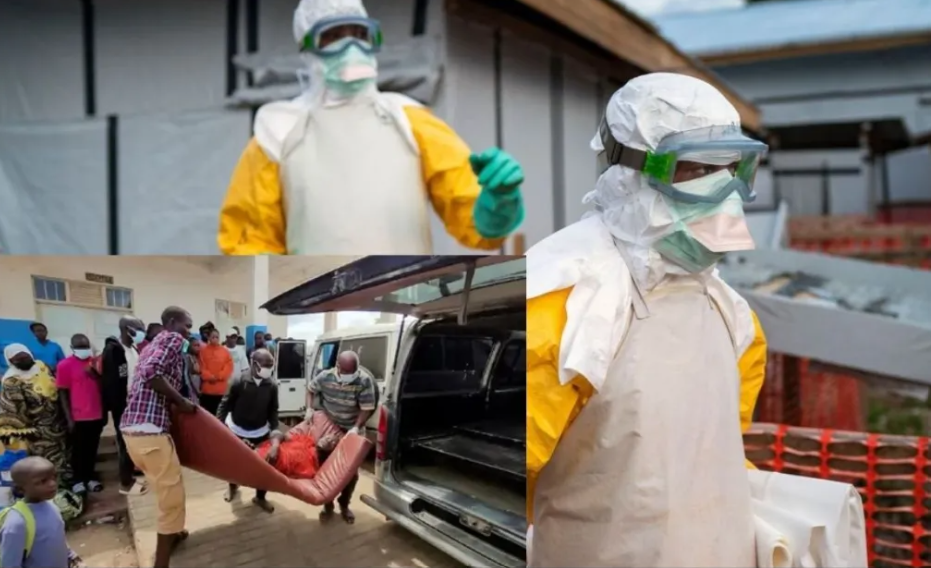
The world’s attention is on Gaza, on the Strait of Hormuz, on Trump’s Beijing summit hangover, on Cuba running out of oil. Ebola just raised its hand. Nobody in a position of power is looking.
Where Is India? Still Watching. Still Silent.
This is the part that should matter most to every Indian reading this.
India has maintained one of the world’s most carefully calibrated positions on Israel-Palestine — strong defence cooperation with Tel Aviv, votes for Palestinian statehood at the UN, and public silence when things get complicated. It is a policy designed for a stable world where you could afford to be everywhere and nowhere at once.
That world is over.
India sits inside BRICS, where Iran’s Foreign Minister is actively lobbying member nations to unite against American “bullying.” India has defence ties with Israel that it cannot afford to sever. India has a Muslim population of 200 million whose opinion on Gaza is not invisible. And India has a seat at tables — the UN, BRICS, the Quad — where Gaza will now dominate every agenda for the foreseeable future.
Strategic autonomy is not the same as strategic paralysis. One is a choice. The other is a failure dressed up in diplomatic language.
The Ghost is dead. Hamas will regroup — it always does. Netanyahu will push forward — he always does. The ceasefire is gone. The humanitarian crisis will deepen. The Ebola emergency will compete for global bandwidth. And somewhere in South Block, India’s foreign policy establishment will craft another carefully worded statement that says everything and commits to nothing.
At some point, silence stops being a strategy. It just becomes cowardice with a passport.
Nishani writes on geopolitics, technology, and India’s place in the emerging world order at nishani.in
Comments

Hi, I’m Nishanth Muraleedharan (also known as Nishani)—an IT engineer turned internet entrepreneur with 25+ years in the textile industry. As the Founder & CEO of "DMZ International Imports & Exports" and President & Chairperson of the "Save Handloom Foundation", I’m committed to reviving India’s handloom heritage by empowering artisans through sustainable practices and advanced technologies like Blockchain, AI, AR & VR. I write what I love to read—thought-provoking, purposeful, and rooted in impact. nishani.in is not just a blog — it's a mark, a sign, a symbol, an impression of the naked truth. Like what you read? Buy me a chai and keep the ideas brewing. ☕💭 For advertising on any of our platforms, WhatsApp me on : +91-91-0950-0950 or email me @ support@dmzinternational.com