
The Cylinder That Burns Twice — Once in Your Kitchen, Once in Your Wallet
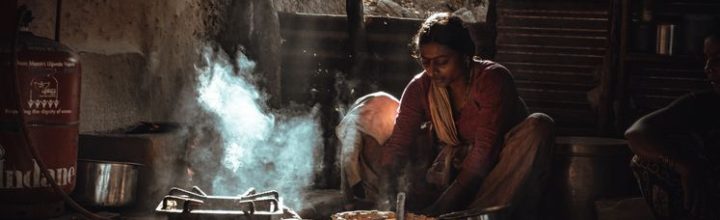
India’s LPG price hike is not an energy story. It is a poverty story dressed in the language of global markets.
There is a number the government announces. And then there is the number that actually matters.
When oil marketing companies raised the price of a domestic LPG cylinder by ₹60 in March 2026, the official rate in Delhi moved from ₹853 to ₹913 per 14.2 kg cylinder. The press release was clean. The justification was familiar — global energy markets, the Strait of Hormuz, West Asia tensions. The government called it a routine revision. But for millions of households across India, nothing about this was routine.
This is not an essay about those ₹60. It is about everything that ₹60 unlocks.
The Cylinder Is Just the Beginning
When the cylinder price goes up, the kitchen economy reshuffles itself quietly. The household that was already rationing gas usage now rations more. The family that was using eight cylinders a year is now calculating whether they can survive on six. The woman in a Tier 3 town who received a free connection under Pradhan Mantri Ujjwala Yojana — and for whom the cylinder was already at ₹550 after subsidy — does the math, decides she cannot afford refills at the new rate, and walks back to firewood.
This is not a projection. It is a documented pattern repeated every single time the cylinder price rises without a proportionate subsidy correction. India spent two decades convincing rural women to give up biomass cooking. The health argument was real. Indoor air pollution from wood fire kills. Clean fuel was progress. But progress, it turns out, has a monthly price tag. And when that price becomes unaffordable, progress is quietly abandoned — with no headline announcing its retreat.
The Commercial Shock Nobody Warned You About
The domestic hike was ₹60. The commercial cylinder hike was ₹115 in March. And then came May — where the commercial cylinder price jumped by nearly ₹1,000 in a single month. Nearly a thousand rupees. One revision. One month.
This is the number that hit dhabas, street food stalls, small restaurants, canteen contractors, and community kitchens — every outlet that feeds working-class India at prices the working class can actually afford. Restaurants, dhabas, and street food vendors are primary users of commercial cylinders, and they have exactly one option when fuel costs explode: pass it on.
Higher menu prices. Smaller portions. Cheaper ingredients. The customer who cannot afford to eat at home now also cannot afford to eat outside. The squeeze runs downward until it hits those who have nowhere left to go.
In April 2026, reports emerged from across the country of roadside eateries, small dhabas, and hostels facing serious supply difficulties. Community kitchens were forced to shut in several places. Many small establishments were buying cylinders on the open market at prices exceeding ₹5,000 per cylinder — a clear signal of black marketing and hoarding filling the vacuum that supply failure created.
Five thousand rupees per cylinder. For the people who feed India’s daily wage workers.
The Government’s Favourite Comparison
The Ministry of Petroleum and Natural Gas has a prepared response to every cylinder price protest. Indian households, it says, still pay far less than their counterparts in neighbouring countries, and a fraction of what households pay in the United States, Australia, or Canada.
This argument is technically correct and practically useless.
Comparing Indian household income to Australian purchasing power while citing cylinder prices as proof of affordability is a statistical sleight of hand. A cylinder at ₹942 is not the same burden for a family earning ₹15,000 a month in Chennai as it is for a household in Sydney earning the equivalent of ₹3 lakh a month. The number is the same. The weight is catastrophically different.
India imports about 60 per cent of the domestic LPG it consumes. Prices are linked to international benchmarks. That much is structurally unavoidable. But how those international pressures are absorbed — who bears the cost, who is shielded, how subsidies are structured and delivered — is entirely a political choice. Not a market inevitability. Never dress a policy decision as a force of nature.
What the Trajectory Is Telling Us
Over the past twelve months, the domestic LPG price has risen by ₹89 cumulatively. That is approximately one additional cylinder cost added to the annual kitchen budget of every non-subsidised household in India. Not from salary growth. From the same income, stretched thinner.
The Ujjwala scheme gave free connections to crore of poor households. It was well-intentioned and genuinely transformative in its early years. But a free connection is not free gas. Each refill must be paid for. And as prices climb, Ujjwala beneficiaries — the very people the scheme was designed to protect — are quietly going back to wood and coal. The connection sits at home. The chulha burns outside.
India has been working to diversify LPG sourcing, including from the United States. That is the right long-term direction. But diversification takes years. The kitchen fire needs fuel today.
The Number Nobody Announces
The real number is not ₹913 or ₹942.
The real number is how many Ujjwala households refilled their cylinder this month compared to three years ago. It is how many dhabas quietly shrunk their portion size this week. It is how many women are breathing wood smoke again in villages where Ujjwala connections were once celebrated as liberation.
Nobody announces that number. It does not come with an effective date or an IOCL press release. It accumulates silently, in lungs, in budgets, in the slow economic retreat of people who have no lobby, no stock price, and no minister speaking on their behalf.
The cylinder price is what the government sets.
What happens next — in the kitchen, on the street, at the dhaba, in the body of a woman burning firewood again — that is what India actually pays.
And that bill never comes with a subsidy.
Comments

Hi, I’m Nishanth Muraleedharan (also known as Nishani)—an IT engineer turned internet entrepreneur with 25+ years in the textile industry. As the Founder & CEO of "DMZ International Imports & Exports" and President & Chairperson of the "Save Handloom Foundation", I’m committed to reviving India’s handloom heritage by empowering artisans through sustainable practices and advanced technologies like Blockchain, AI, AR & VR. I write what I love to read—thought-provoking, purposeful, and rooted in impact. nishani.in is not just a blog — it's a mark, a sign, a symbol, an impression of the naked truth. Like what you read? Buy me a chai and keep the ideas brewing. ☕💭 For advertising on any of our platforms, WhatsApp me on : +91-91-0950-0950 or email me @ support@dmzinternational.com