The Next Pandemic May Not Be a Virus
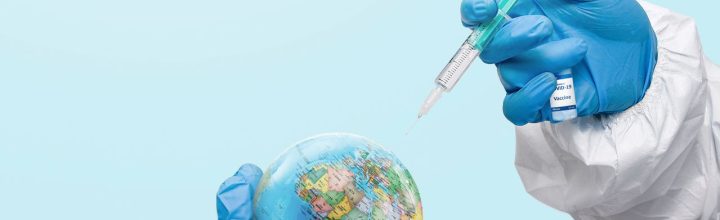
We have become strangely comfortable with the idea of pandemics.
We know what a virus can do. We have seen empty streets, overloaded hospitals, closed borders and frightened families.
But there is another threat developing much more quietly.
It doesn’t need a new virus.
It doesn’t need a mysterious animal.
It doesn’t even need to begin in one particular country.
It is already happening.
Antimicrobial resistance.
The frightening possibility is not that humanity discovers another deadly disease.
It is that some of the diseases we already know how to treat stop responding to the medicines we depend on.
Imagine a World Where Antibiotics Stop Working
A child develops a bacterial infection.
A doctor prescribes an antibiotic.
Except this time, it doesn’t work.
Another antibiotic is tried.
Still nothing.
The infection continues.
This isn’t science fiction. Resistant infections can already be difficult—and sometimes impossible—to treat. The World Health Organization describes antimicrobial resistance as a growing threat that undermines life-saving treatments and puts people at greater risk from common infections and routine medical procedures. (World Health Organization)
And the frightening part is the word common.
We tend to imagine deadly diseases as something exotic.
But AMR can turn ordinary infections into serious medical problems.
The Irony Is That Antibiotics Created This Problem
Antibiotics are among medicine’s greatest achievements.
They transformed infections that once killed millions into conditions that could often be treated.
But bacteria are not passive.
When exposed to antibiotics, susceptible bacteria can be killed while resistant ones survive. Those survivors can multiply, and resistance mechanisms can spread between bacteria. Excessive or inappropriate antimicrobial use accelerates this process. (CDC)
And antibiotics aren’t only used in hospitals.
Resistance is connected to human healthcare, agriculture, animals, food systems and the environment.
Modern travel and trade then give resistant organisms something previous generations never had at the same scale:
a remarkably efficient global transportation system. (CDC)
The Nightmare Goes Beyond Infections
Here is where the issue becomes much bigger.
Modern medicine depends heavily on antibiotics.
Major surgeries, organ transplants, cancer treatments and other procedures rely on being able to prevent or control bacterial infections. If effective antibiotics become scarce, procedures that currently seem routine can become significantly more dangerous. (CDC)
Imagine a world where the question before surgery isn’t simply:
“Can the surgeon perform it?”
but:
“Can we safely control the infection afterwards?”
That is a very different healthcare system.
This Isn’t a Problem for Some Distant Future
The numbers are already concerning.
WHO’s 2025 global surveillance report analysed more than 23 million bacteriologically confirmed cases reported through global surveillance systems and found substantial resistance across important infection-causing bacteria. (World Health Organization)
The United States CDC also reported a sharp increase in certain highly drug-resistant infections; NDM-producing carbapenem-resistant Enterobacterales infections increased by more than 460% in the U.S. between 2019 and 2023. (CDC)
These aren’t predictions about a fictional future.
They are warning signs from the present.
But We Are Not Helpless
The story doesn’t have to end with a post-antibiotic world.
Preventing infections, vaccination, hygiene, sanitation, surveillance, appropriate prescribing and responsible antimicrobial use can all slow the development and spread of resistance. (CDC)
And perhaps one of the simplest things people can understand is this:
Antibiotics are not a cure for everything.
They don’t treat viral infections such as ordinary colds and flu.
Every unnecessary use creates another opportunity for resistance to develop.
The Pandemic We Should Fear Most
A future AMR crisis may not arrive with a dramatic announcement.
There may be no single patient zero.
No breaking-news headline saying:
“A New Disease Has Arrived.”
Instead, the warning signs may appear gradually.
An infection that takes longer to cure.
A medicine that stops working.
A hospital outbreak that becomes harder to contain.
A routine operation carrying risks that medicine once made almost negligible.
And perhaps that is what makes antimicrobial resistance so unsettling.
The next great global health crisis may not introduce a new disease to humanity.
It may simply take something we already know—
and make us lose the ability to fight it.
The real question isn’t whether bacteria will evolve.
They will.
The question is whether humanity can change faster than the microbes do.
Comments

Hi, I’m Nishanth Muraleedharan (also known as Nishani)—an IT engineer turned internet entrepreneur with 25+ years in the textile industry. As the Founder & CEO of "DMZ International Imports & Exports" and President & Chairperson of the "Save Handloom Foundation", I’m committed to reviving India’s handloom heritage by empowering artisans through sustainable practices and advanced technologies like Blockchain, AI, AR & VR. I write what I love to read—thought-provoking, purposeful, and rooted in impact. nishani.in is not just a blog — it's a mark, a sign, a symbol, an impression of the naked truth. Like what you read? Buy me a chai and keep the ideas brewing. ☕💭 For advertising on any of our platforms, WhatsApp me on : +91-91-0950-0950 or email me @ support@dmzinternational.com